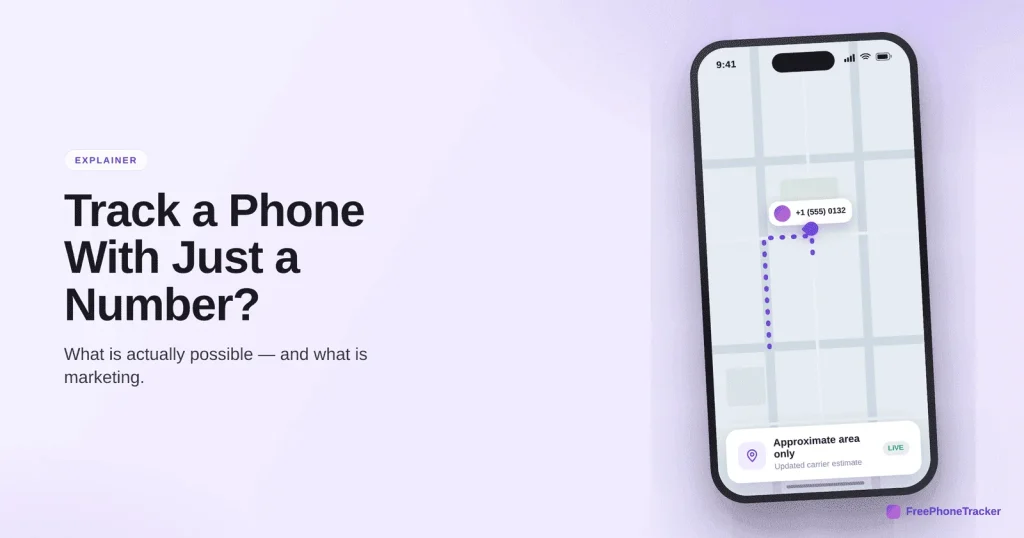
Type a phone number into a website, hit enter, and watch someone appear on a live map. That’s the promise plastered across a thousand “phone tracker” ads. It’s also, almost entirely, a lie. Can someone track your phone with just your number? The short answer is no, not really. Here’s the real answer, what a number actually can and can’t reveal, and how to spot the scams built on the myth.
- A phone number alone can’t pinpoint your location or read your messages.
- Real tracking needs an app on the phone, or access to your accounts.
- “Enter a number to track anyone” sites are scams that target you.
- Protect your number, but don’t lose sleep over the number-tracking myth.
The short answer
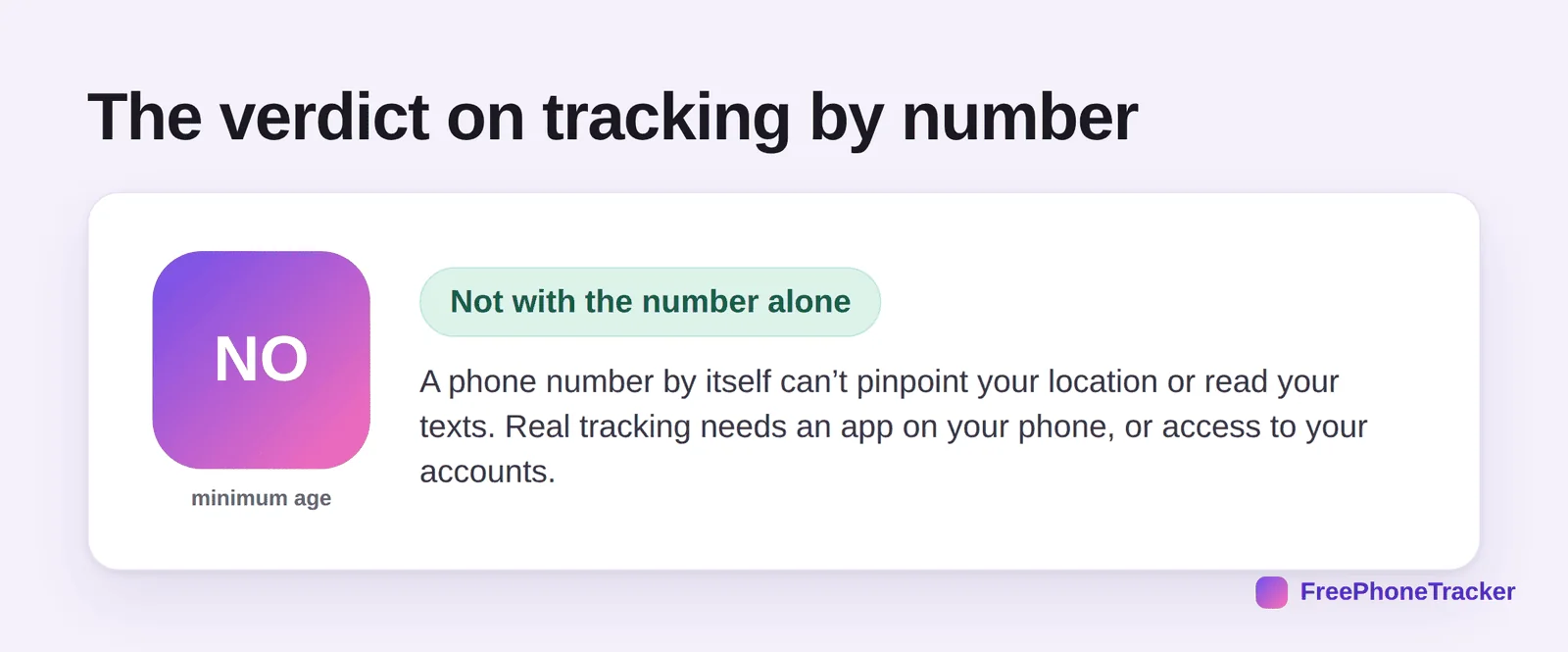
Let’s not bury it. With nothing but your phone number, an ordinary person cannot see your live location, read your texts, or listen to your calls. The apps and websites that claim otherwise are selling a fantasy, or a scam. Real tracking always needs something more: software on the device, or the keys to your accounts.
What a number can reveal
To be fair, a phone number isn’t nothing. It just doesn’t do what the ads claim.
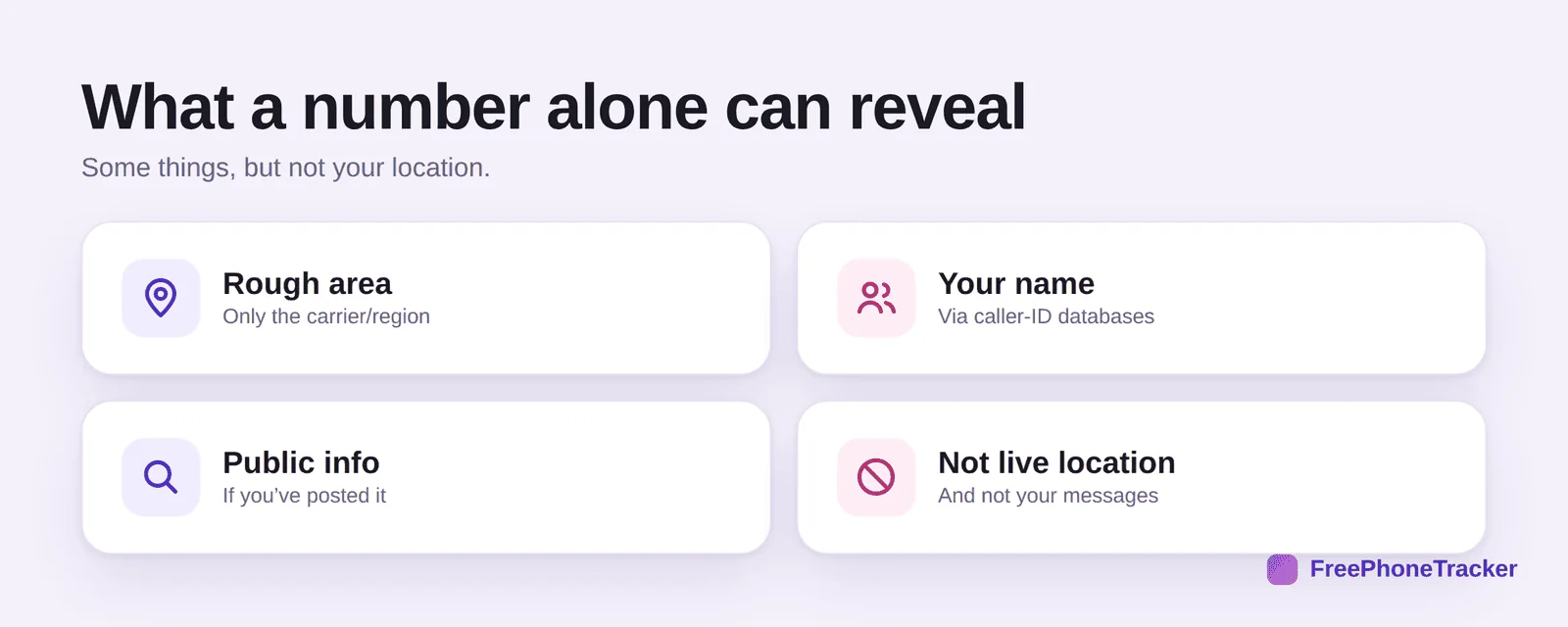
From a number, someone might learn your rough region or carrier (from the area code and network), possibly your name via caller-ID databases, and any public information you’ve tied to it online. What they cannot get is your live location or your messages. Those are protected, and no legitimate service hands them over to a stranger with a number.
What real tracking actually needs
When tracking is real, it’s never “just the number.” It’s one of these, and each requires access you’d usually have to grant or lose.
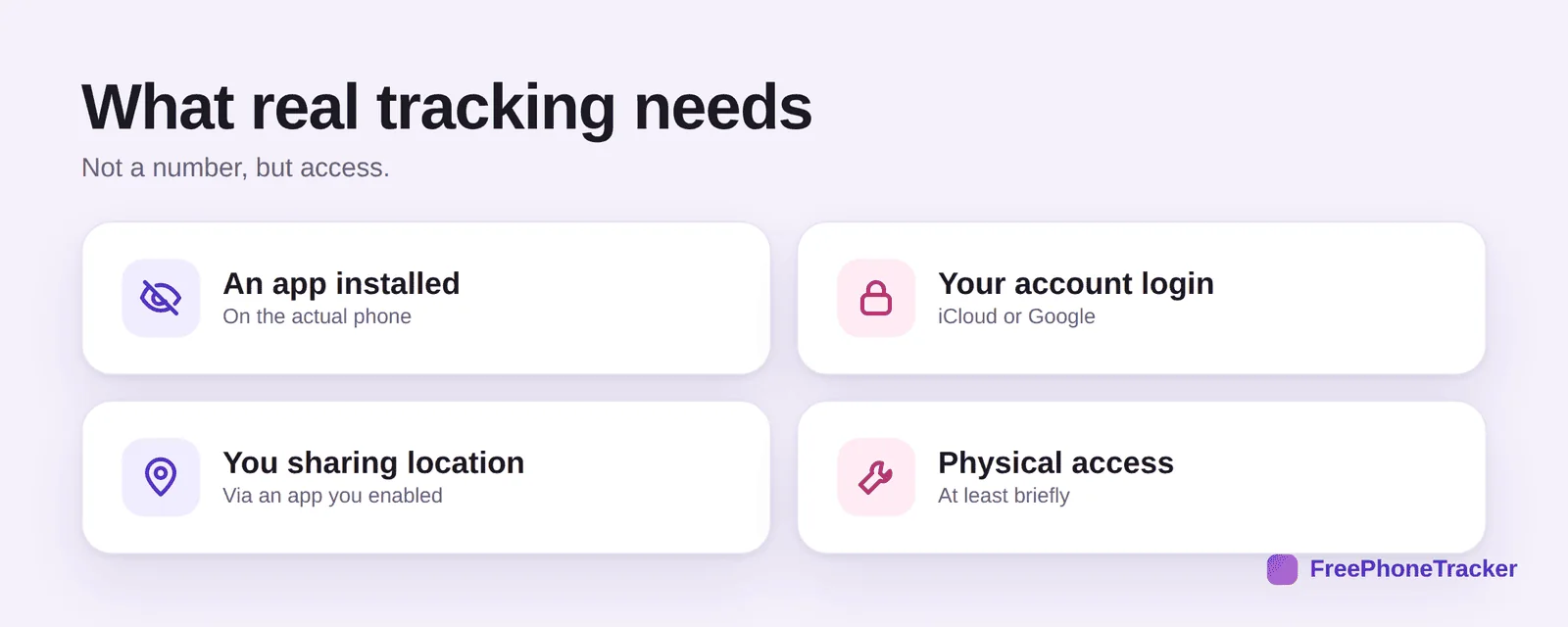
It takes an app installed on the actual phone (stalkerware, or a consent-based tool). Or your account login, someone in your iCloud or Google can see your location. Or location sharing you switched on. Or at least brief physical access to set something up. The common thread: they need the device or your credentials, not a string of digits.
The scams built on the myth
The number-tracking myth is so widespread because a whole industry profits from it. Recognise the pattern and you’ll never fall for it.
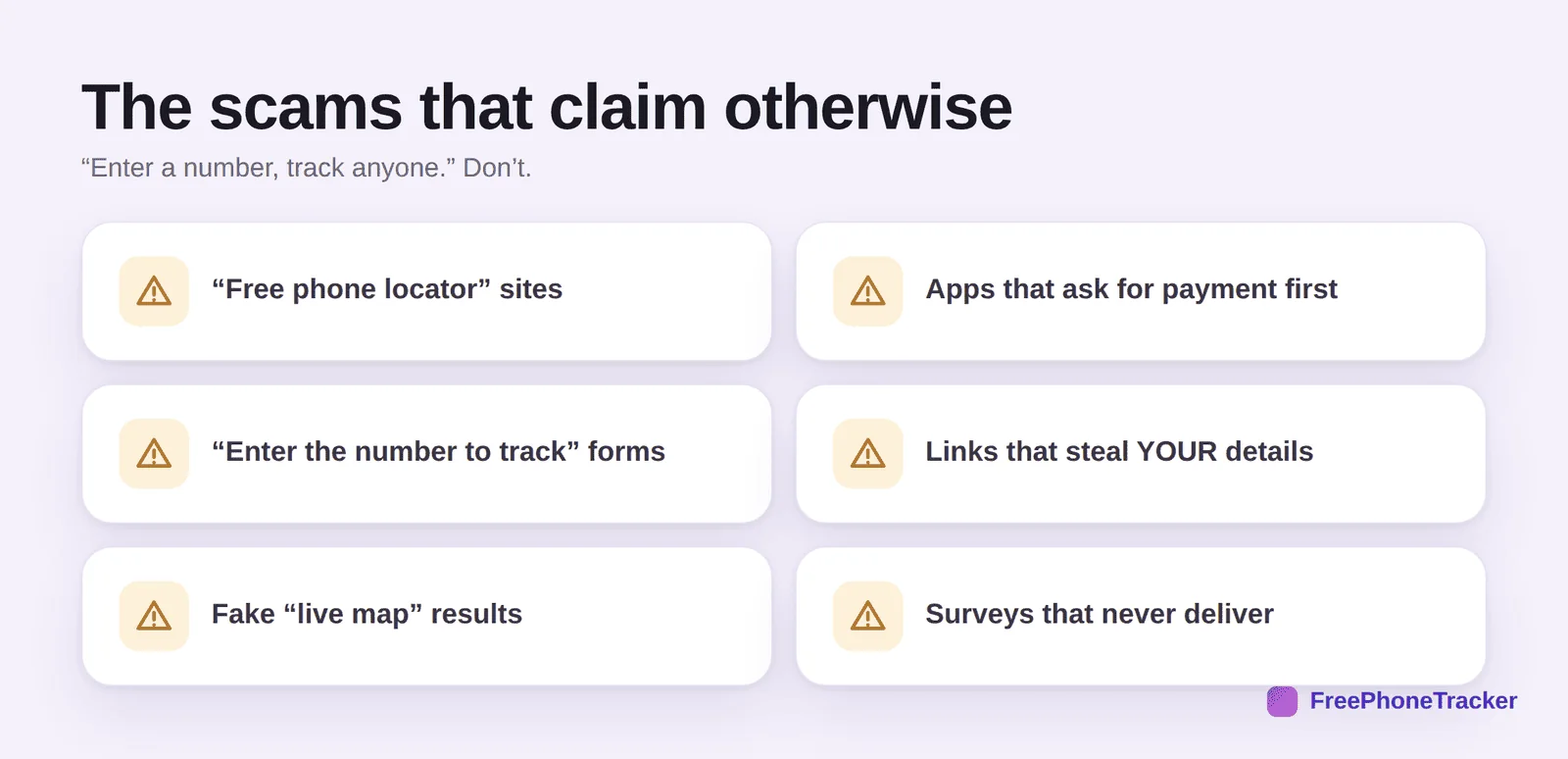
They lure you with a free locator, then demand payment before revealing anything, and reveal nothing. The “enter the number to track” form usually exists to harvest your details, or push you through endless surveys and malware-laden downloads. If a site claims it can map any phone from the number alone, it’s not a tool, it’s bait.
Protecting your number anyway
A number can’t be used to track you live, but it’s still worth guarding, mainly against spam, SIM-swap fraud, and scams.
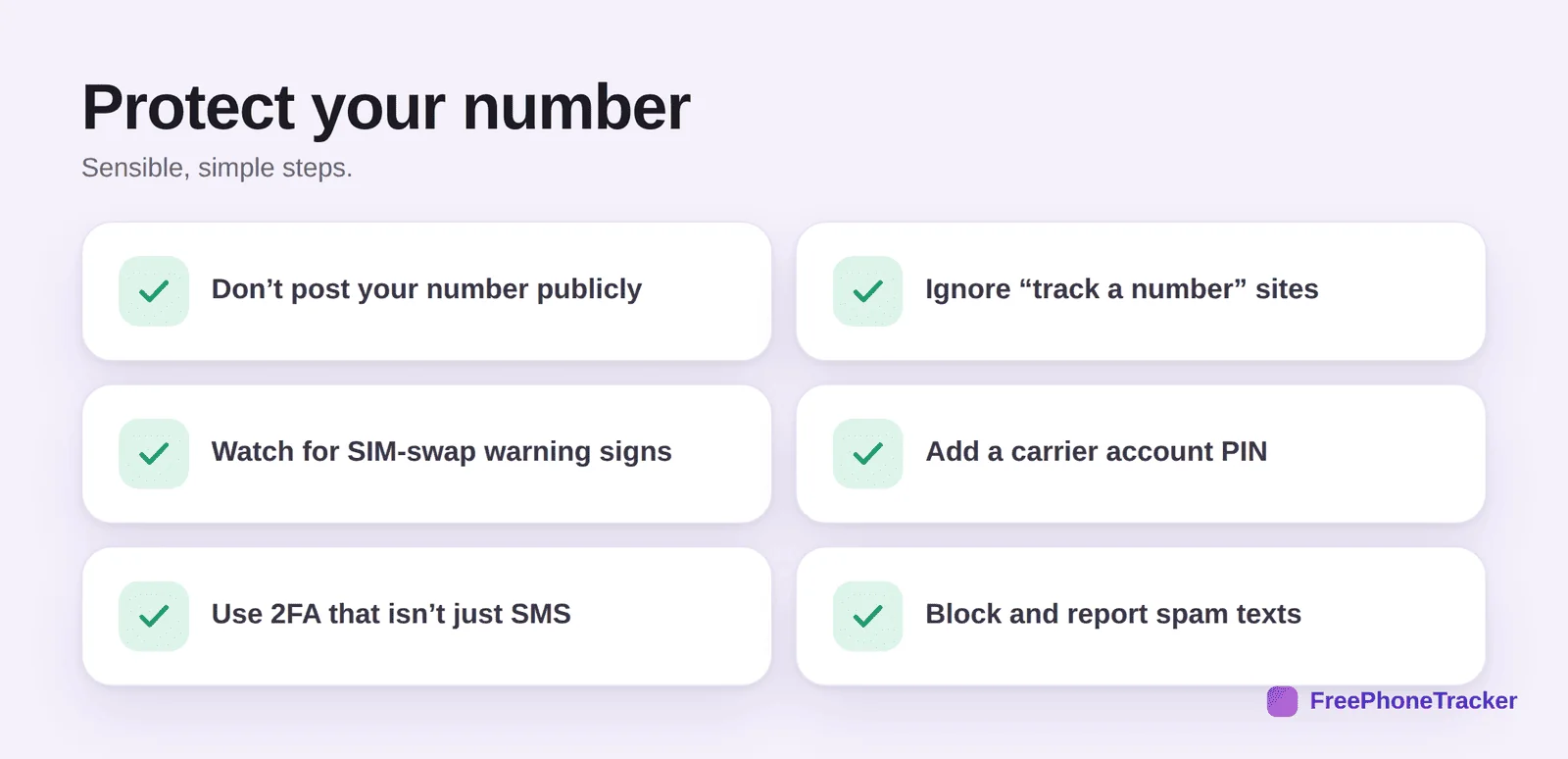
Don’t post your number publicly. Ignore “track a number” sites entirely. Learn the SIM-swap warning signs (sudden loss of signal can mean your number was ported). Add a PIN to your carrier account. Prefer app-based two-factor over SMS codes where you can. And block and report spam texts.
Myth vs. reality
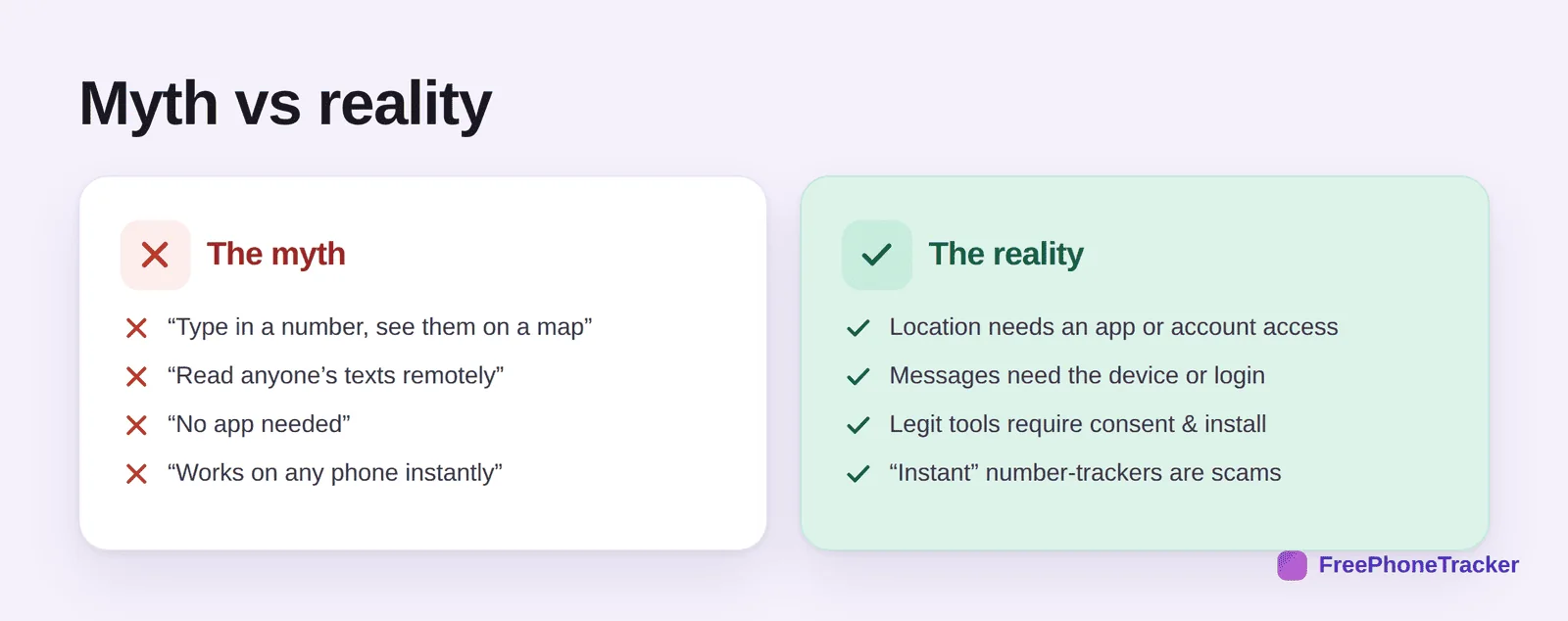
This matters beyond your own peace of mind. The “track any phone from its number” myth is exactly what shady spy services sell, and it’s the opposite of how legitimate monitoring works. Real tools are installed with consent and are visible on the device, they don’t pretend a number is a magic key.
Where the myth comes from
The idea isn’t pulled from nowhere, which is why it sticks. A few grains of truth get stretched into a false promise. Emergency services really can locate a phone by its number, so people assume anyone can, but that’s a regulated, authorised process, not a public tool. Carriers hold location data, again, tightly controlled. And consent-based apps like family location sharing show a phone on a map, so it looks like “tracking by number,” when really the other person agreed to share and can stop anytime. Scam sites splice these truths together into “enter any number, see anyone,” which is simply false. Understanding the real mechanisms is the fastest way to stop fearing the fake one.
Common questions
So can police or carriers track a number?
Carriers can locate a number for emergencies, and law enforcement can with legal authority. That’s a regulated process, not something a stranger or a website can do.
What about “find my friends” by number?
Those work only because the other person agreed to share their location with you through an app. That’s consent-based sharing, not tracking by number, and they can turn it off anytime.
I got a text saying I’m being tracked. Real?
Almost certainly a scare-scam trying to get you to click or pay. Don’t. If you’re genuinely worried, run the checks in our guide on telling if your phone is tracked.
Can someone track my location if they call me?
No. A call doesn’t reveal your location to the caller. That’s another persistent myth.
Is any “phone tracker by number” service legit?
For tracking a stranger from a number, no. Legitimate location tools require an app and consent, like sharing location with family, or a parent’s consent-based monitoring of their own child’s device.
So, can someone track your phone with just your number? Overwhelmingly, no, and anyone claiming they can is selling a scam. Real tracking needs the device or your accounts, which is why guarding your passwords matters far more than guarding your digits. Know the myth, skip the scam sites, and if you’re genuinely worried something’s on your phone, our guides on spotting tracking and removing spyware are the real answer.