The first phone is a milestone, for them and for you. Handled well, it’s a chance to teach good habits from day one. Handled badly, it’s a source of fights for years. The difference isn’t luck. It’s a bit of thought before you hand it over: whether they’re ready, which phone to get, how to set it up, and the rules you agree from the start. This guide walks through all four.
- Readiness beats age. Judge the child, not the birthday.
- For a first phone at 9–11, a basic phone often beats a smartphone.
- Set it up before you give it: lock, filter, limits, location. Ten minutes, day one.
- Agree the rules first. It’s far easier to loosen later than to claw back.
Is your child ready?
There’s no magic age. The average first phone lands around ten or eleven, but averages don’t raise your kid. Readiness is about maturity, not the number of candles on the cake.
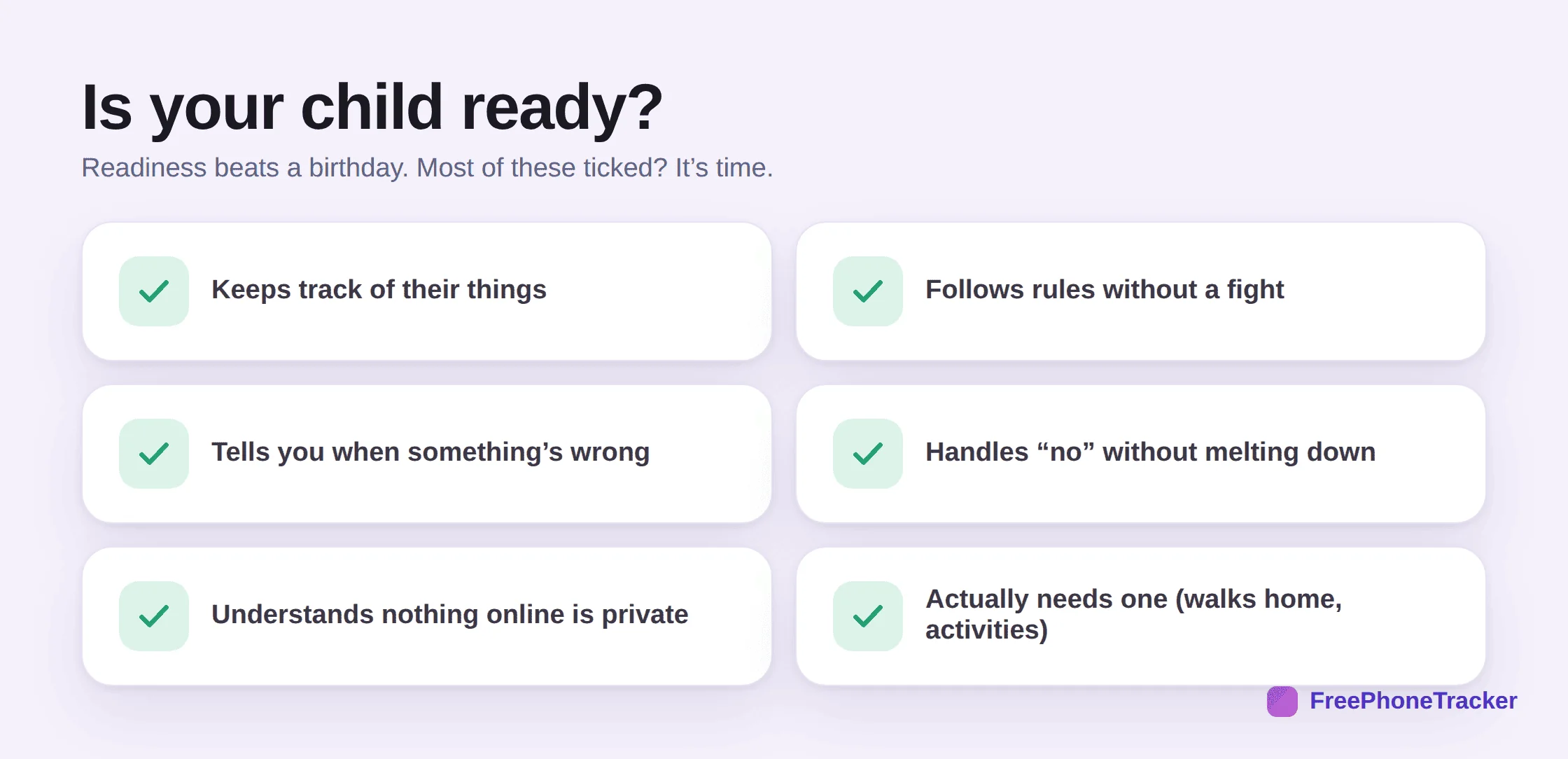
Look for a child who keeps track of their things, follows rules without a constant fight, and tells you when something’s wrong. One who can handle “no” without melting down, and who understands, at least in simple terms, that nothing online is truly private. And ask the practical question: do they actually need one? A child who walks home alone or goes to activities without you has a real reason. “All my friends have one” is a pressure, not a reason. If most of the readiness signs are there, it’s probably time. If they’re not, waiting a while is a perfectly good answer.
Basic phone or smartphone?
Here’s the choice most parents skip, and later wish they hadn’t. The first phone doesn’t have to be a smartphone. For a younger child, a basic phone is often the smarter start.
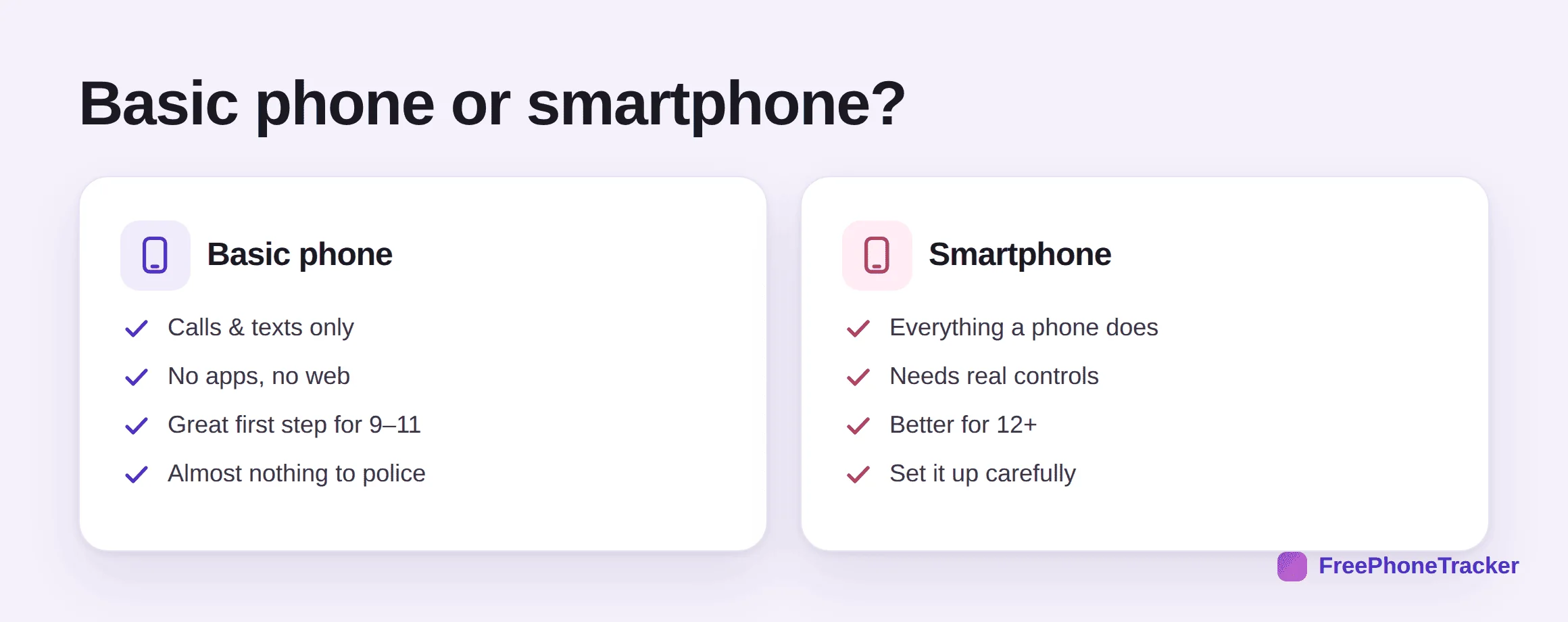
A basic phone does calls and texts, and little else. No apps, no web, no social media. For a nine-to-eleven-year-old who just needs to reach you on the walk home, it’s ideal, and there’s almost nothing to monitor or worry about. A smartphone does everything, which is the point and the problem. It opens the whole internet, so it needs real controls from the start. It suits a slightly older child, twelve and up, who’s ready for the responsibility. There’s no shame in a basic phone as step one. It buys your child a couple of years to mature before the full internet arrives in their pocket.
Set it up before you hand it over
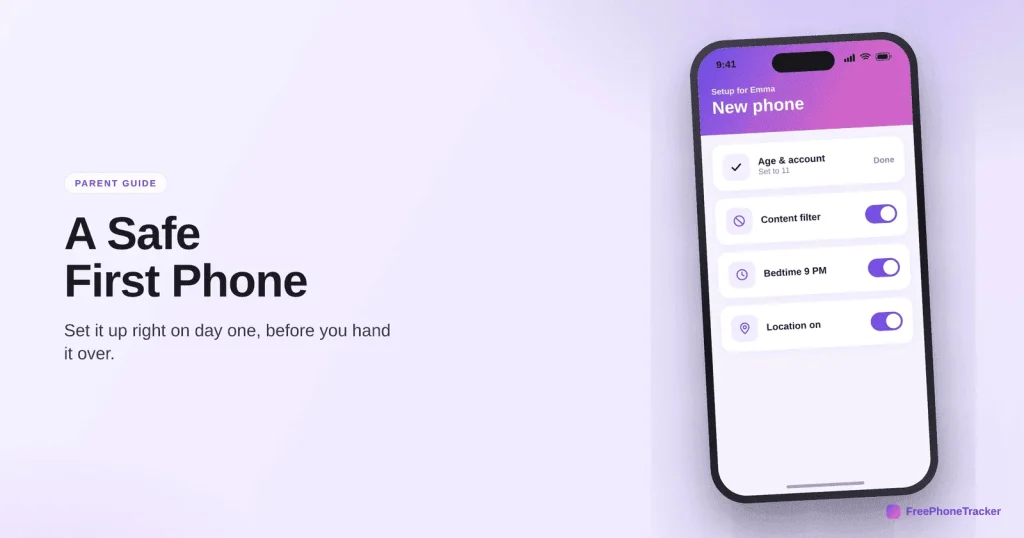
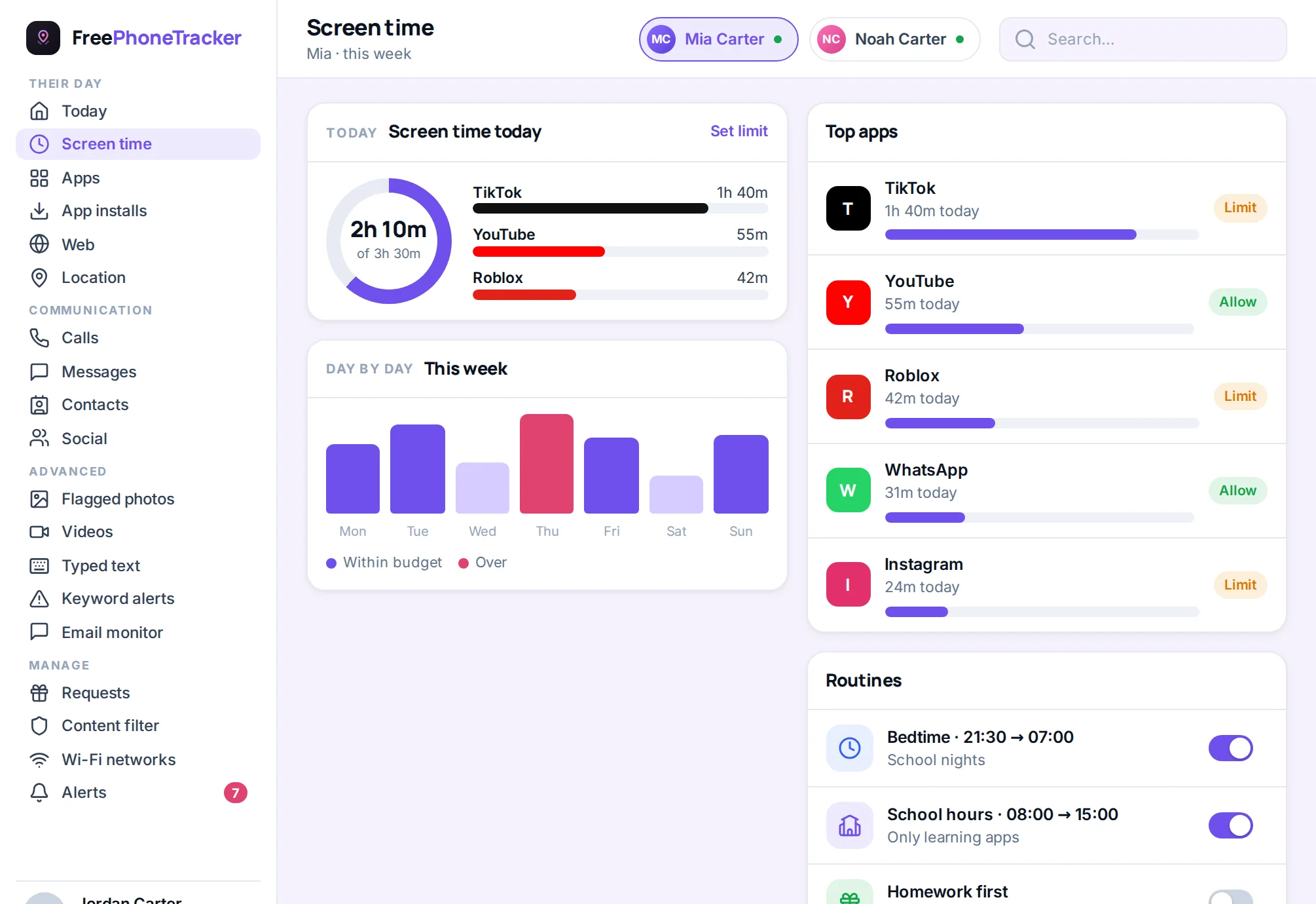
If it is a smartphone, do the setup before you give it, not after. Ten minutes now saves a lot of grief later, and it sets the tone: this phone comes with guardrails, and that’s normal.
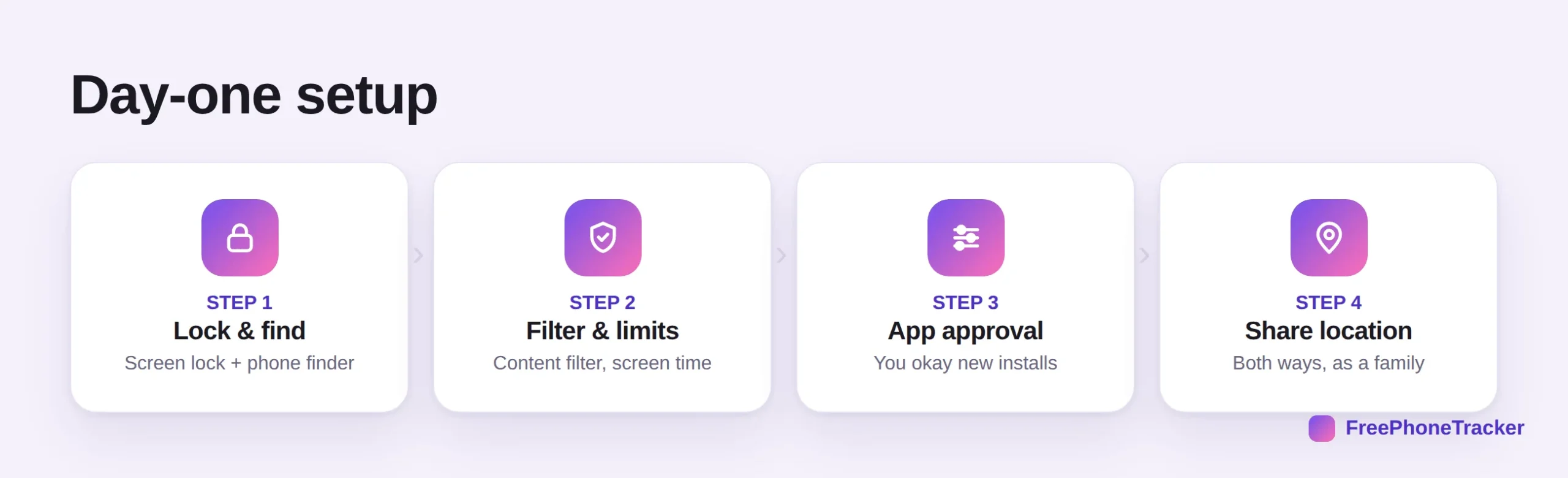
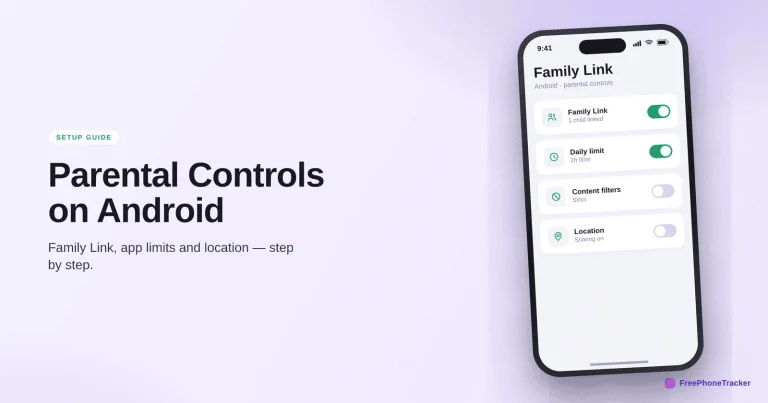
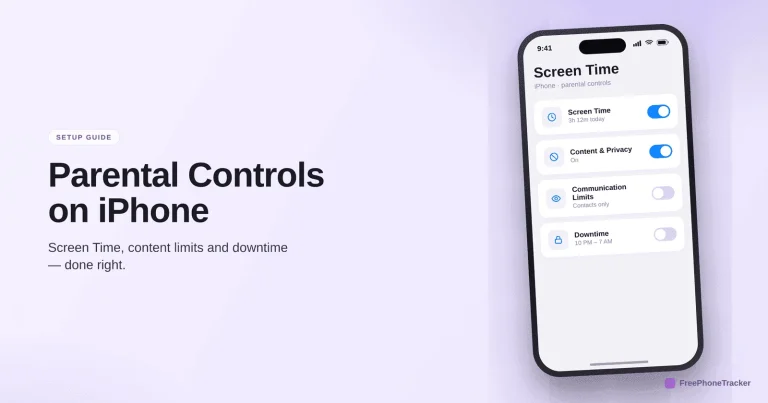
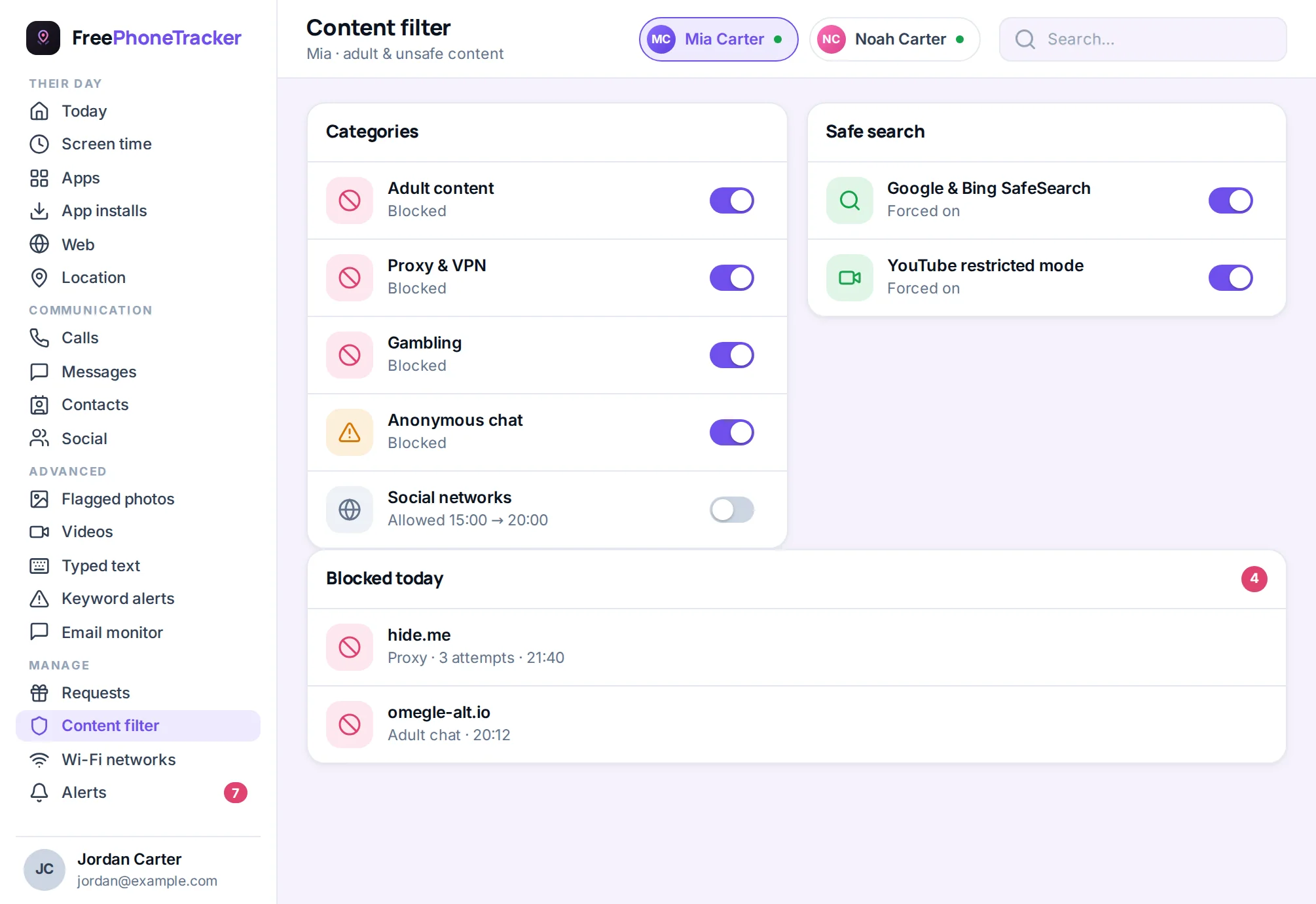
Set a screen lock and turn on the phone finder, so it’s protected and findable. Switch on a content filter and sensible screen-time limits. Turn on app approval, so nothing installs without your okay. And set up location sharing, ideally both ways, as something the whole family does. Our beginner’s guide to parental controls walks through each of these in detail.
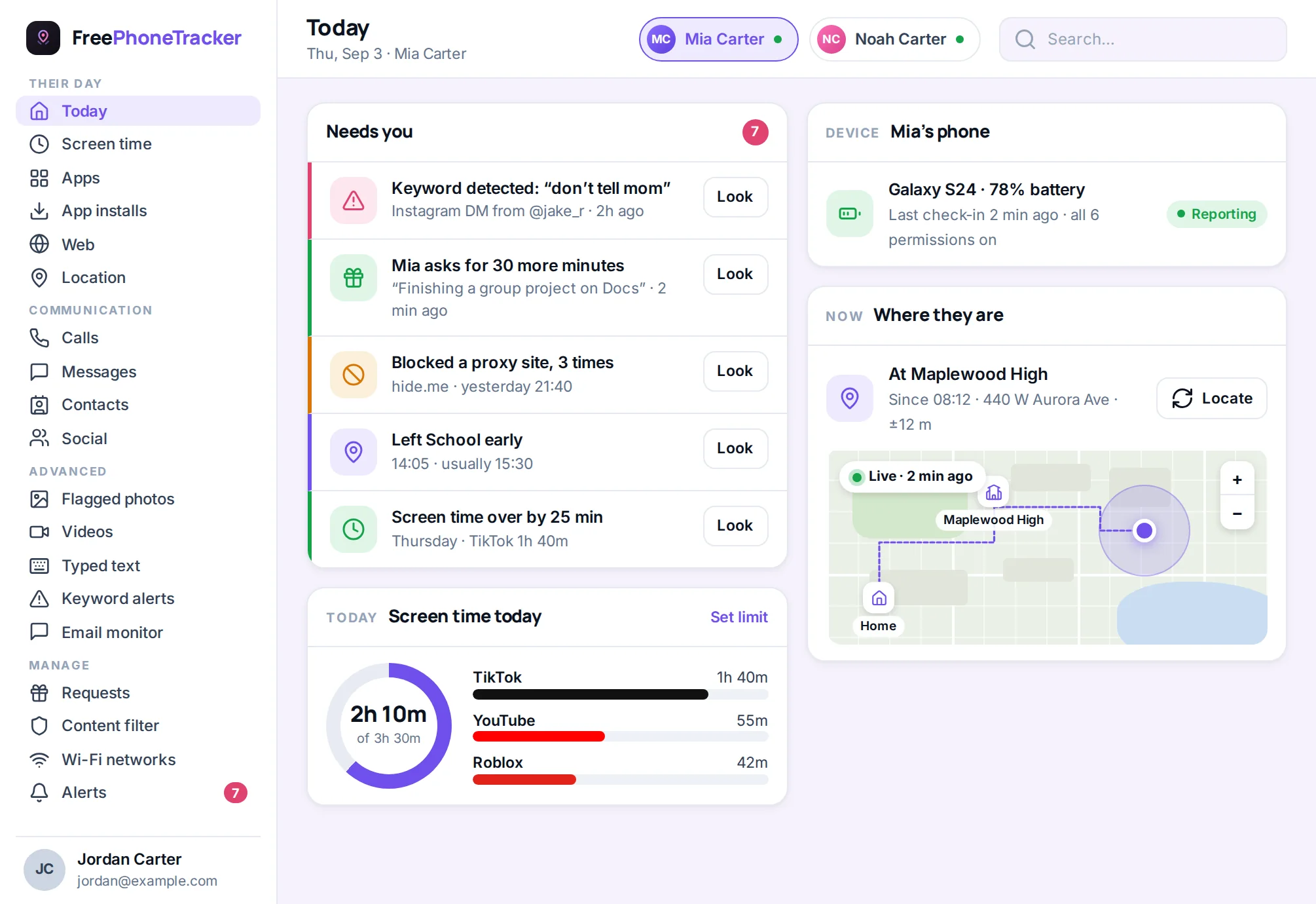
Start a little tighter than you think you need to. It’s easy and pleasant to grant more freedom as your child earns it. It’s hard and unpleasant to take freedom back after it’s been given. A first phone with firm, fair limits that loosen over time is the setup kids actually accept.
Agree the rules from the start
The single best thing you can do with a first phone is agree the rules before it’s switched on. Not a lecture, a conversation, and ideally something you both put your name to.
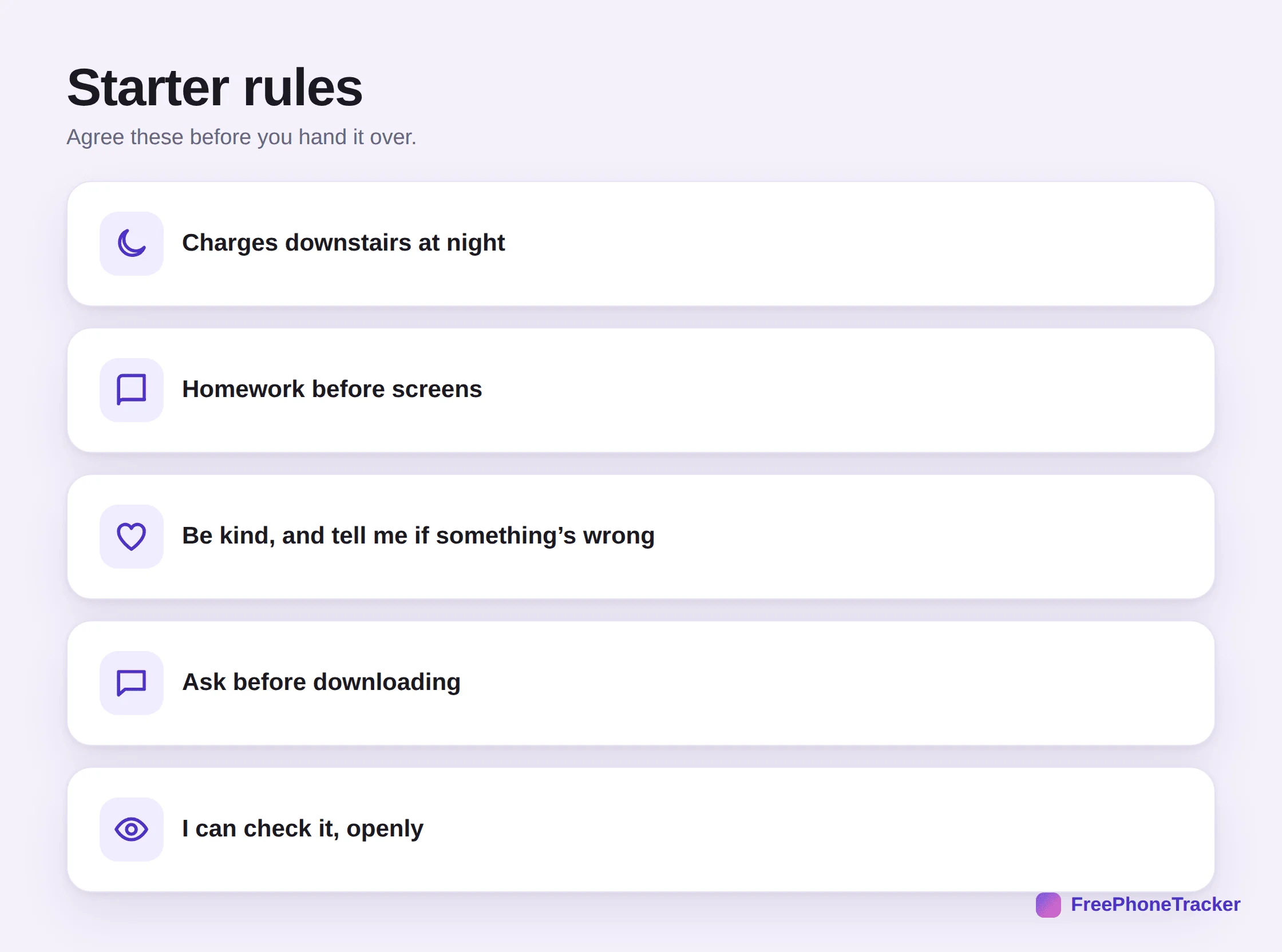
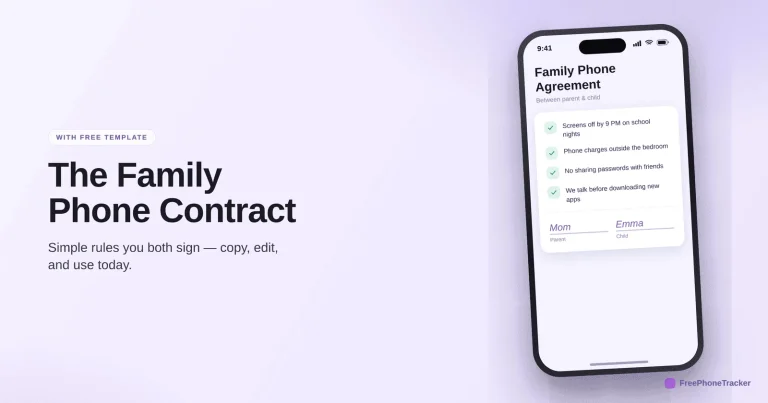
Keep it to a handful that matter. The phone charges downstairs overnight. Homework comes before screens. Be kind, and tell a parent if anything online upsets you. Ask before downloading. And: I can look at this phone, openly, any time. Writing these into a simple agreement you both sign turns a hundred future arguments into one calm chat now. We’ve made a ready-to-use one in our guide to the family phone contract.
The first few weeks
The handover isn’t the end of the job; it’s the start. The first few weeks set the pattern. Check in gently and often, not as an interrogation but as interest: what are you playing, who are you chatting with, seen anything funny? Keep the conversation light so the phone stays a shared topic, not a closed door. Expect to adjust the limits as you learn how they actually use it. And notice the good: when they handle something well, say so. A first phone is a skill they’re learning, and like any skill, encouragement teaches faster than criticism.
Who pays, and what it teaches
The money side is a quiet parenting opportunity, so don’t waste it. Who pays for the phone and the plan sends a message about responsibility. For a first phone, most families cover it, and that’s fine. But make the deal explicit. The phone is provided by you, which is part of why the rules apply and the phone can be checked.
As kids get older, having them contribute, from pocket money, chores, or a part-time job, teaches them to value it and to take more care of it. A phone a teen part-paid for is one they’re far less likely to lose or smash. A prepaid plan is a useful training tool too: when the data runs out, it runs out, and they learn to budget it. Small lessons, but they stick.
Common questions
What’s the right age for a first phone?
There isn’t one. Most kids get one around 10–11, but readiness matters more than age. A mature nine-year-old who walks home may be readier than an impulsive twelve-year-old. Judge the child.
Should I get a basic phone or a smartphone first?
For a younger child, a basic phone is a great first step, calls and texts, little to worry about. Move to a smartphone when they’re a bit older and ready for the responsibility.
How much should I monitor a first phone?
Match it to age. A young child’s first phone usually needs just location, limits and a filter. Add more only as they grow. Our monitoring guide covers how much is right at each stage.
What if they lose it?
Very likely at some point. Turn on the phone finder now, before it happens. Our guide to finding a lost phone has the full drill.
Do I really need a written contract?
You don’t need one, but it helps enormously. It makes expectations clear, removes the “you never said” argument, and gives you something to point back to. The family phone contract is free to use.
A first phone is a big step, but it doesn’t have to be a leap into the unknown. Check they’re ready. Consider a basic phone to start. Set it up with guardrails before you hand it over, and agree a few clear rules together. Do that, and you turn a source of future battles into the beginning of good digital habits. Get started free and set the first phone up right.