Bullying used to stop at the school gate. Now it follows kids home, into a device they carry everywhere and can’t switch off. That’s what makes cyberbullying so hard. It’s constant, it’s often invisible to parents, and the child on the receiving end frequently says nothing. This guide will help you spot it, respond well, and be the person your child turns to, whether they’re being bullied or, harder to face, doing the bullying.
- Cyberbullying takes many forms, from cruel messages to being frozen out of groups.
- Kids rarely tell you. Watch for changes in mood, sleep and how they act around the phone.
- If it’s happening: listen first, save the evidence, then report it. Don’t grab the phone.
- If your child is the bully, stay calm and firm. It’s a problem you can fix.
The forms it takes
Cyberbullying isn’t just nasty messages. It wears many faces, and some are easy to miss, especially the quiet ones like exclusion.
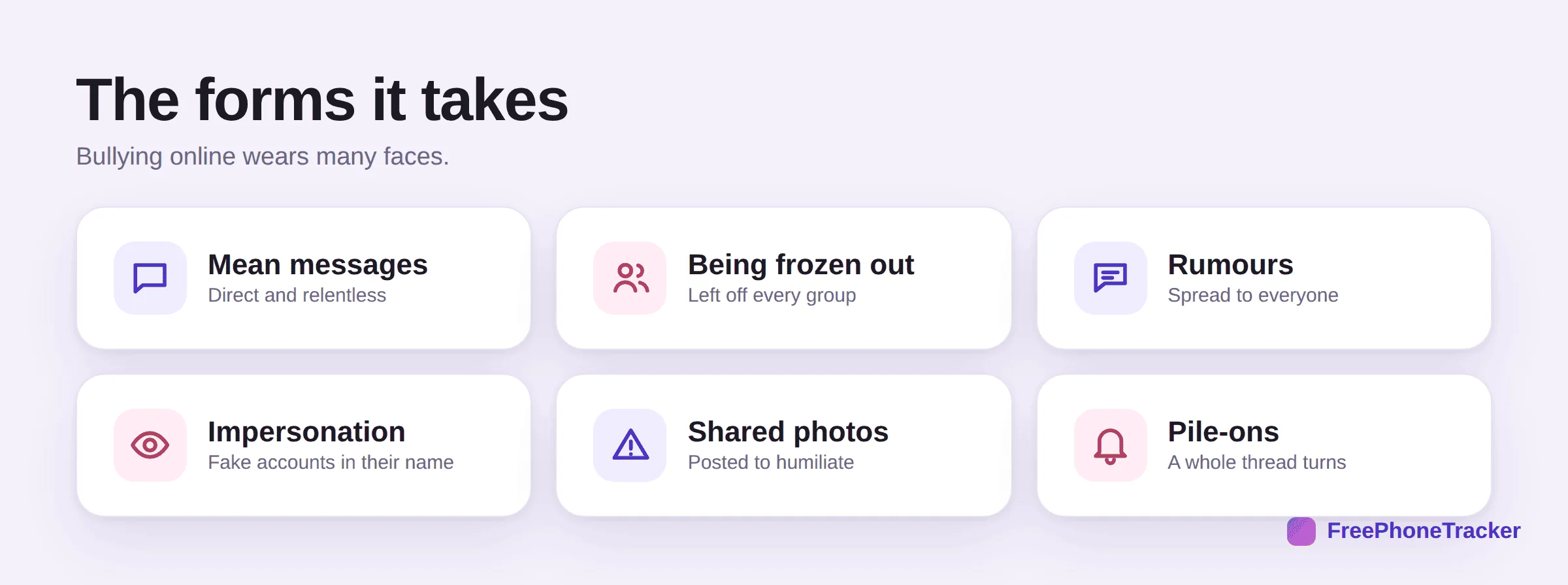
There’s the direct kind: cruel messages, name-calling, threats. There’s exclusion, being deliberately left out of every group chat and plan. There are rumours spread to a whole year group in minutes. There’s impersonation, someone making a fake account in your child’s name. There’s the sharing of embarrassing or private photos to humiliate. And there are pile-ons, where a whole thread turns on one kid at once. Knowing the forms helps you recognise it when you see it, and helps your child name what’s happening to them.
The signs your child is being bullied
Most bullied kids don’t come out and say it. They’re ashamed, or scared it’ll get worse, or afraid you’ll take the phone away. So you have to read the signs instead.
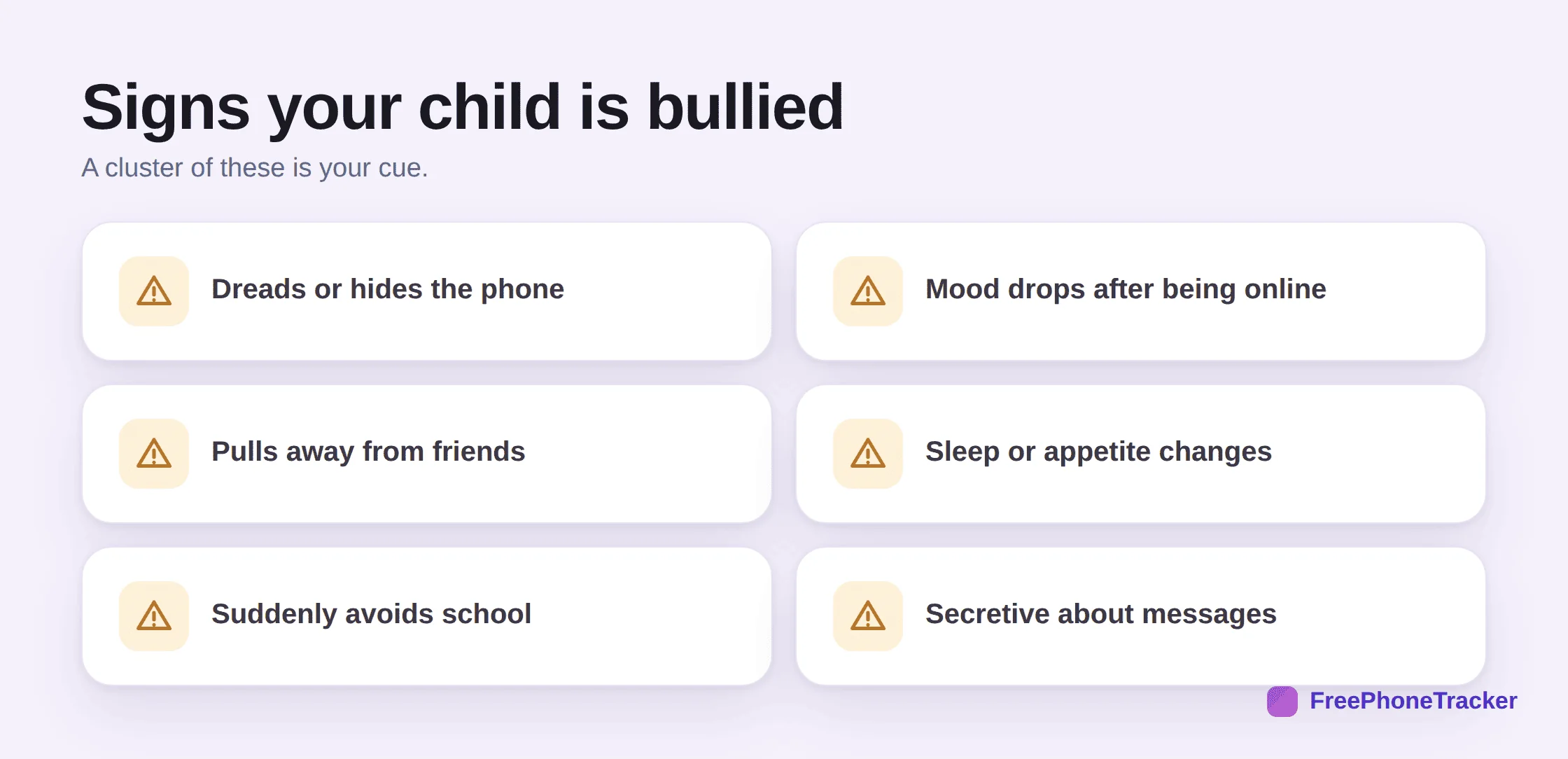
Watch for a child who suddenly dreads or hides the phone, or whose mood drops sharply after being online. Pulling away from friends. Changes in sleep or appetite. Suddenly not wanting to go to school. Becoming secretive about messages. Any of these can have other causes, but together, especially alongside more phone use or a sudden retreat from it, they point to something wrong.
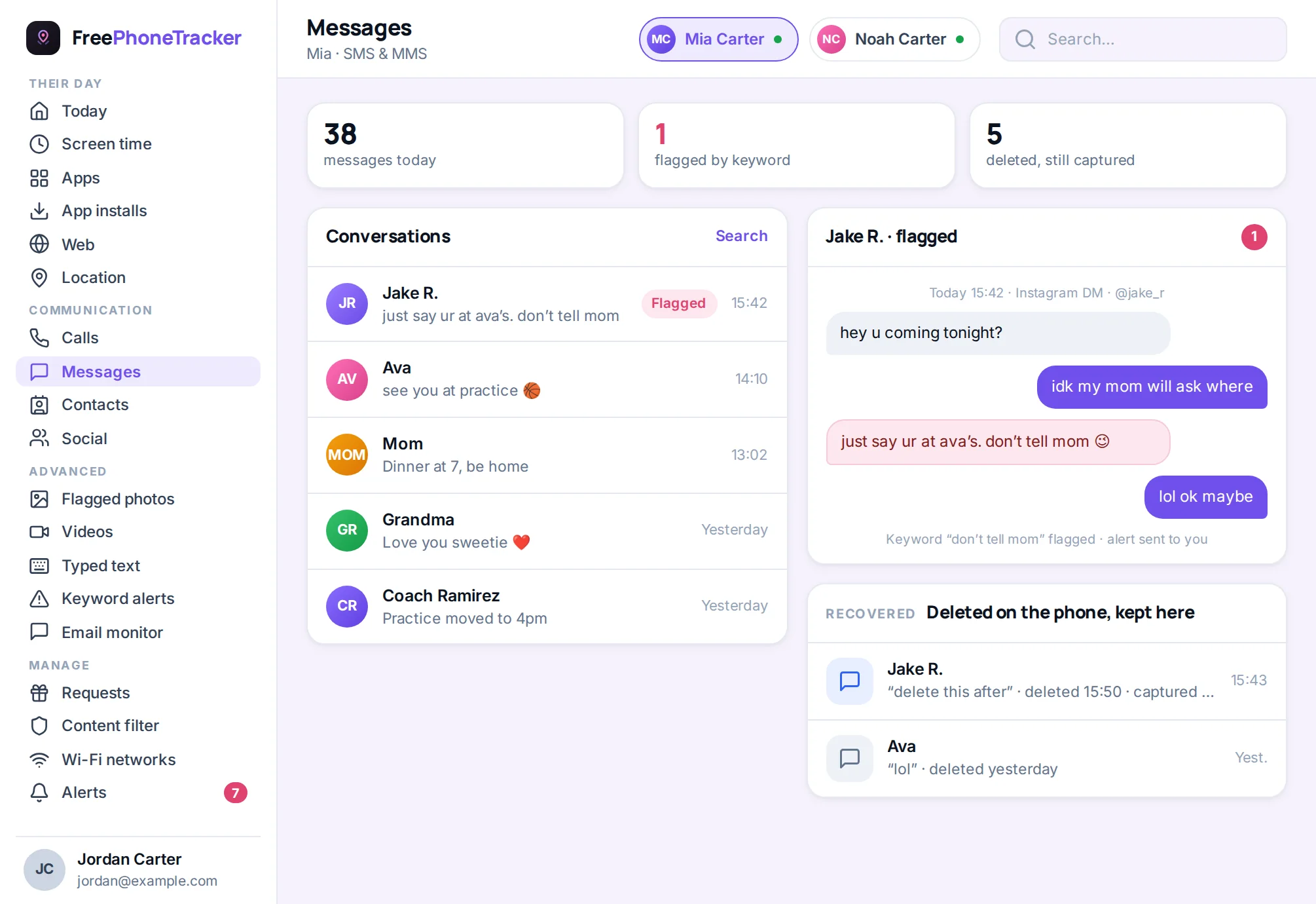
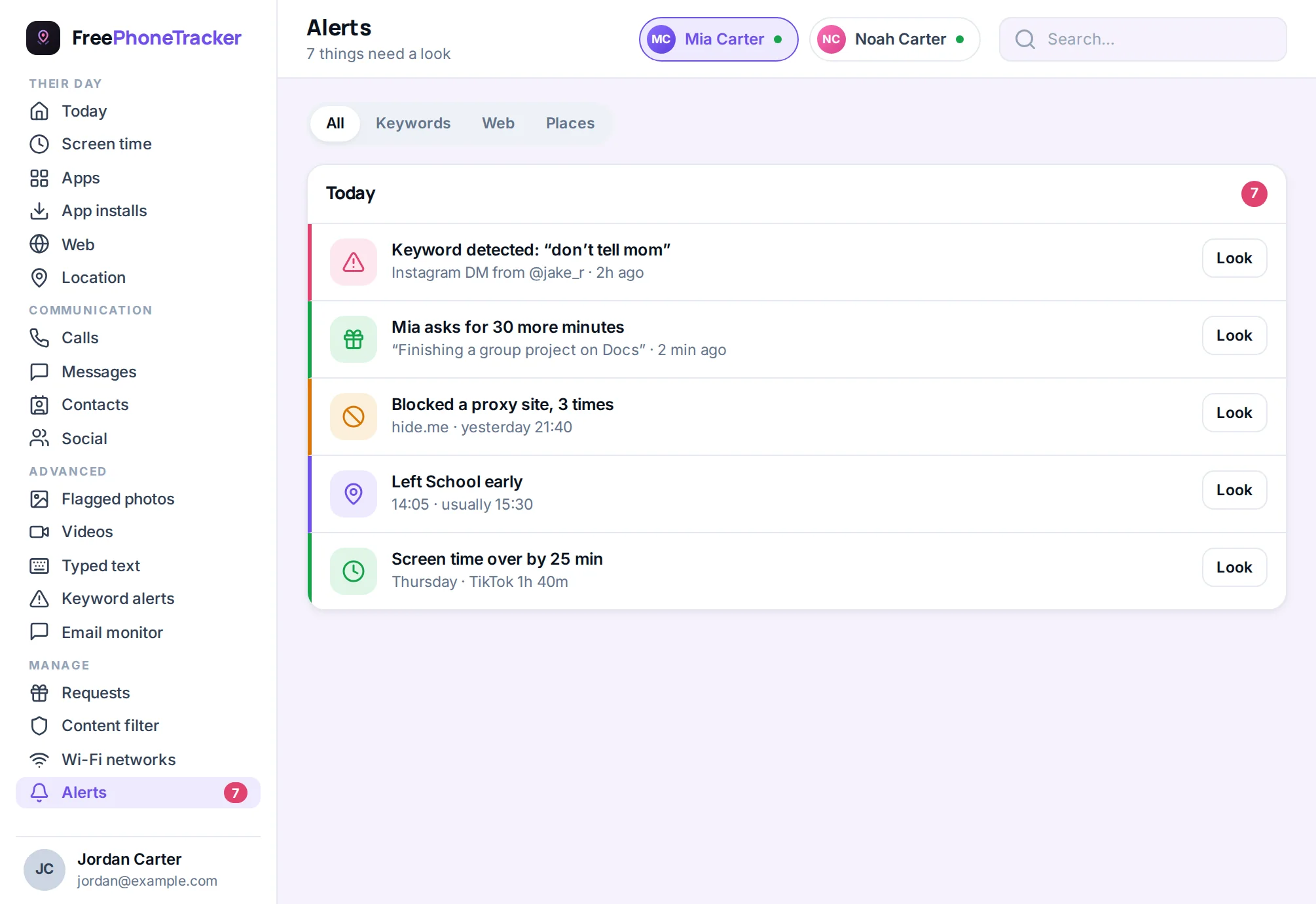
This is where a little visibility helps, used with care. Keyword alerts can flag phrases like “everyone hates you” or “kill yourself” the moment they appear, so a bullying situation reaches you even when your child stays silent. The point isn’t to read everything. It’s to catch the harm you’d otherwise never see.

What to do about it
When you find out your child is being bullied, the instinct is to fix it immediately, grab the phone, call the other parent, march to the school. Slow down. The first move is always the same: connect with your child.
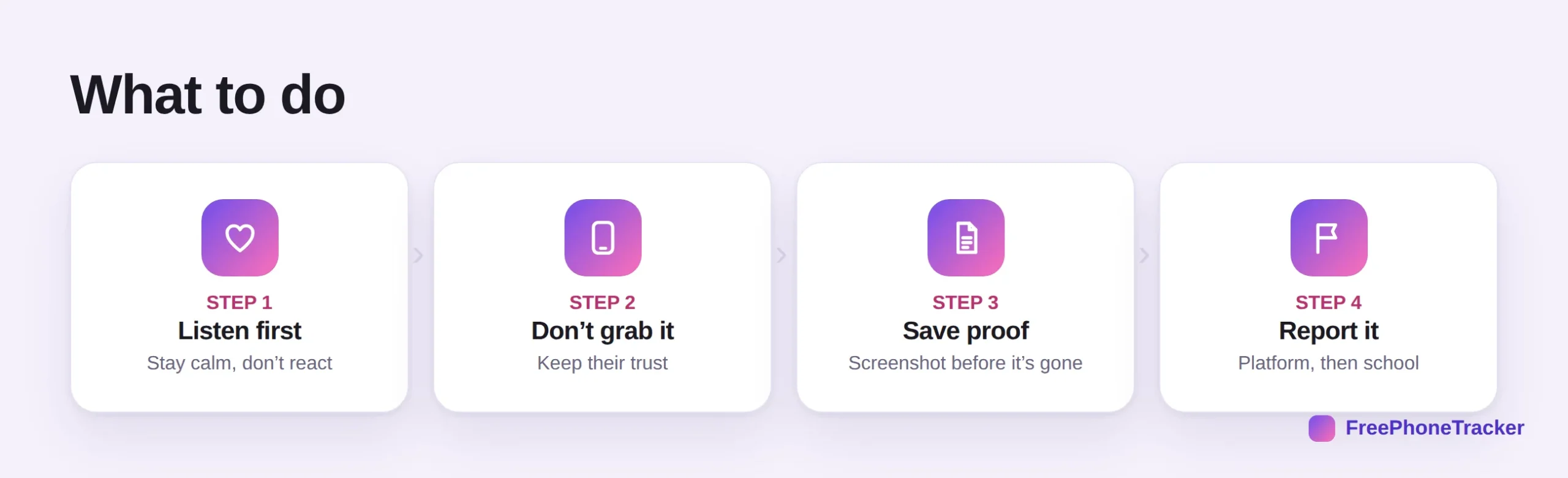
First, listen. Stay calm, thank them for telling you, and don’t overreact. Second, don’t grab the phone. Taking it away punishes the victim and teaches every kid watching that telling a parent means losing their lifeline. Third, save the evidence. Screenshot the messages, posts and profiles before anything gets deleted. Fourth, report it. Use the platform’s reporting tools to block and flag the accounts, and if it involves classmates or threats, bring it to the school. For serious threats or anything illegal, involve the police.
When your child is the one bullying
It’s the harder call, and no parent wants to make it. But sometimes the cruel messages are coming from your child’s phone, not to it. If that’s the case, how you handle it shapes the kind of person they become.
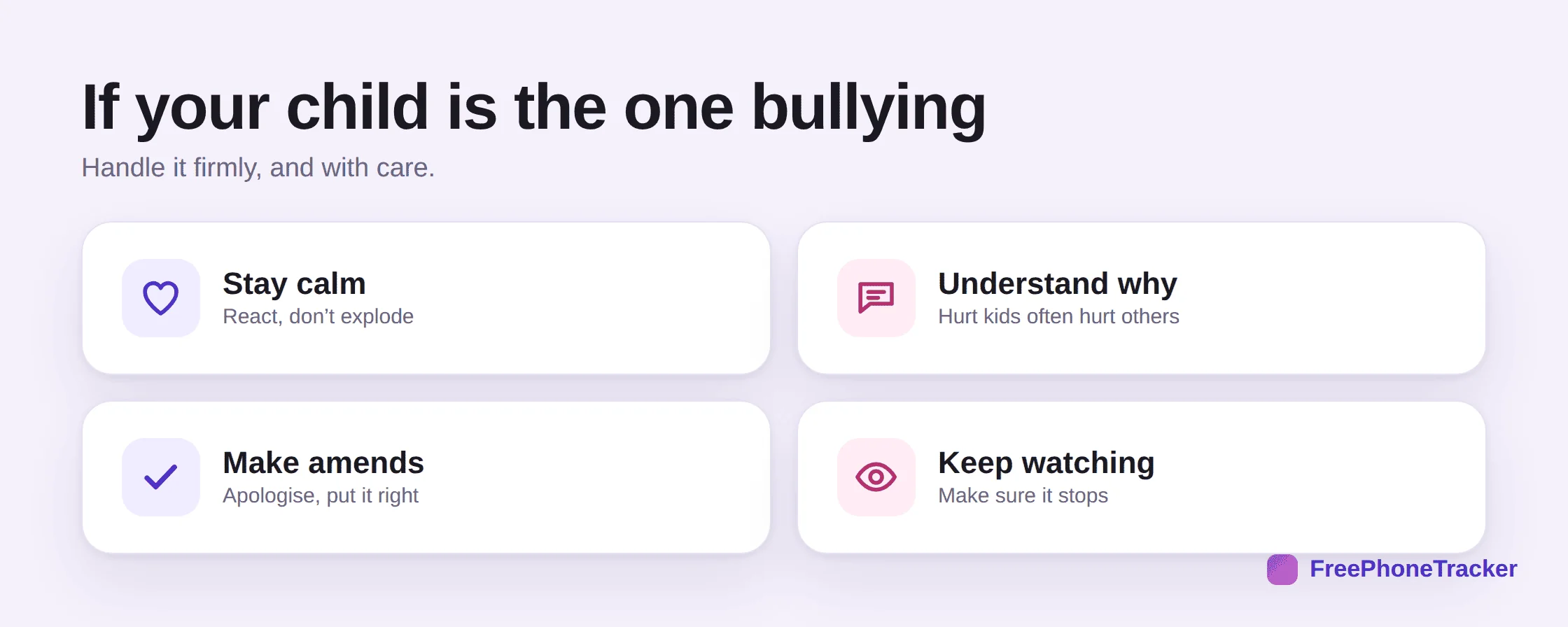
Stay calm and react without exploding; rage shuts the conversation down. Try to understand why. Kids who bully are often hurting, copying what they see, or chasing status in a group. That’s an explanation, not an excuse. Insist they make amends, a genuine apology, and put right what they can. Then keep watching for a while to be sure it’s stopped. Address it seriously now and you prevent a pattern from setting. Ignore it and it hardens.
How to protect your child before it starts
You can’t bully-proof a childhood, but you can make your child more resilient and more likely to come to you. A few things help. Keep the phone out of the bedroom overnight, so the abuse can’t follow them into the small hours. Talk openly about what to do if someone’s cruel: don’t respond, screenshot, block, tell a parent. Make your home the place where they’re never in trouble for telling you something hard. And model kindness online yourself. Kids absorb how the adults around them behave on their own screens.
Raise an upstander, not a bystander
Most cyberbullying is watched by a crowd of kids who say nothing. Your child will be in that crowd far more often than they’re the target or the bully. Teaching them what to do as a witness is one of the most powerful things you can do, because bullying withers when bystanders refuse to feed it.
Keep the guidance simple. Don’t like, share or pile on, even as a joke; it fuels the fire. Don’t remove the target’s support by staying silent, a private “you okay?” message means a lot. And tell a trusted adult when something crosses a line. You’re not asking your child to be a hero or to put themselves in the firing line. You’re asking them to be kind, and to not look away. A generation of kids who won’t join in is how this problem actually shrinks.
Common questions
Should I contact the bully’s parents?
Sometimes, but carefully. It can help if you know them and can keep it calm. It can also escalate things. Often the school is a better first channel, especially when classmates are involved. Lead with your child’s wishes and safety.
Won’t monitoring make my child trust me less?
Not if it’s open. Tell your child what you watch for and why. For teens, lean on alerts rather than reading everything, as our guide on monitoring a teen respectfully explains. Openness builds trust; secrecy breaks it.
Should I take the phone away?
As a punishment for being bullied, no, it isolates them further. As a temporary, agreed break to cool a situation down, sometimes. The difference is whether it’s done with your child or to them.
What if the school won’t act?
Document everything, in writing, and escalate. Keep a record of incidents and of your reports. If it involves threats, harassment, or sharing of explicit images, it may be a police matter, not just a school one.
How is this different from normal kid conflict?
Ordinary conflict is between equals and blows over. Bullying is repeated, deliberate, and involves a power imbalance. If it keeps happening and your child feels powerless to stop it, treat it as bullying, not a squabble.
Cyberbullying is one of the hardest parts of raising a connected kid. You can’t see the school corridor, but you can watch for the signs, keep a light and honest eye on the phone, and above all be the safe place your child comes to. Listen first, act second, and never punish them for telling you. That’s how you help them through it. Get started free, and read our social media safety guide for more.