Monitoring a seven-year-old is easy. You hold the phone. You set the rules. Nobody argues. Monitoring a sixteen-year-old is a different sport. Teens need real privacy to become working adults. They also need a safety net, because the risks they meet online are bigger and more grown-up. This guide is about that line. How to keep a teenager safe without treating them like a suspect. And how to do it without wrecking the trust you’ll need when something actually goes wrong.
- Teens get more privacy than younger kids. Monitoring should loosen every year.
- Lean on alerts, not eyes. Watch the few things that matter, not every message.
- Do it openly. Secret monitoring, once found, costs more than it protects.
- Focus on safety, not control. Strangers, bullying and crises. Not gossip and crushes.
Why teens are different
Psychologists agree on one thing. Adolescence is when kids build an identity that’s theirs, separate from yours. Privacy is the workshop where that happens. A teen with zero privacy doesn’t become a safe adult. They become a sneaky one, or an anxious one. Often both.
But the teen years are exactly when the phone gets dangerous in adult ways. Contact from strangers. Pressure to share images. Bullying that follows them home. Group chats that normalise risk. The first brush with content no parent wants their kid seeing. So you can’t just hand over the phone and hope. The answer isn’t more monitoring or less. It’s different monitoring, tuned to someone halfway to adulthood.
The trust ladder
The biggest mistake is running the same monitoring at 17 that you ran at 13. Your oversight should shrink each year. And your teen should know it will. That’s the incentive that keeps them on the right side of the rules. Here’s a rough shape. Every kid is different, so treat it as a start, not a law.
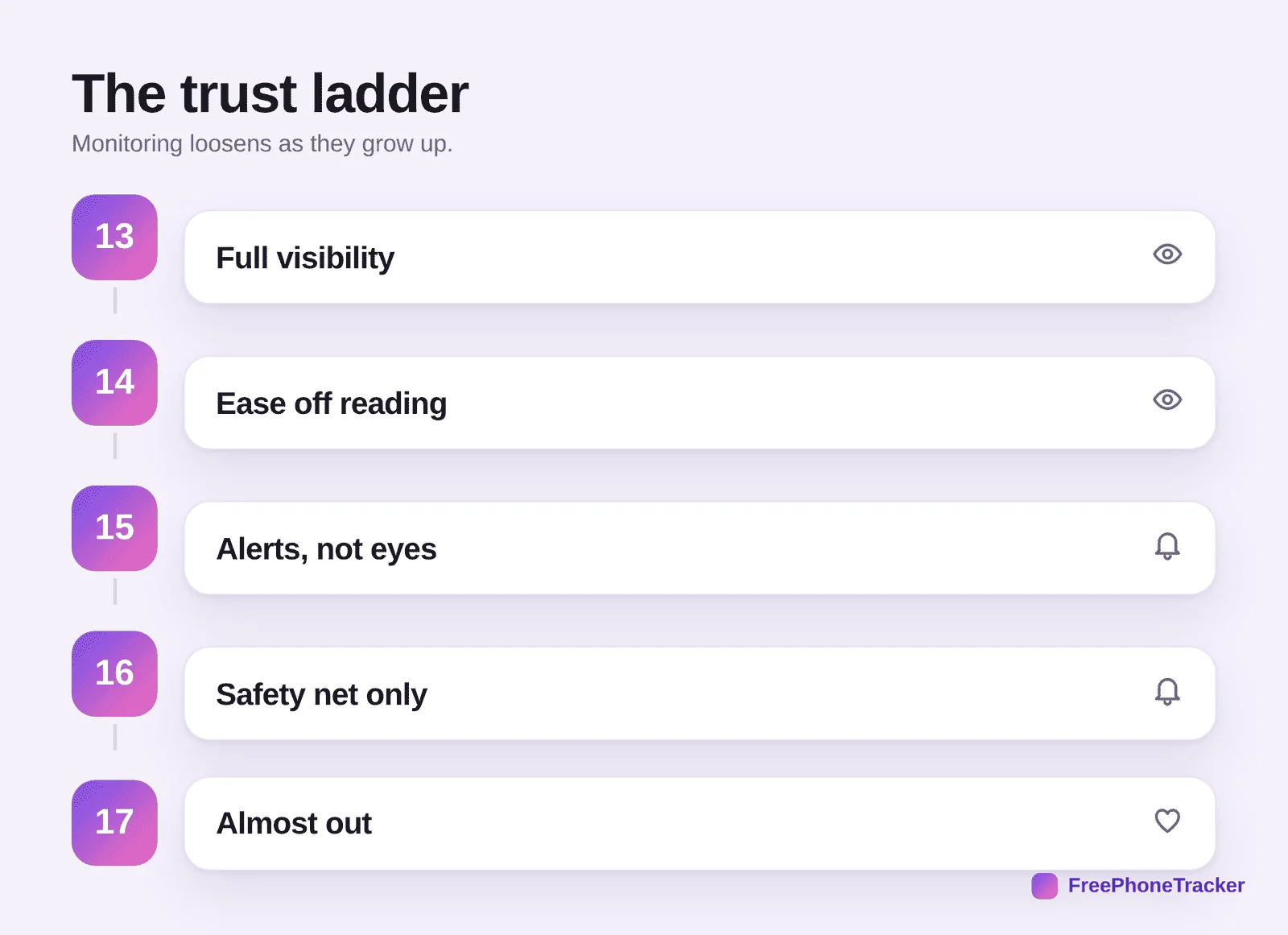
At thirteen, you’re on training wheels. Full visibility, lots of talking, location shared both ways. By fifteen, you’ve mostly stopped reading messages. You rely on keyword alerts and check-ins instead. By seventeen, you’re down to shared location and an open door. The direction matters as much as any setting. Your teen should feel the leash getting longer, not tighter.
Alerts, not eyes
Reading your teenager’s every message is a bad idea. Two reasons. It wastes your time. And when they find out, and they will, it detonates the trust you were protecting. The grown-up move is to let the software watch for the danger signs and stay out of everything else.
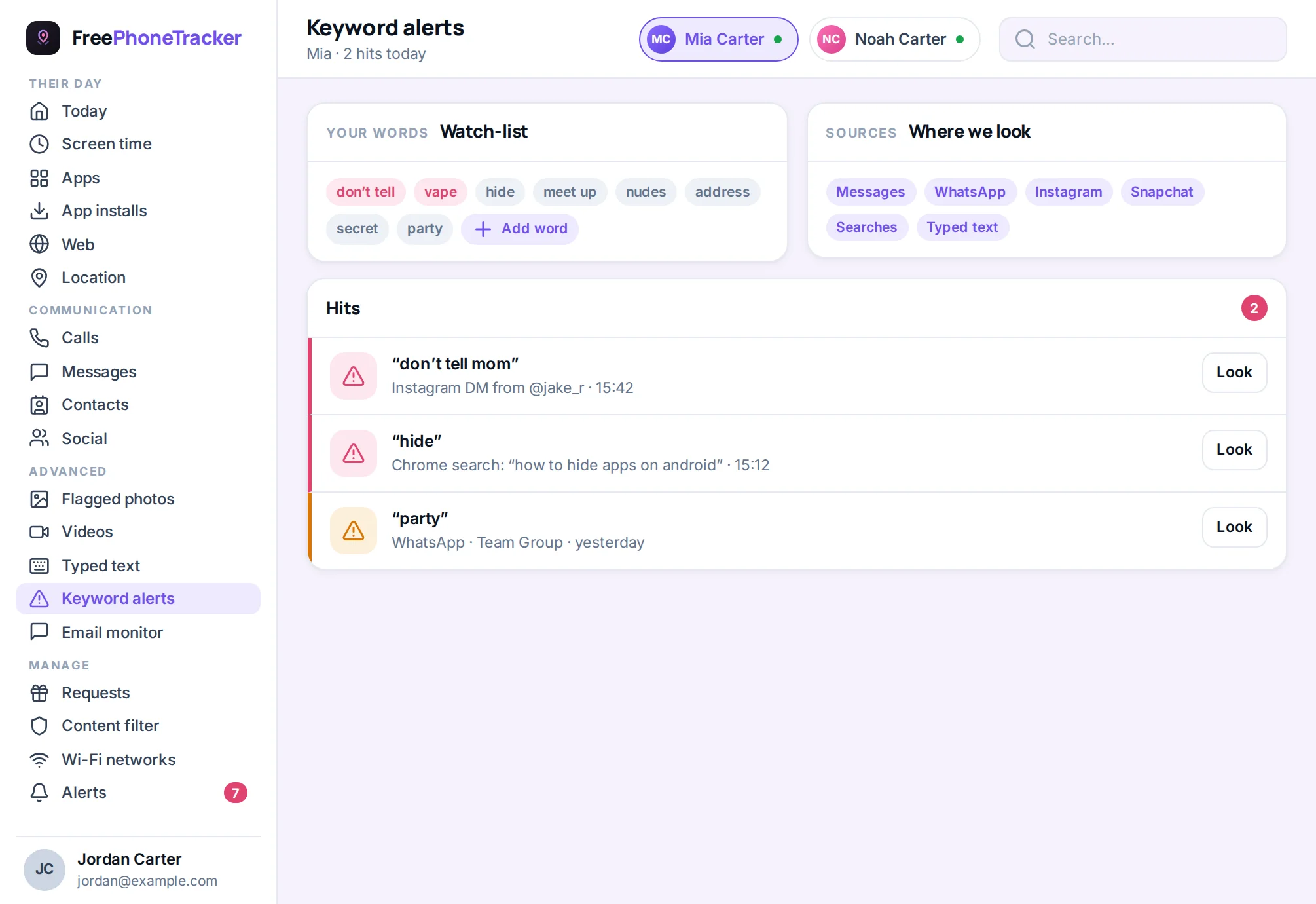
This is where keyword alerts earn their keep. You set the triggers. Terms tied to self-harm, drugs, meeting strangers, explicit content. The app pings you only when one appears. The rest of your teen’s digital life stays private. That’s exactly right. Safety without surveillance.
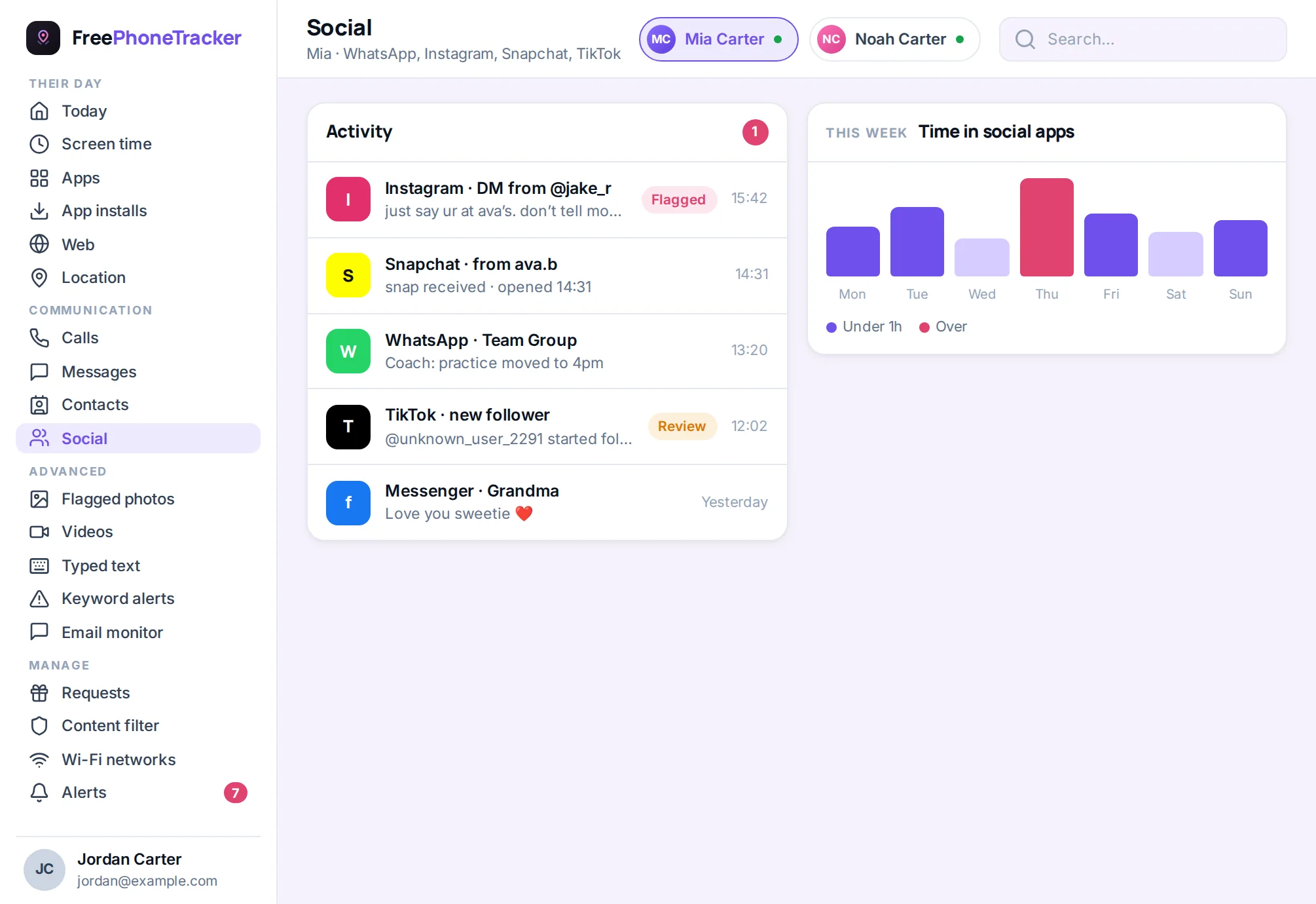
The same idea applies to social media. You’re not reading every DM. You’re watching for the pattern that signals trouble. A much older account messaging them. A spike in late-night activity. Requests for photos.
What to watch, and what to let go
Respectful monitoring means being ruthless about one line: safety versus curiosity. Your teen’s crush is not a safety issue. Their opinion about their teacher is not a safety issue. Resist the urge to peek at the ordinary, embarrassing, none-of-your-business stuff. The day they catch you reading it is the day they stop telling you anything.
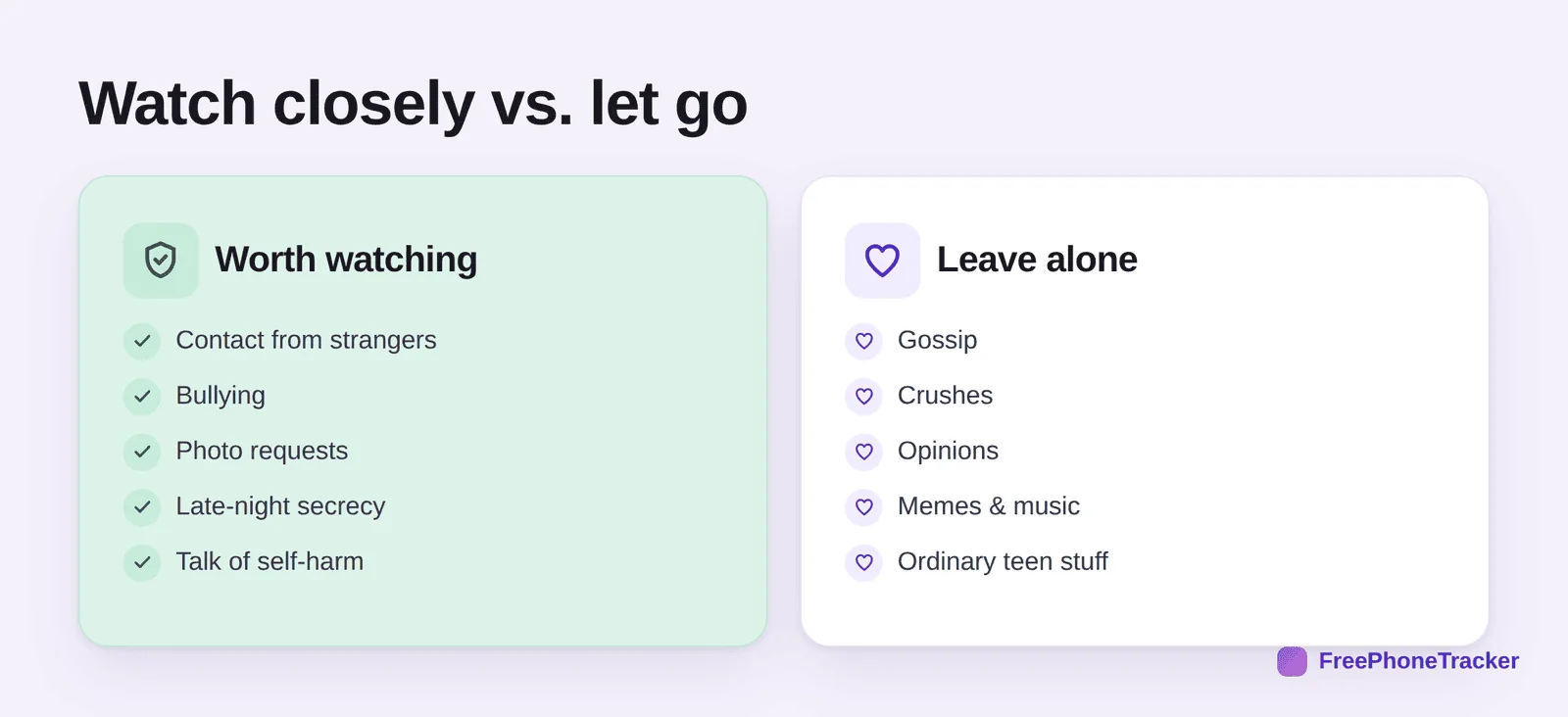
Watch closely for contact from adults they don’t know. Bullying, given or received. Requests for or sharing of images. Late-night secrecy paired with mood changes. Any talk of self-harm or meeting a stranger. Let go of the gossip, the crushes, the memes, the music, and opinions you disagree with. If it isn’t a safety issue, it isn’t your business. Acting like it is will cost you the access you actually need.
The platforms worth understanding
You don’t need to master every app. But knowing where the risks cluster helps you aim your attention. Each platform carries a different pressure.
Snapchat runs on disappearing messages and streaks. Great for friendships. It also lets stranger contact vanish without a trace. Instagram and TikTok run on public profiles and algorithms that can pull a teen toward extreme content fast. Discord and gaming chats are where a lot of stranger contact happens now. Parents watching only the big social apps miss them. WhatsApp group chats can normalise risk through peer pressure. You don’t have to ban these. Most are normal teen life. But social monitoring plus keyword alerts let you keep a light hand where trouble tends to start.
The red flags that justify a closer look
Respectful monitoring is mostly hands-off. Until specific warning signs appear. When several show up together, it’s fair to look closer and, if needed, to talk.
Sudden secrecy plus a change in mood. A new, older “friend” they won’t explain. Hiding the screen when you walk in. Money or gifts from nowhere. A sharp drop in sleep, appetite, or interest. Talk, even joking, about meeting an online contact. One sign alone isn’t a crisis. A cluster is your cue to lean in. This is what monitoring is for. Not daily surveillance. The chance to notice a pattern early and step in while it’s small.
Have the conversation
Secret monitoring of a teenager is a time bomb. Teens are savvy. They compare notes. They’ll find the app. When they do, the damage isn’t just an awkward evening. They learn that you go behind their back. Which teaches them to go behind yours. Openness isn’t the soft option. It’s the smart one.
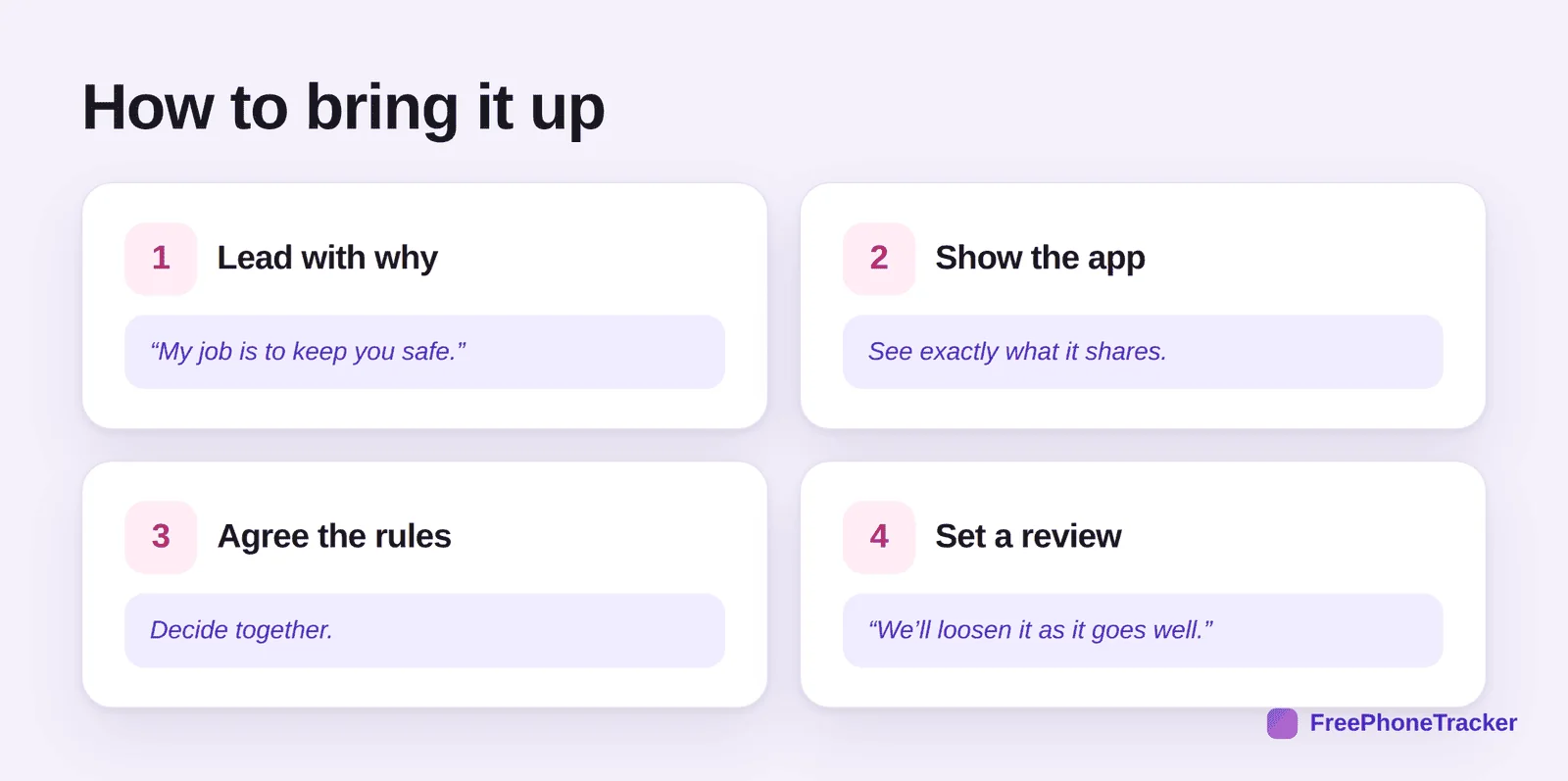
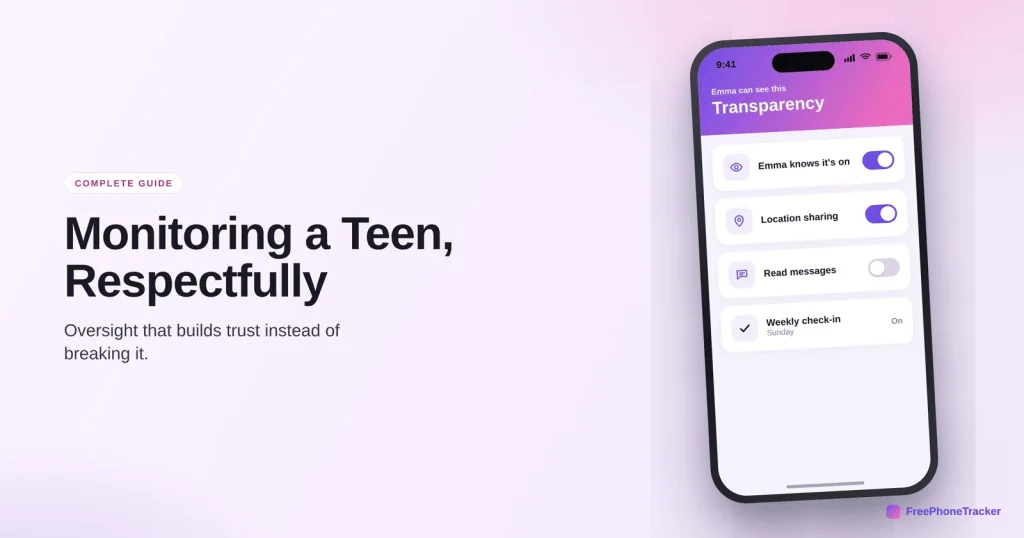
Lead with why. “My job is to keep you safe, not to spy on you.” Then show them the app. Open it together. Let them see what it shares. This is where FreePhoneTracker’s transparency helps. The app is honest about being there, so there’s nothing to hide and nothing to discover later. Agree the rules together, including what earns more privacy. Then set a review date. “Let’s check in monthly and loosen this as it goes well.” A teen who helped write the rules is far more likely to keep them.
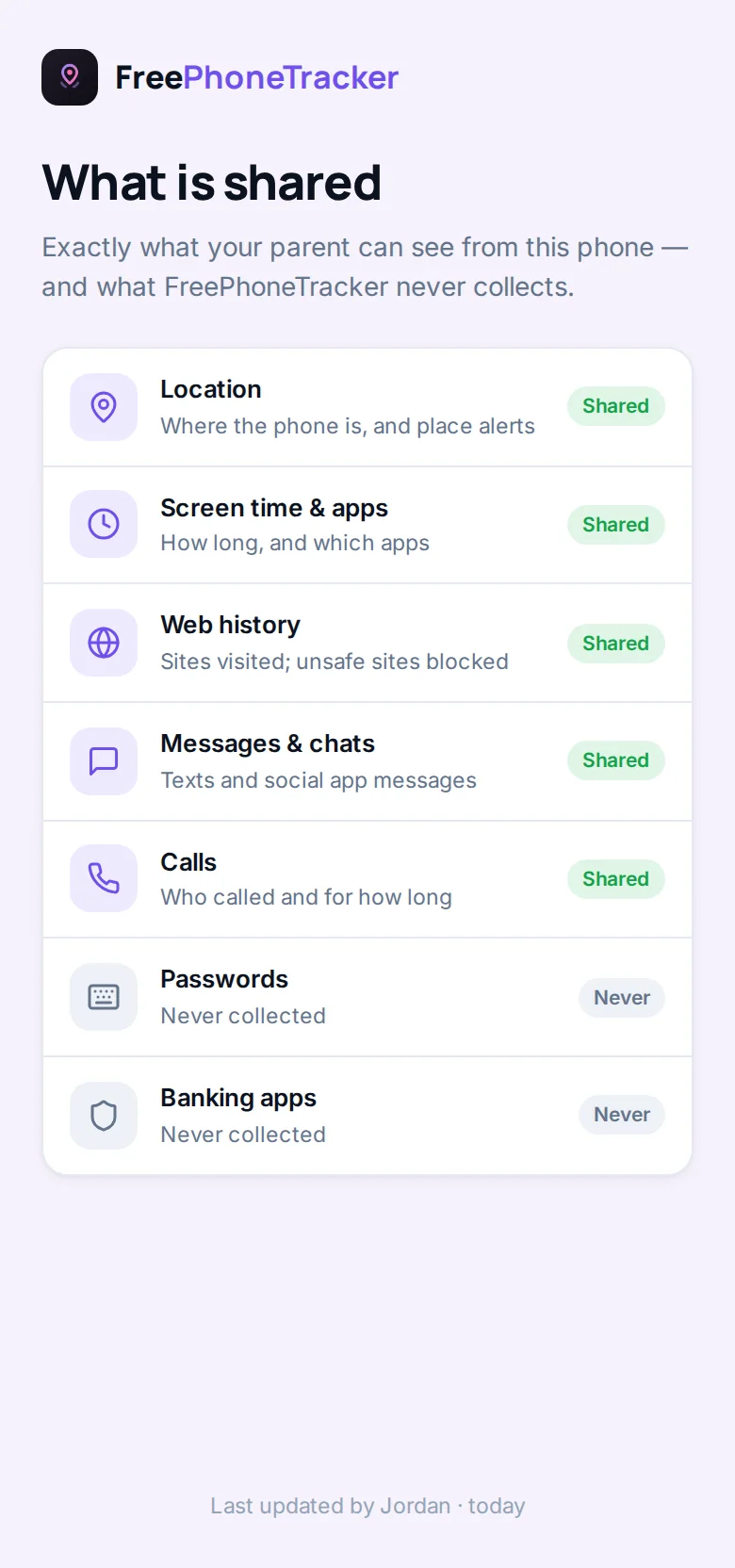
Keep location, drop the micromanaging
Of all the tools, shared location is the one teens accept most easily. Many of their friends already share location with each other. Keep it, but use it like an adult. “Did you get to the party safe?” is fine. Watching the map in real time to check they went where they said is micromanaging. It curdles into resentment. Set up place alerts for arrival and departure. You get the reassurance without the hovering.
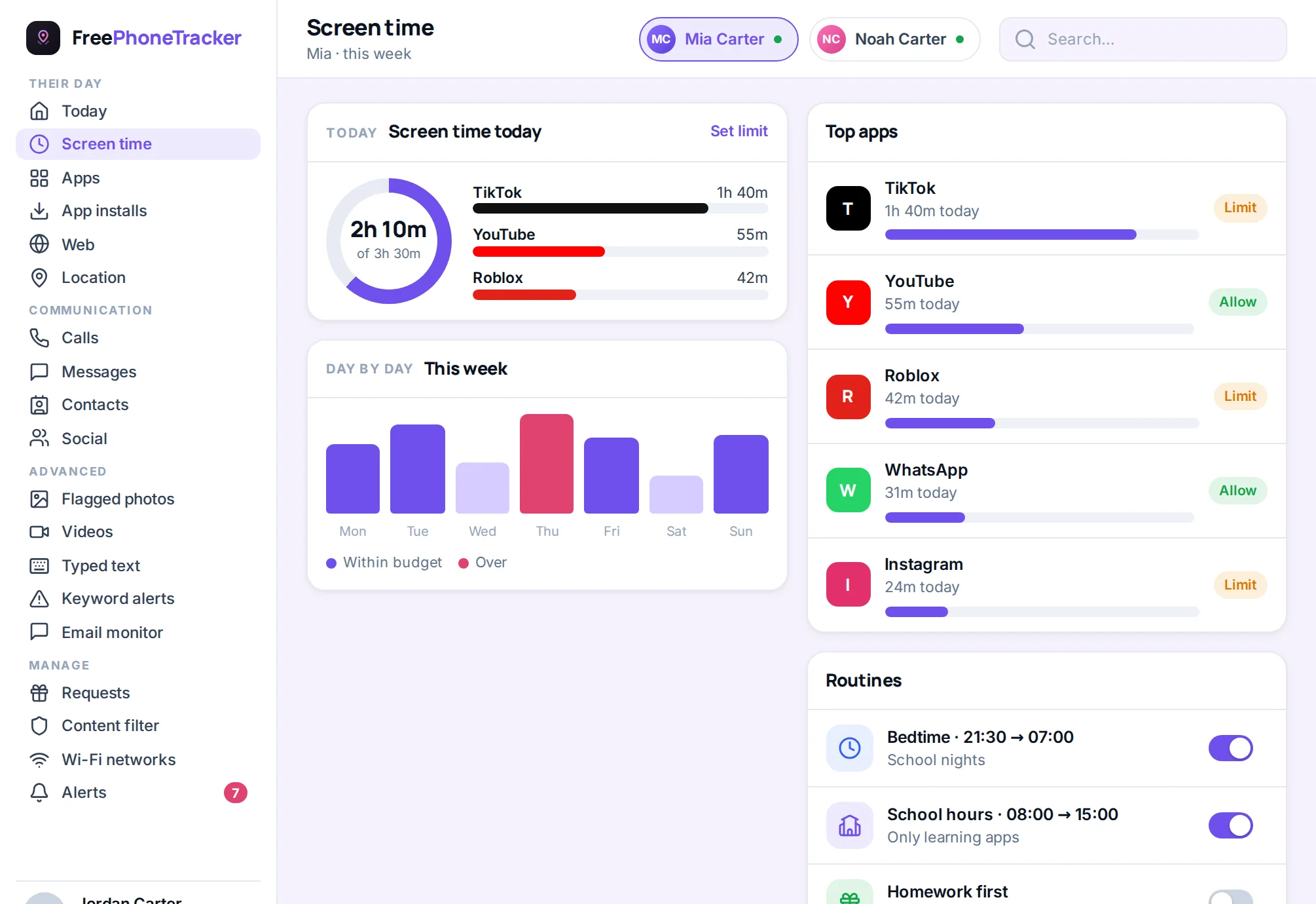
Screen time needs a lighter touch too. A ten-year-old needs a hard bedtime lock. A sixteen-year-old is two years from managing this alone. So your job shifts from enforcing limits to coaching self-control. More nudges and conversations, fewer locks. Our screen time by age guide has the age-by-age detail.
When an alert fires
The hard part isn’t setting up monitoring. It’s the day something flags. How you handle it decides whether your teen ever trusts the system again. A few rules. Don’t ambush them with a screenshot. Lead with concern, not accusation. And remember context. A flagged word in a song lyric isn’t a flagged word from a stranger.
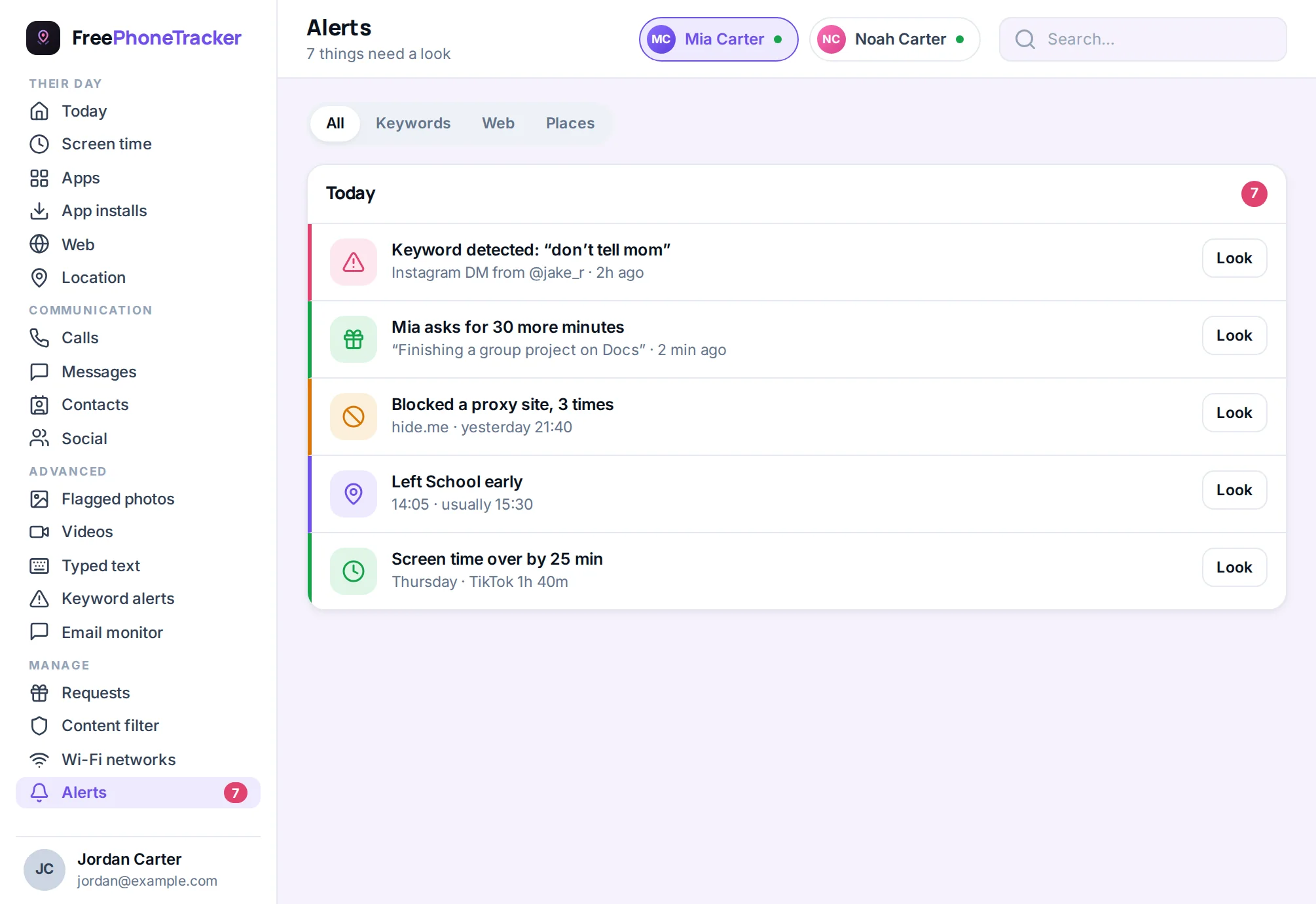
If it’s serious, grooming, a threat, talk of self-harm, that’s the moment monitoring earns its place. You act. If it’s a false alarm, own it. “I got an alert and wanted to check you’re okay” is a fine thing to say. It shows the system exists to protect them, not catch them out. Talk of self-harm is sensitive. An alert is a prompt to open a caring conversation, not to panic. If you’re worried your teen is in real distress, reach out to a professional or a trusted support line in your country. The app’s job is simply to make sure you don’t miss the signal.
A note on “spy apps”
The internet is full of apps that promise to hide completely and let you read everything invisibly. Resist. When they’re discovered, and on Android they usually are the first time the system updates, the trust damage is huge. Hidden apps also tend to be buggy, battery-hungry, and legally dubious. FreePhoneTracker doesn’t play that game. It gives you the full toolkit, location, calls, messages, social, typed text, screen time, while staying honest about being there. For a teenager, thorough and transparent is the only combination that lasts.
When they push back hard
Some teens shrug and accept it. Others treat it as war. If yours pushes back hard, don’t cave and don’t clamp down. Both teach the wrong lesson. Get curious about the objection instead. “I don’t trust you” usually means “I’m scared you’ll use this to control me, not protect me.” That fear is answerable. Show them the narrow scope of what you watch for. Offer the trade out loud: more responsibility earns more privacy, on a timeline you both agree. Be willing to negotiate the details, the app, the alerts, while holding the principle that safety comes first. A teen who feels heard, even when they don’t fully get their way, is far more likely to keep the deal.
The bottom line
Monitoring a teen respectfully is less about which features you switch on and more about the spirit you bring. Give them real privacy. Watch only for real threats to their safety. Be honest that the safety net exists. Let it shrink as they prove they can handle more. Do that, and monitoring becomes rare: a tool that keeps your teen safer and strengthens the relationship, instead of trading one for the other.
Ready to set it up the honest way? Get started free, or read our companion guide on child phone monitoring for iPhone and Android.