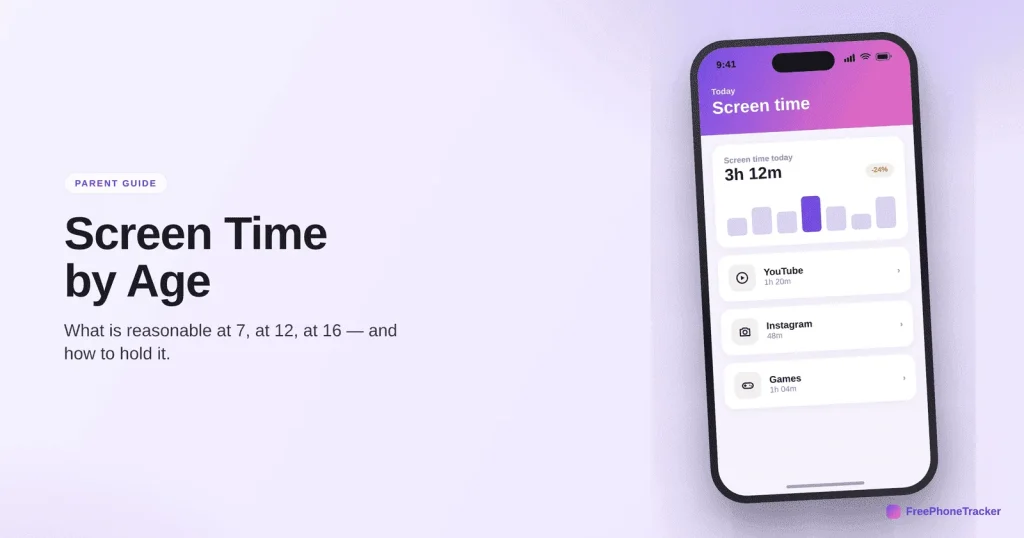
“How much screen time is too much?” Every parent asks it. No two experts give the same answer. The honest reply: it depends on your child’s age, and on what they’re actually doing. A toddler and a teenager need different rules. This guide gives you a clear starting point for each age. It explains what the guidelines really say. And it shows how to set limits that hold, without a fight every night.
- Screen time should grow with age. Almost none under 2. A few hours for teens.
- The guidelines care about sleep, quality and balance more than a magic number.
- Homework and video calls don’t count like scrolling does.
- Limits stick when the phone enforces them. Not when you nag.
A rough guide by age
Here’s the chart everyone wants. These figures are for fun screen time only. Games, videos, social. Not homework or family calls. Treat them as gentle targets. Your own child is the real guide.
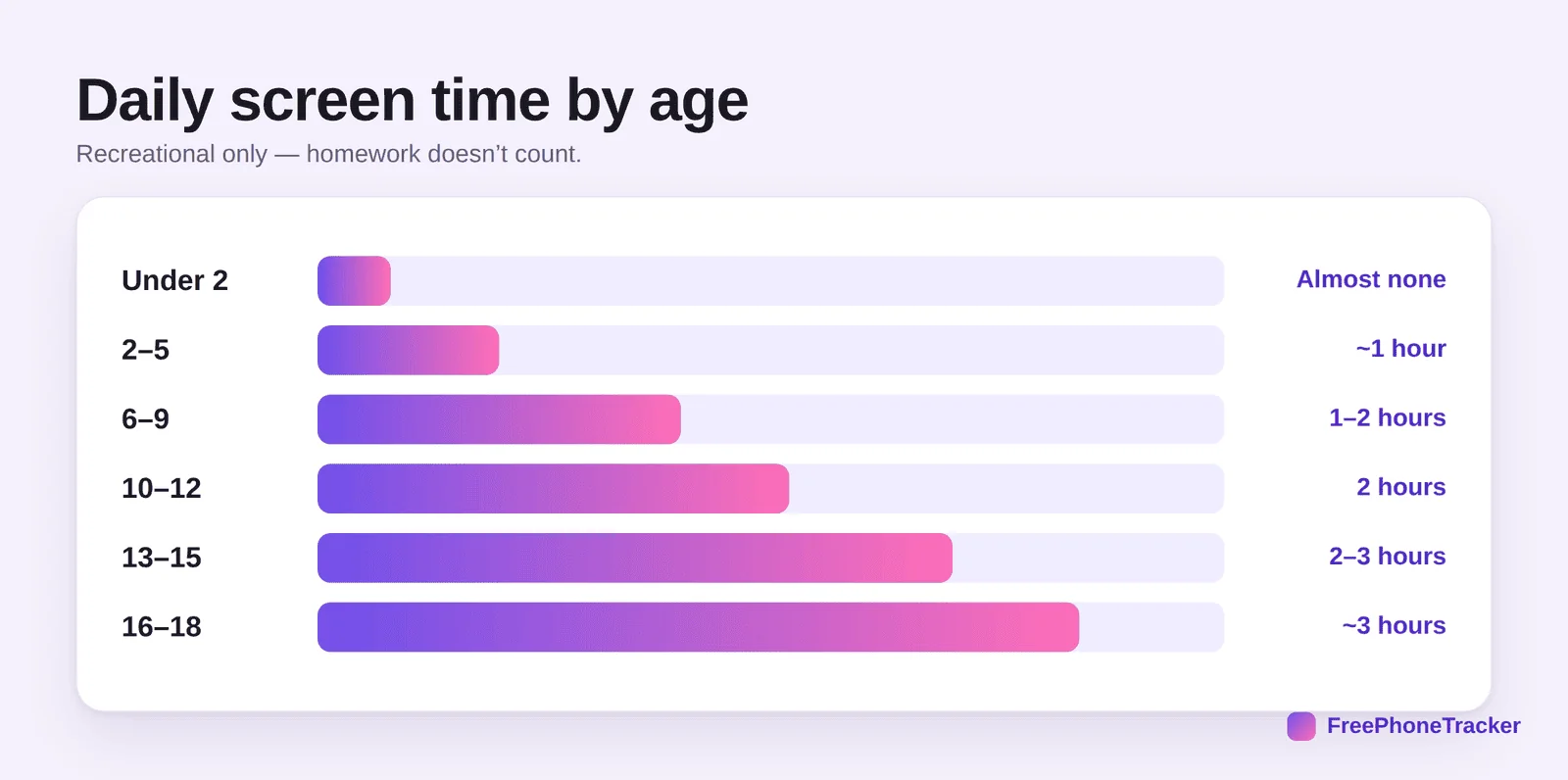
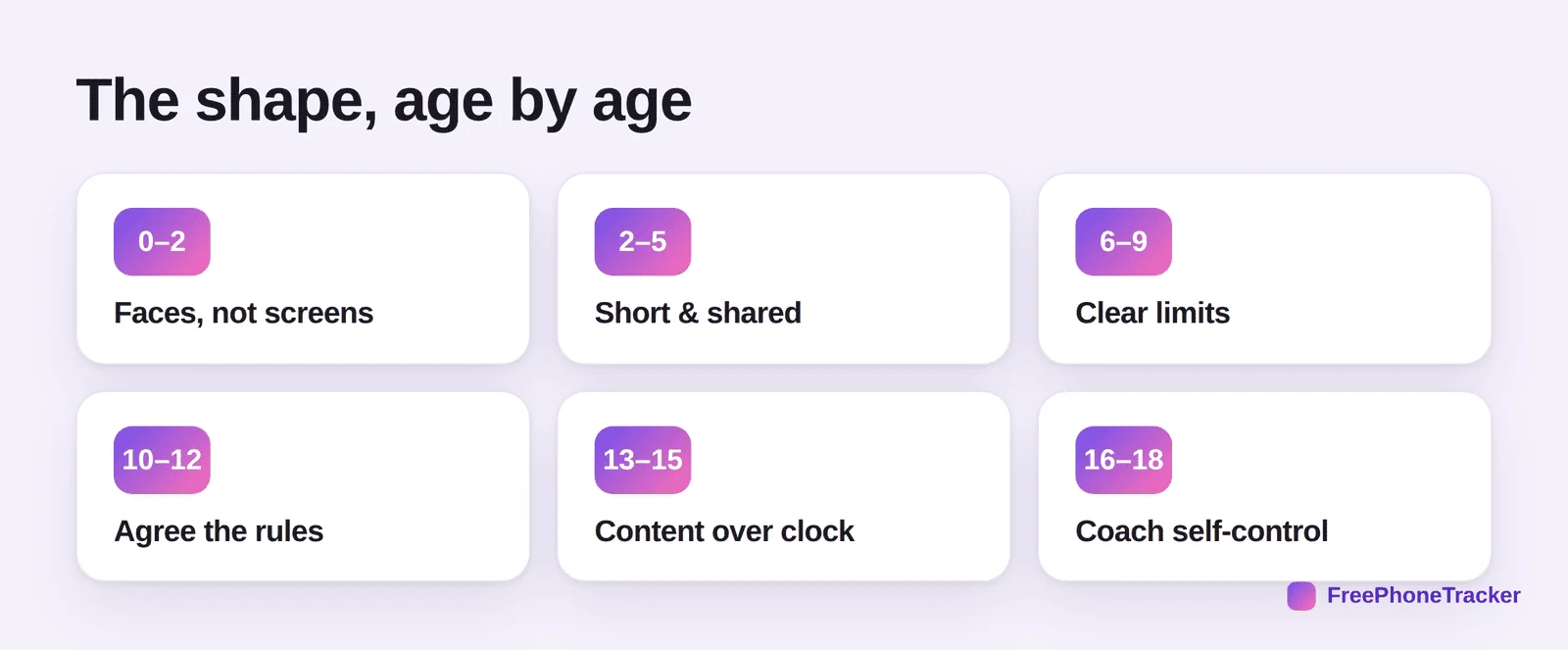
The shape matters more than any single number. Under two, skip screens beyond video calls with family. This is the age for faces. From two to five, keep it short and watch together. Through the primary years, one to two hours works well. Keep it out of meals and bedrooms. As kids hit their teens, the number climbs. Your focus shifts too, from the clock to the content, and to sleep.
What the guidelines actually say
The two big sources are the American Academy of Pediatrics (AAP) and the World Health Organization (WHO). Both have moved away from a single magic number for older kids. It’s worth knowing why.
For the youngest children, the numbers are firm. The WHO advises no screen time under 1. No more than one hour for ages 2 to 4, and less is better. The AAP agrees. Avoid screens other than video chat before 18 to 24 months. Keep it limited and shared for toddlers.
For school-age kids and teens, the AAP stopped naming a fixed hour count. Instead it tells families to build a media plan. The plan protects what matters: sleep, activity, homework, meals, and offline play. So screen time becomes a problem when it crowds out the good stuff. Not at some universal number of minutes.
Quality beats quantity
An hour of a video call with grandparents is not the same as an hour of scrolling. Every parent knows this. So sort screen use into three rough buckets. Creative and learning. Games and chat. Passive watching. Give the first a longer leash. Keep the last one shorter.
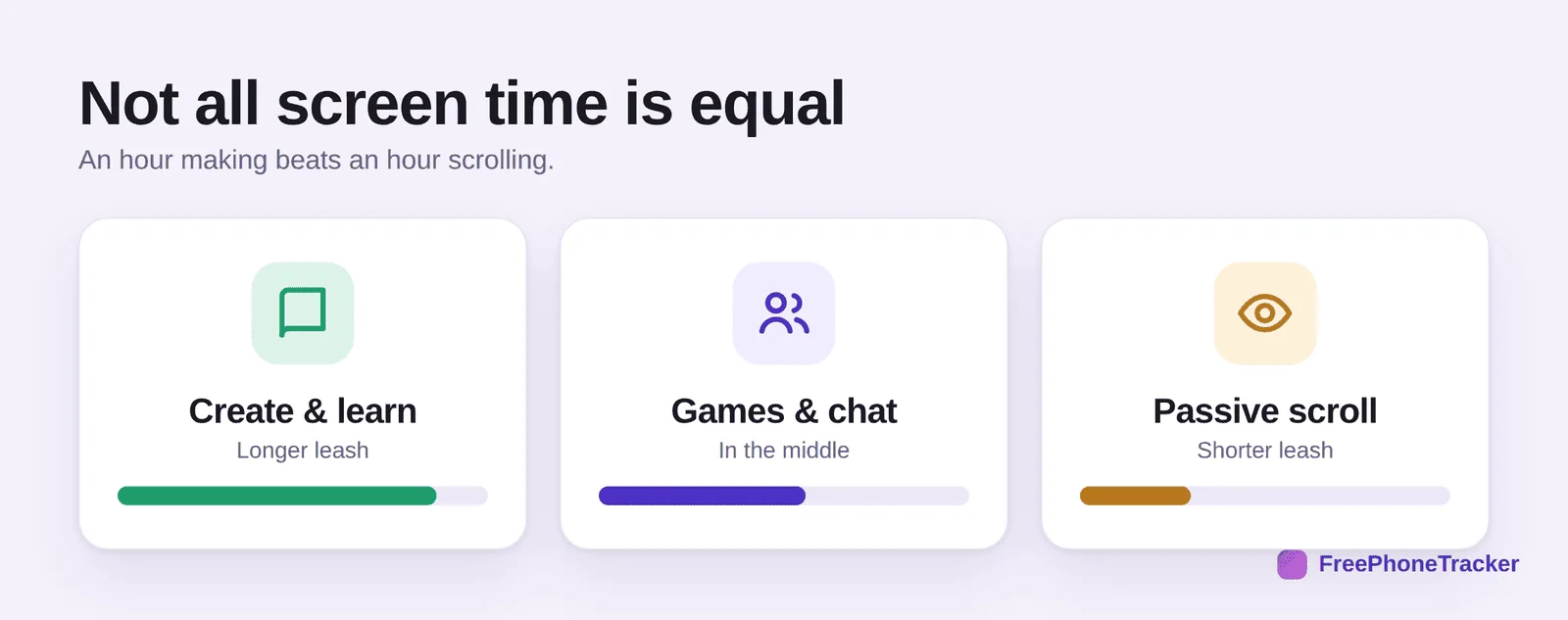
This is why a raw daily total can mislead. Two hours of coding, drawing, or reading is very different from two hours of autoplay. When you judge screen time, look at what’s on the screen. Not just the clock.
Watch for the signs of too much
Numbers are a starting point. Your child is the real dashboard. So watch behaviour, not just minutes. One or two of these now and then is normal. Several, most days, means it’s time to pull back.
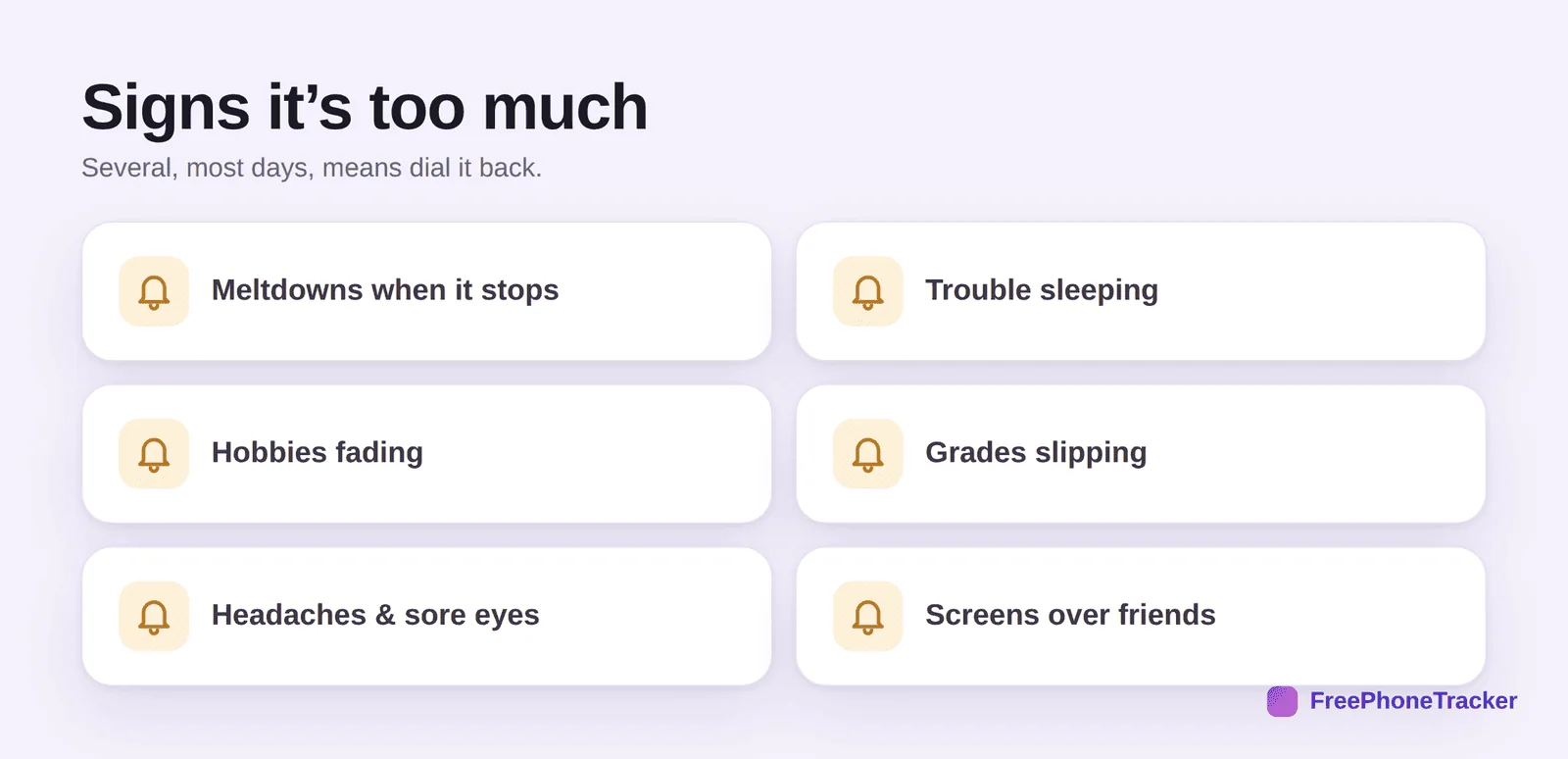
Meltdowns when it’s time to stop. Sleep slipping. Hobbies going cold. Grades sliding. Headaches and sore eyes. Choosing the screen over friends and family. These tell you more than any timer. If you see a cluster, reset the routine. Back it with limits the phone actually enforces.
Guard sleep first
If you take one thing from this guide, make it this. Protect sleep above every other rule. The research is clear. Screens before bed delay sleep two ways. The light suppresses melatonin. The content keeps the brain switched on. A phone in the bedroom overnight is worse. The urge to check it breaks sleep into pieces.
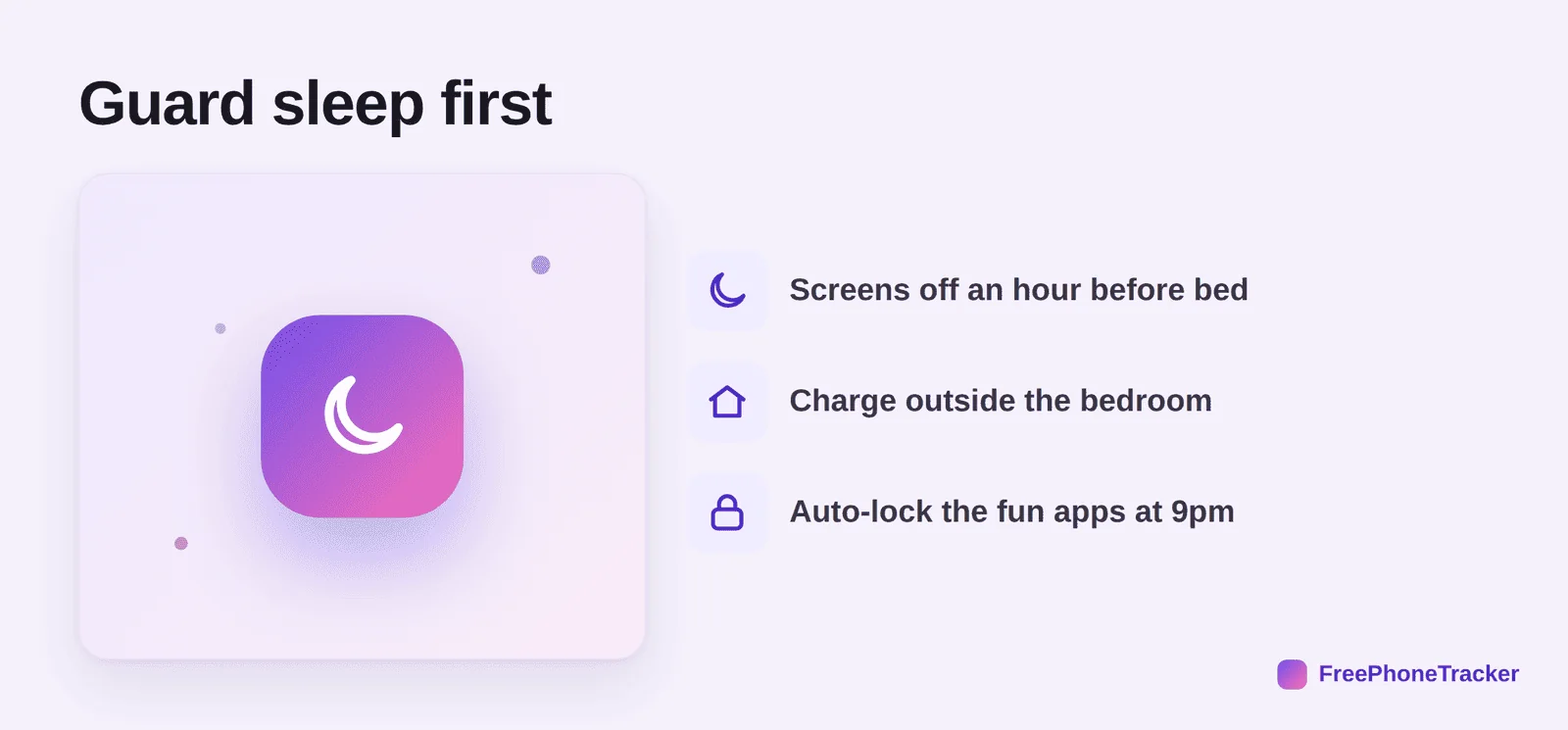
The fix is low-tech. Phones charge outside the bedroom overnight. The fun apps lock at a set hour. Calls and alarms still work. Everything else pauses. Kids who sleep well are calmer. They do better at school. And they’re far easier to reason with the next day. Sleep is the rule that makes the other rules work.
Build a simple media plan
Modern advice isn’t “X minutes.” It’s “make a plan that fits your family.” That sounds vague. Here’s how to make it real in fifteen minutes at the kitchen table.
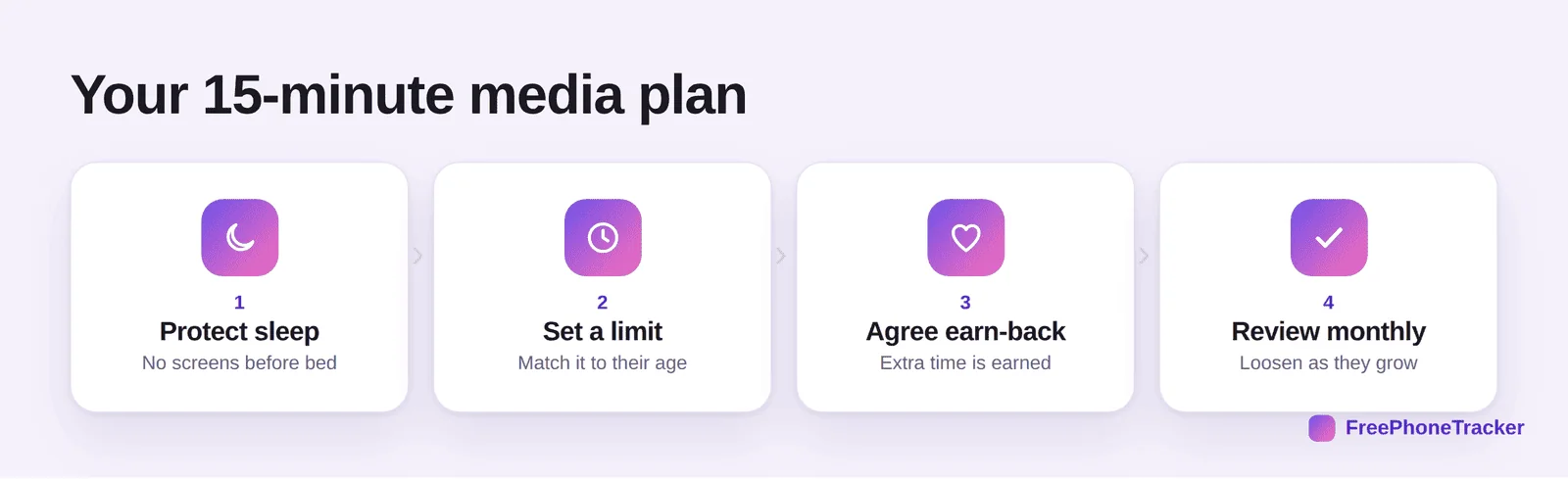
Start with the non-negotiables. Meals, the hour before bed, and bedrooms overnight stay screen-free. Protect sleep first. Then set a daily limit that matches your child’s age. Decide what counts against it. Games and social, yes. Homework and family calls, no. Agree the earn-back rules. How extra time is granted, and for what. Write it down. Put it on the fridge. Then apply the same spirit to the adults. Set a date to revisit it. A plan that fit a nine-year-old won’t fit an eleven-year-old.
House rules that make it easier
Software enforces. Culture sustains. The families who win this game keep a few plain rules that everyone follows, parents included. Keep them few. Keep them firm.
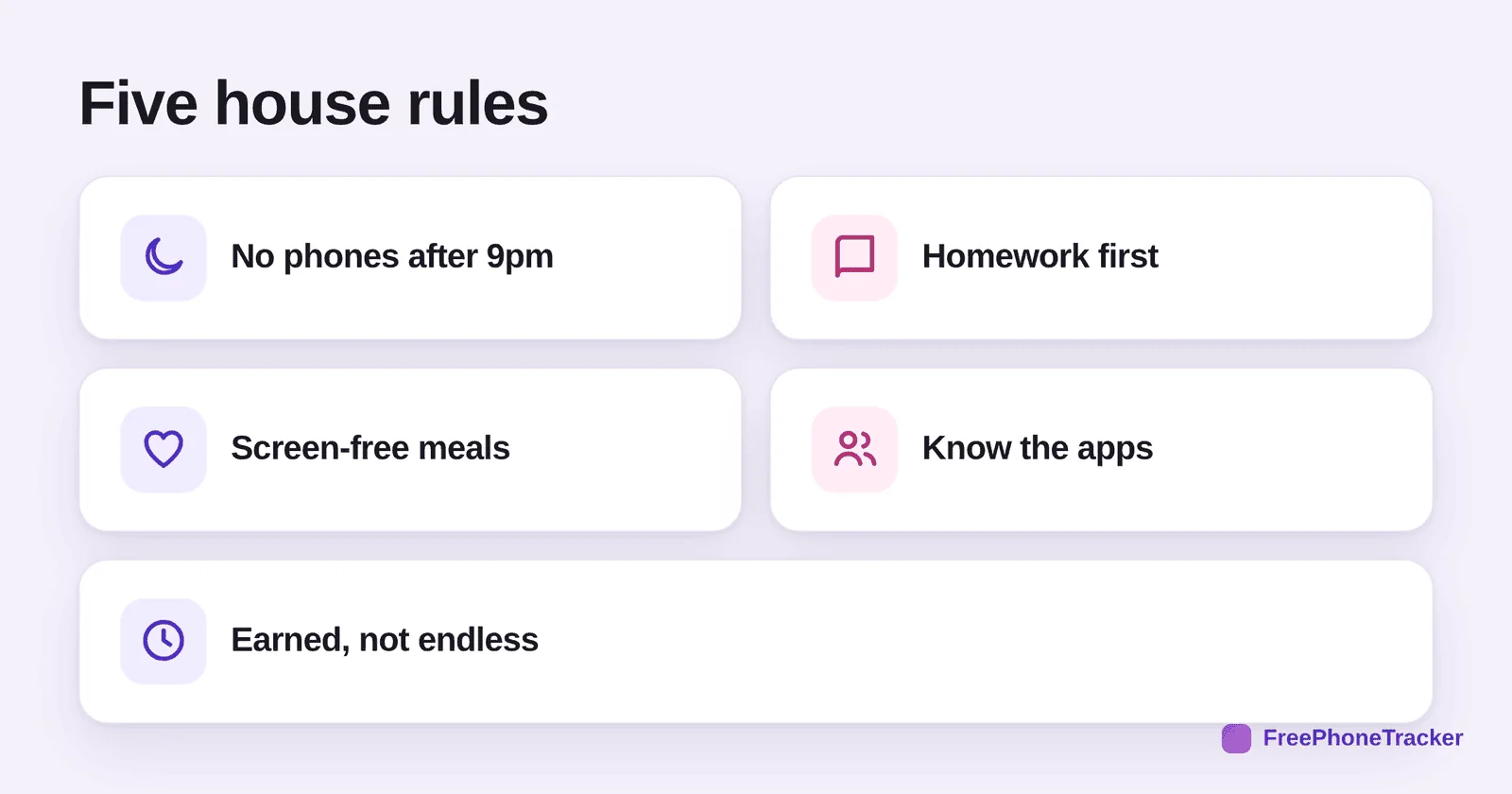
No phones after a set hour. Charge them outside the bedroom. Homework before fun. Screen-free meals, for the grown-ups too. That last part is what makes it credible. A quick chat before any new app goes on. And extra time is earned, not the default. A content filter helps here. It keeps the time they do get on age-appropriate material.
Setting limits that stick
Every parent has lost the “ten more minutes” negotiation. Here’s why nagging fails. It makes you the timer. And kids will always argue with a person. So let the phone be the timer instead. When the limit is a rule the device enforces, there’s no one to argue with. The game just pauses. You get to be the sympathetic parent, not the enforcer.
A good screen-time setup gives you three levers. A daily limit for fun apps. A bedtime, after which those apps lock. And homework hours, when only school apps work. Set them once. The day runs itself. One rule above all: be consistent. Enforcing the limit on Tuesday and caving on Wednesday is the fastest way to lose it.
When they push back
They will push back. That’s normal. Don’t cave, and don’t clamp down harder. Both teach the wrong lesson. Get curious instead. Ask what the objection really is. Often it’s fear of missing out, or feeling singled out because a friend has no limits. Name it. Then explain the why in one line: this protects your sleep and your focus, not my mood. Offer a trade they can see. More responsibility earns more freedom. Put it on a timeline you both agree. A child who helped set the rule is far more likely to keep it.
Expect a rough first week. New limits always sting at first. Hold steady. The meltdowns fade fast once the phone, not you, is the one saying “time’s up.” Consistency is what turns a rule into a habit. After that, it mostly runs itself.
Do it as a family
Screen-time rules land better when they aren’t aimed only at the kids. Charge your own phone outside the bedroom too. Put it away at meals. Take a screen-free hour in the evening together. Children copy what they see, not what they’re told. If the adults scroll through dinner while the kids can’t, the real rule they learn is simple: screens win. Model the balance you want. It’s the loudest lesson in the house.
Age by age, in more detail
- 0–2
Faces, not screens
Skip screens beyond video calls with family. This is the age for talking, singing and play.
- 2–5
Short and shared
Up to about an hour. High quality. Watch together. Co-viewing turns watching into learning.
- 6–9
Clear limits
One to two hours. Keep meals and bedrooms screen-free. A great age to set the routine early.
- 10–12
Agree the rules
Around two hours. Now negotiate it with them. Buy-in at this age pays off in the teen years.
- 13–15
Content over clock
Two to three hours. Focus on what they’re doing. Protect sleep hard.
- 16–18
Coach self-control
Around three hours, mostly self-managed. They’ll be doing this alone soon. Coach the skill now.
Weekends and holidays
Weekday and weekend limits don’t have to match. Most families give a little more slack on Saturdays and in the holidays. That’s fine. The trick is to decide the weekend number in advance, not in the moment. “Two hours on school nights, three on weekends” is a clear rule. “We’ll see how the day goes” is a negotiation you’ll lose. Keep the sleep rules the same all week, though. A late night is a late night, holiday or not. And watch the long stretches. A rainy Sunday can slide into six hours before anyone notices. Plan one offline thing each weekend to break it up.
Common questions
Does homework count as screen time?
Not the same way. This guide is about fun screen use. Homework and family video calls are the good screen. You want to protect it, not limit it.
Is screen time bad?
No. Screens are part of modern childhood. Much of it is positive. Learning, creating, staying close to friends. The aim is balance, not a ban. Don’t let the screen crowd out sleep, movement and real life.
How do I enforce limits without a daily fight?
Let the phone enforce them. When the limit is automatic and consistent, there’s nothing to argue about. See our screen-time features. And loosen the rules as kids get older, so they feel fair.
What about teenagers?
Teens need a lighter touch. The goal is self-regulation. Our guide to monitoring a teen respectfully covers it in depth. The complete monitoring guide shows how screen time fits with everything else.
There’s no perfect number of minutes. Any guide that promises one is overselling. What works is simpler. A sensible starting point for your child’s age. Attention to what they do on the screen. A few firm house rules. And limits the phone enforces, so you don’t have to. Get those right, and screen time stops being a nightly fight. It becomes one more thing you’ve quietly got handled. Get started free and set your first limit today.