Employee monitoring sits on a legal knife-edge: the same tracking can be perfectly lawful or a serious violation depending on consent, notice and scope. The rules vary by country and state, but the principles are remarkably consistent. This guide covers what’s legal, what isn’t, and how to stay on the right side.
- You usually need consent, and always need to give notice.
- You need a legitimate business purpose, and must keep it proportionate.
- Monitor company-owned devices, not personal phones.
- Rules vary by region — check your local law, and this isn’t legal advice.
The legal essentials
Wherever you are, most employee-monitoring law comes down to the same four ideas.
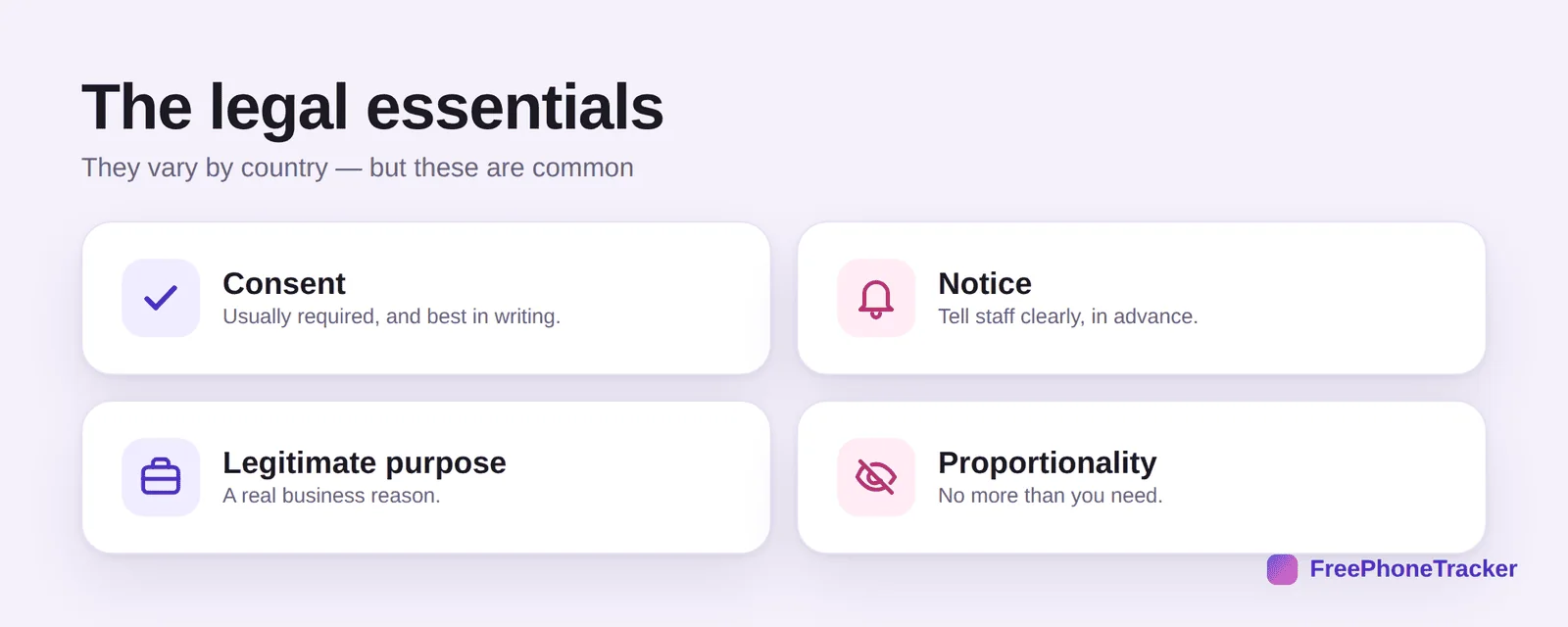
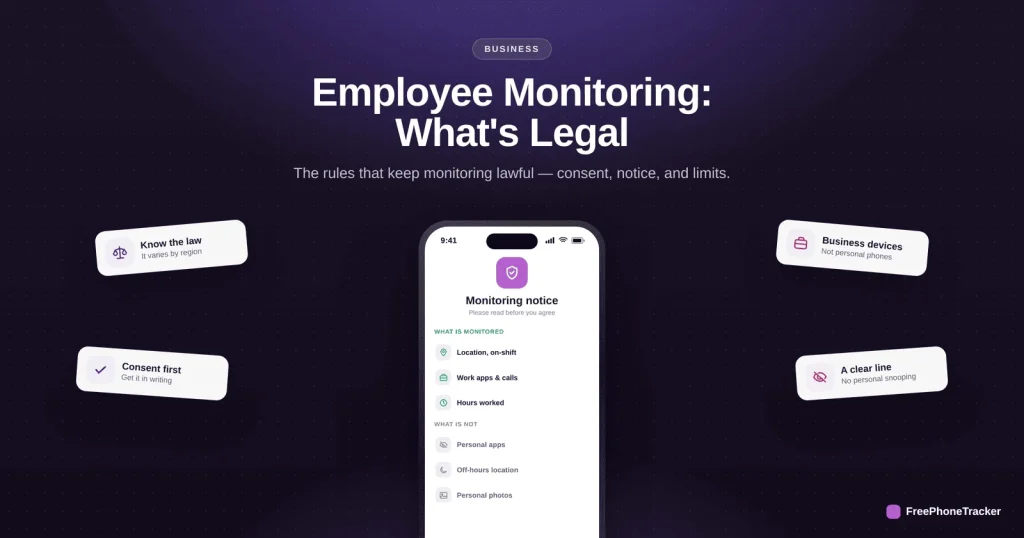
Consent, usually required, and best obtained in writing. Notice, tell staff clearly and in advance. A legitimate purpose, a real business reason like safety or security. And proportionality, collect no more than that purpose needs. Get these four right and you’re most of the way to compliant.
Where employers get it wrong
The lawsuits and complaints almost always trace back to the same mistakes.
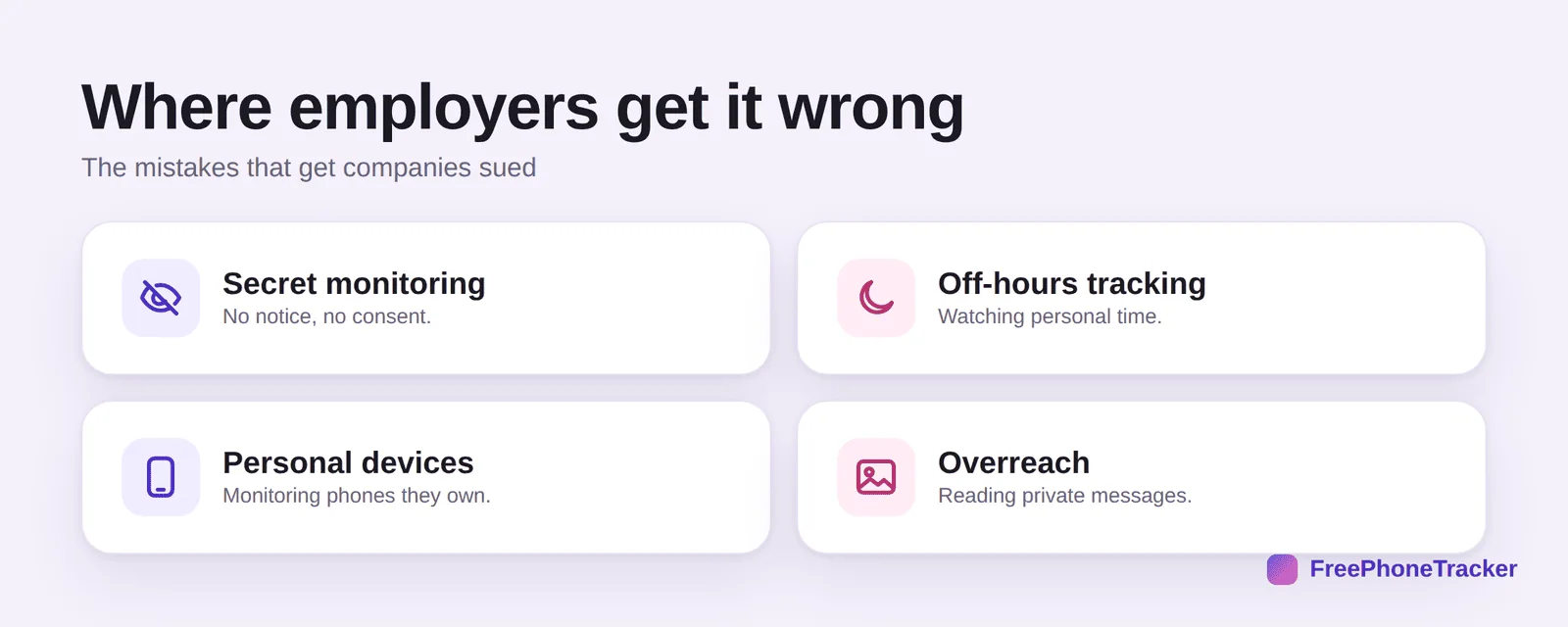
Secret monitoring with no notice or consent. Off-hours tracking that follows people into their personal time. Monitoring personal devices employees own. And overreach, reading private messages or collecting far more than the job needs. Each of these turns lawful oversight into a legal problem.
Stay on the right side
A short compliance checklist keeps you safe, but confirm the specifics for your jurisdiction.
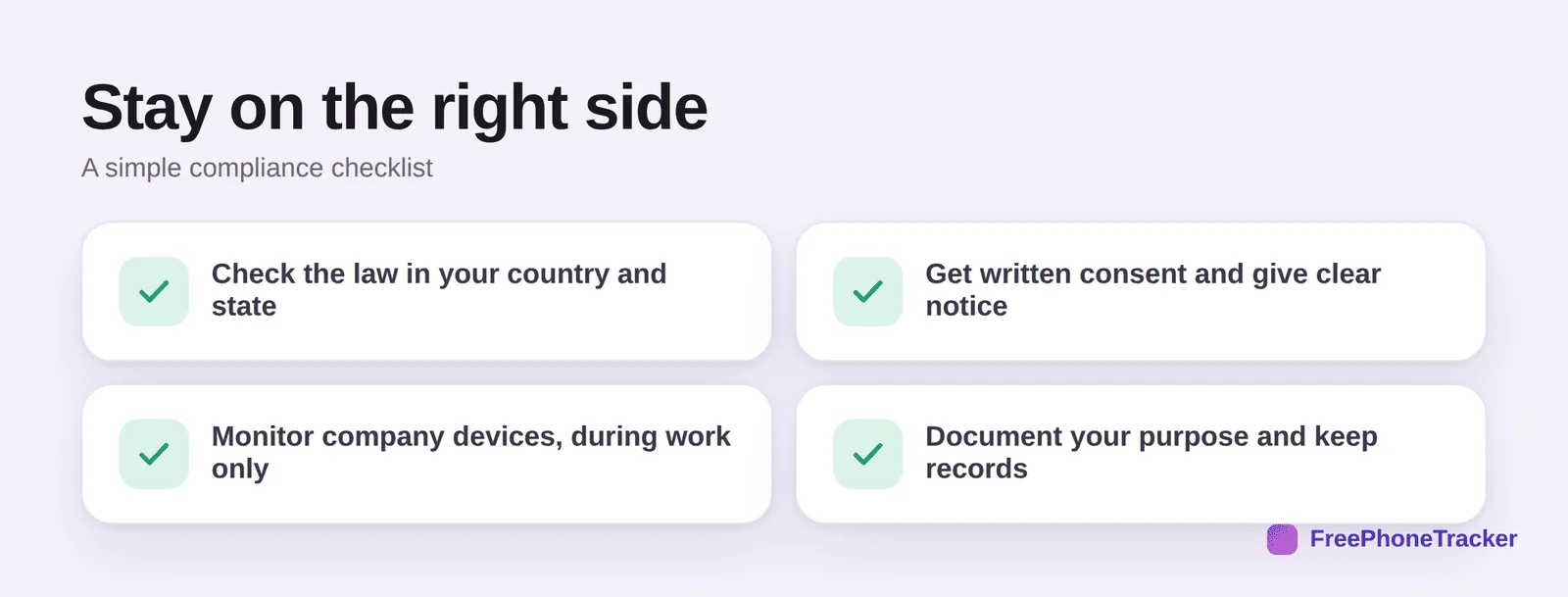
Check the law in your country and state, rules differ sharply (some places require consent, some two-party consent for calls, some works-council involvement). Get written consent and give clear notice. Monitor company devices, during work only. And document your purpose and keep records. When in doubt, ask a local employment lawyer.
Common questions
Do I legally need employee consent to monitor?
In most places, yes, or at minimum clear notice, and often explicit written consent. Some regions (and call recording specifically) require it from all parties. Check your local law.
Can I track an employee’s location?
On a company device, during work hours, with notice and a legitimate purpose, usually yes. Tracking off-hours or on a personal phone is where it becomes unlawful.
Is it legal to read employees’ messages?
Work communications on company systems are often monitorable with notice; personal messages generally are not. Reading private messages is a common and serious overstep.
What about employees’ personal phones used for work?
Monitoring a personal device is legally fraught. Prefer company-owned devices, or a managed work profile that isolates work data, and get explicit agreement.
Is this legal advice?
No, it’s general guidance. Employment and privacy law varies widely and changes often, so confirm the specifics with a qualified lawyer in your jurisdiction.
Employee monitoring is legal when it’s consented to, disclosed, purposeful and proportionate, and unlawful when it’s secret, excessive, or reaches into personal life. Nail the four essentials and check your local rules. Get started free, and read our guides to tracking company phones and writing a monitoring policy.