A monitoring policy is what turns “we track company phones” from a source of suspicion into something your team understands and accepts. It doesn’t need to be long or full of legalese, it needs to be clear, fair and honest. This guide shows what to include and how to write one in an afternoon.
- Cover scope, what you collect, when, and employees’ rights.
- Write it plainly — people should understand it without a lawyer.
- Say clearly what you will not do.
- Share it, explain it, and get a signature or acknowledgement.
What a good policy includes
Four sections cover almost everything. Keep each short and specific.
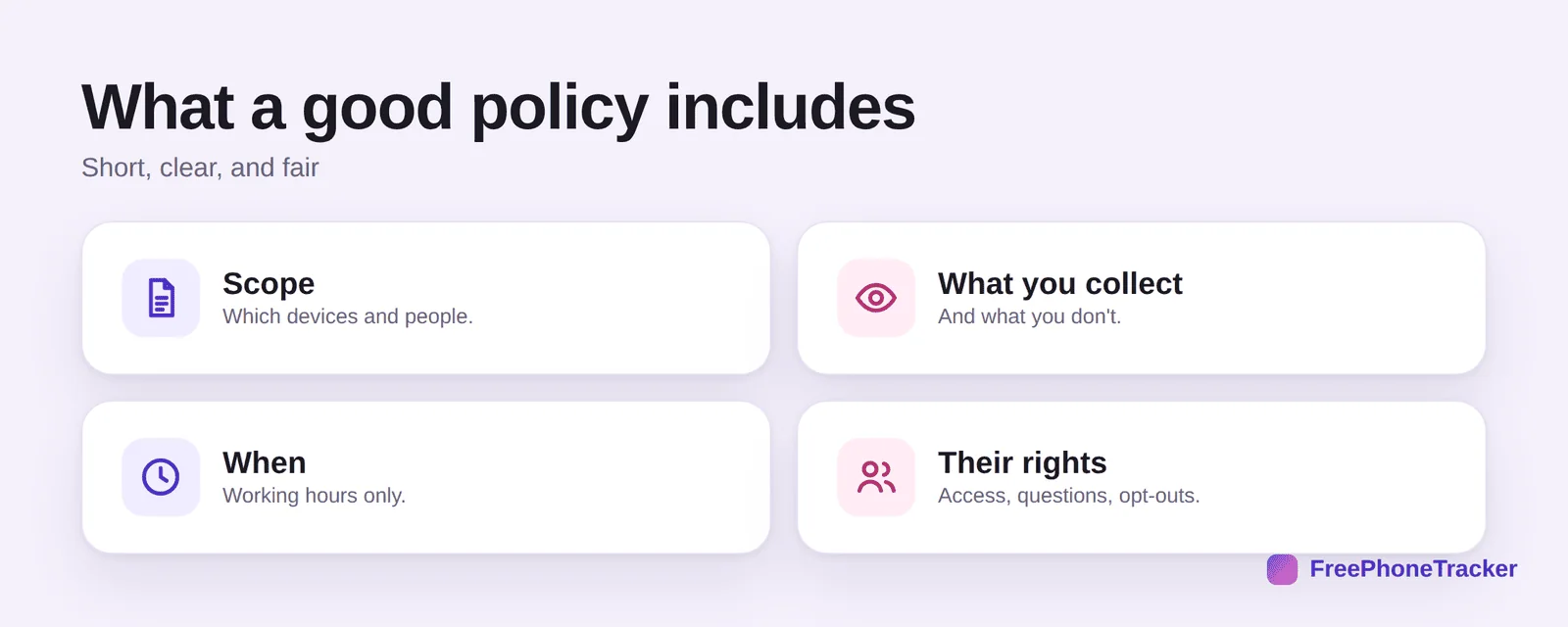
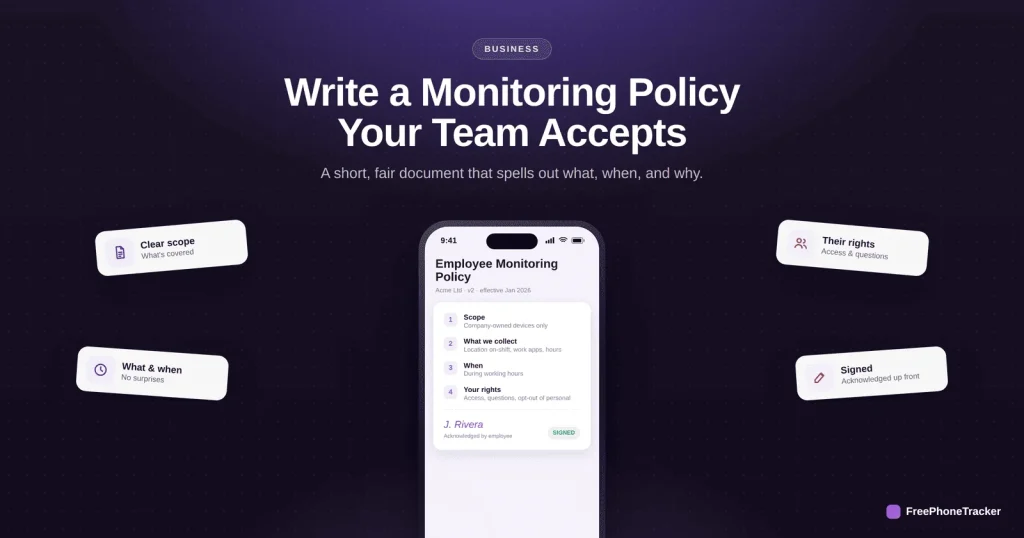
Scope, which devices and which people. What you collect, and just as importantly what you don’t. When, working hours only. And their rights, how to see their data, ask questions, and opt out of anything personal. That’s a complete, fair policy in four parts.
Write it in an afternoon
You don’t need a law firm to draft this, just clarity and a quick legal check.
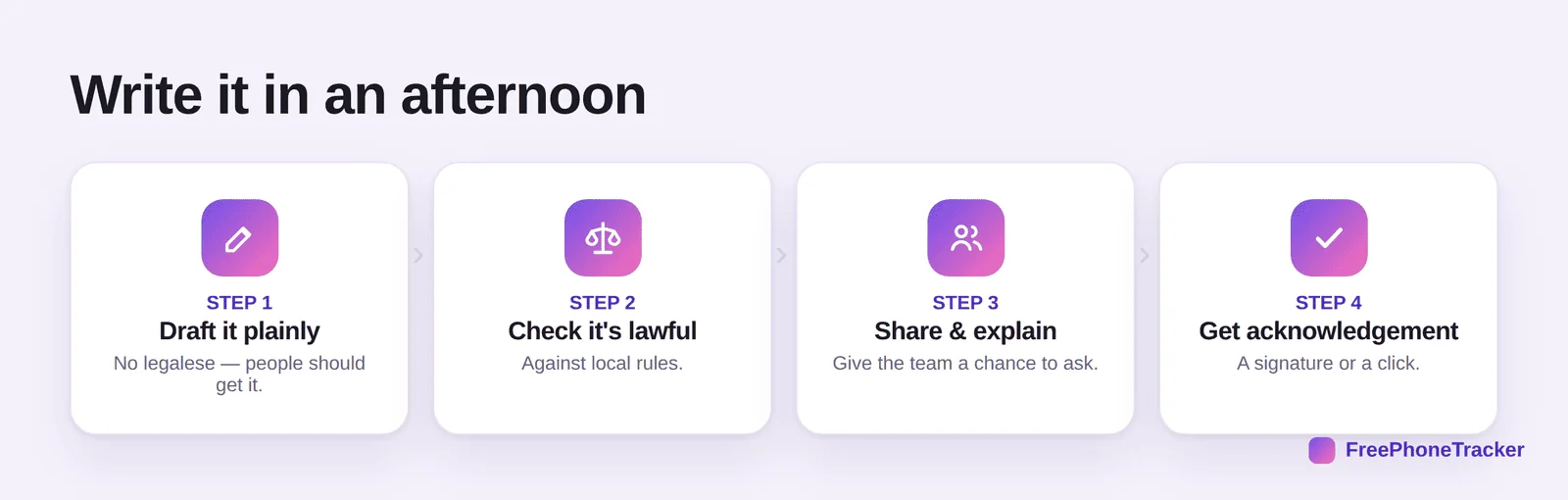
Draft it plainly, no legalese; people should get it on one read. Check it’s lawful against your local rules (see our legal guide). Share and explain it, giving the team a chance to ask. And get acknowledgement, a signature or a click, so consent is on record.
Make it land well
How you present the policy matters as much as what’s in it.
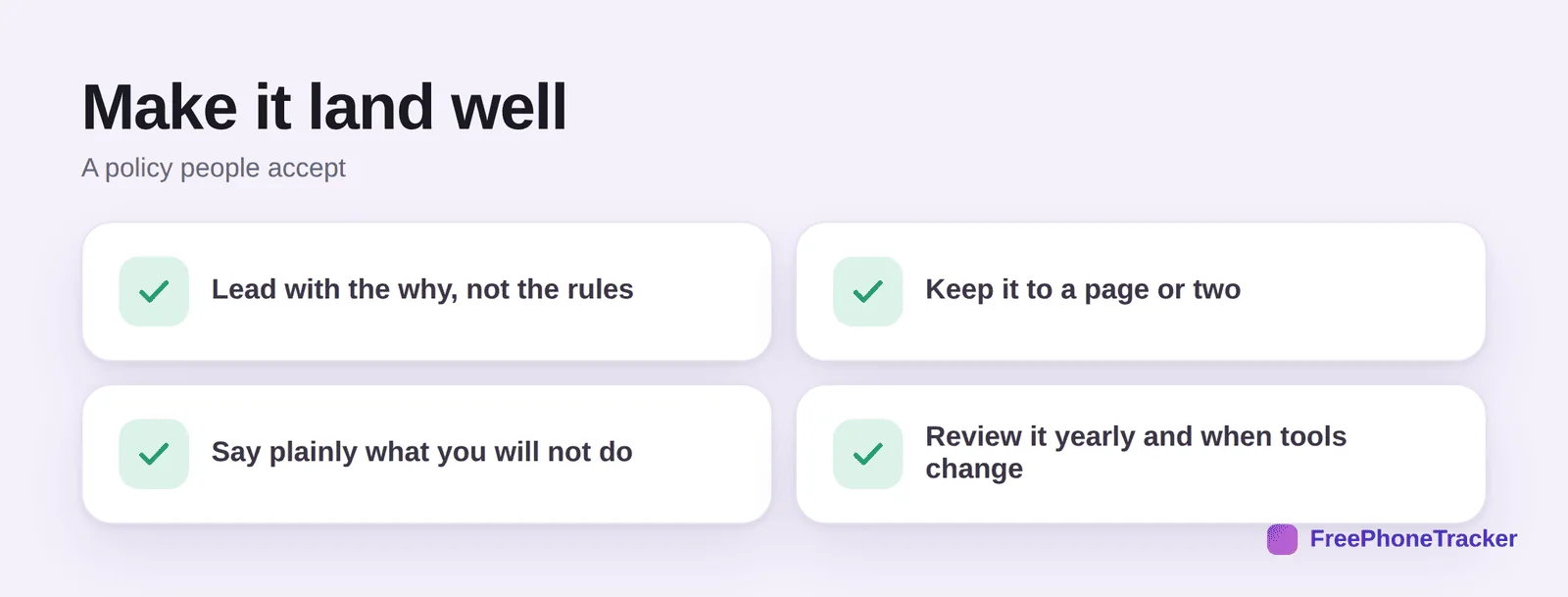
Lead with the why, not the rules. Keep it to a page or two. Say plainly what you will not do, that reassurance does a lot of work. And review it yearly, and whenever your tools change, so it stays accurate.
A sample structure you can copy
A workable policy fits on two pages. Open with purpose — one paragraph on why the company monitors (security, safety, compliance) and a plain statement that it is not used to judge personal lives. Next, scope: which devices and accounts are covered, and the clear line that personal devices and personal accounts are out of scope unless the employee opts into a BYOD arrangement. Then list what is collected, in a table if you can: category, example, how long it is kept, who can see it.
Follow with how the data is used and the review process — who can request access, what triggers a review, and how an employee is told if their data was looked at. Close with rights and contacts: how to ask what is held about you, how to raise a concern, and who owns the policy. Add a signature line and a date, review it once a year, and re-issue it whenever the tools change. Keeping it short is what gets it read.
Common questions
Do we really need a written policy?
Yes. It’s often a legal requirement, and it’s the single best way to make monitoring feel fair rather than sneaky. It also protects you if a dispute arises.
How long should the policy be?
A page or two. Long, dense policies don’t get read. Be specific about scope, data, timing and rights, and cut everything else.
What should we promise not to do?
Spell out that you won’t monitor personal apps, off-hours activity, or private messages, and won’t track personal devices. Naming the limits builds trust fast.
How do we record consent?
A signature on the policy, or an acknowledgement click in your system, dated and stored. Keep it on file alongside the policy version they agreed to.
Do we need a lawyer to write it?
You can draft it yourself, but have someone check it against local employment and privacy law before rollout, especially across multiple regions.
A good monitoring policy is short, honest and fair, cover scope, data, timing and rights, lead with the why, and get it acknowledged. That one document is what makes monitoring work socially, not just technically. Get started free, and read our guides to the legal essentials and tracking company phones.