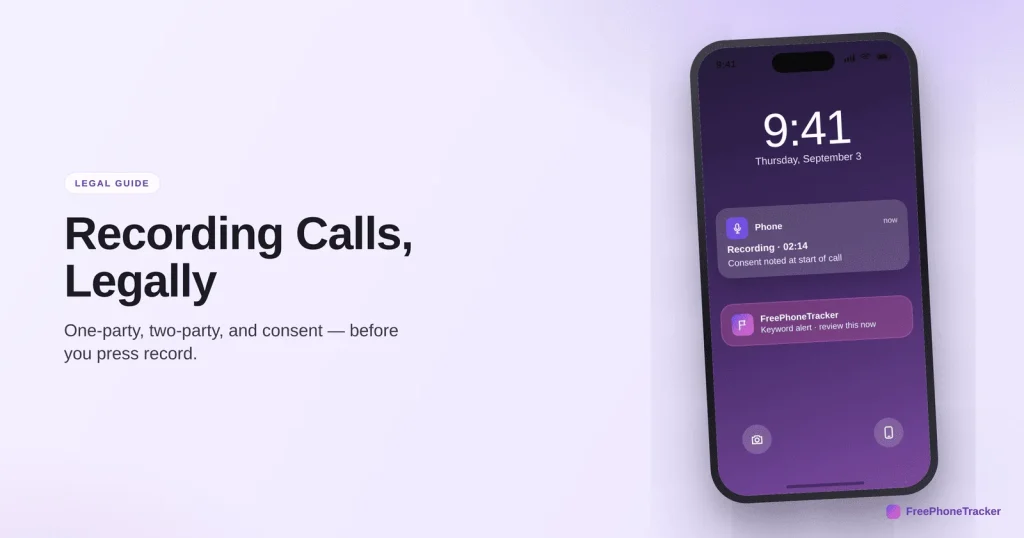
Recording a phone call sounds simple. Press a button, save the audio. The law is where it gets tricky. Record the wrong call in the wrong place and you could break the law, even on your own phone. This guide explains the rules in plain English: when you can record, when you can’t, and how to do it the right way. It’s general information, not legal advice, so check your local rules for anything serious.
- The key question: does your area need one-party or two-party consent?
- One-party: you can record a call you’re part of. Two-party: everyone must agree.
- For your own minor child, on a device you own, you’re on solid ground.
- When in doubt, announce it. “This call is being recorded” solves most problems.
The one thing that decides it: consent
Almost every call-recording law comes down to one question. How many people on the call need to agree? There are two answers, and which one applies depends on where you are.
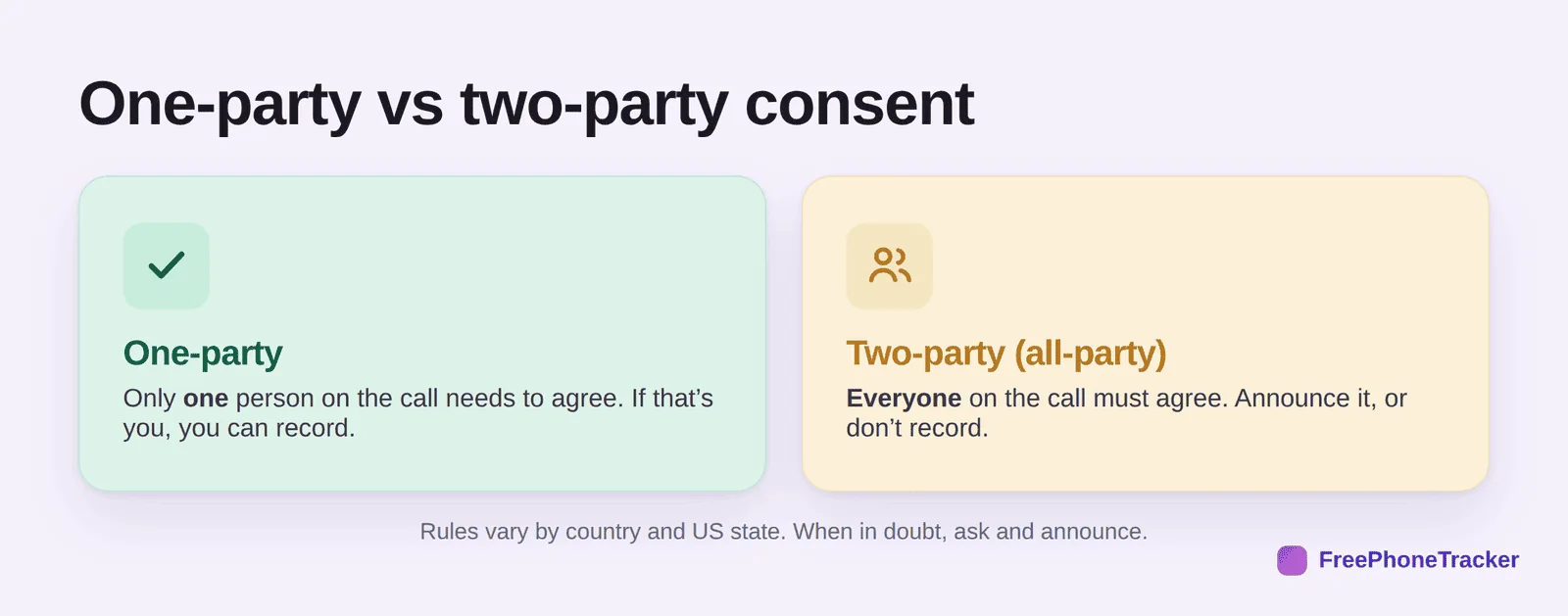
One-party consent means only one person on the call has to agree to the recording. If that person is you, you’re free to record. Most places, and most US states, work this way. Two-party consent, sometimes called all-party consent, means everyone on the call must agree. A number of US states, and many countries, require this. Record without telling the other person there, and you’ve broken the law, even if you were part of the conversation.
Because the rules vary by country and by US state, the safe move is simple. Assume the stricter rule applies. If you announce the recording at the start, you satisfy both. Nobody has ever been prosecuted for telling someone they’re being recorded.
When it’s OK, and when it’s not
Here’s the practical version. Most everyday recording falls clearly on one side of the line or the other.
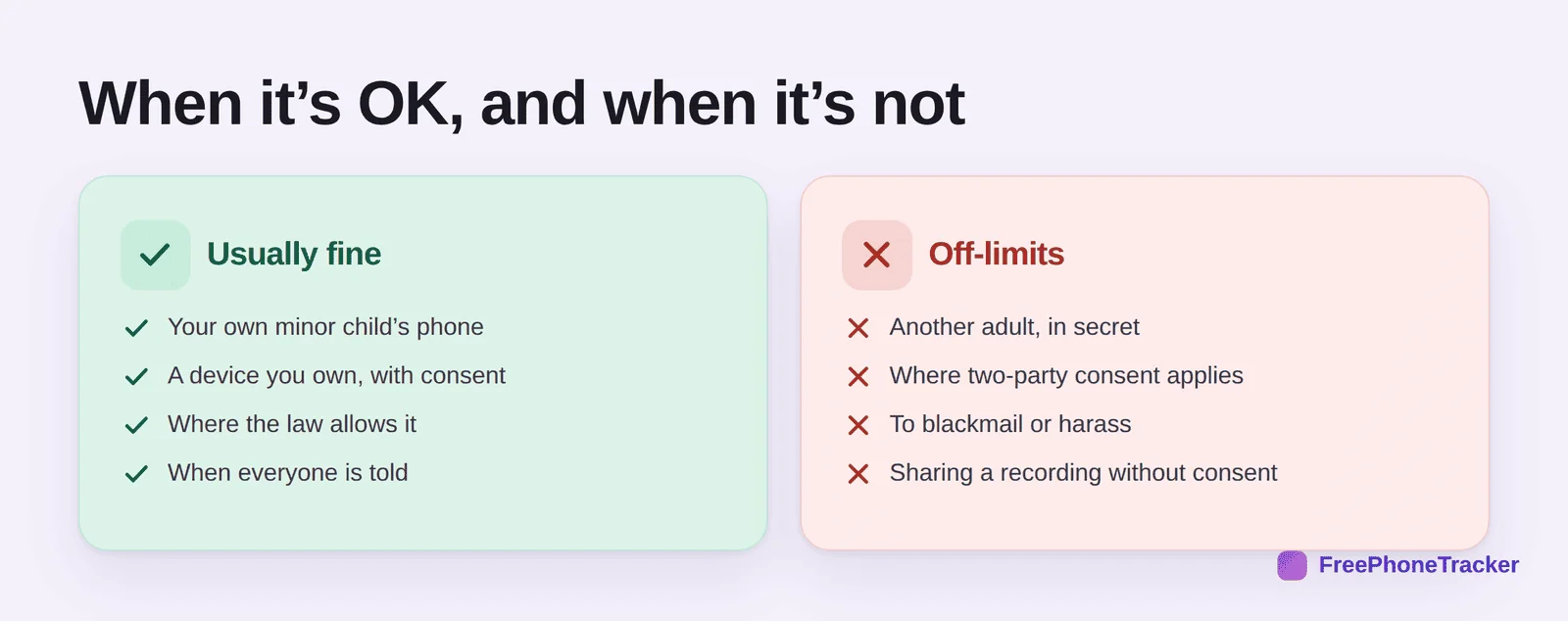
Recording is usually fine on your own minor child’s phone, on a device you own with the user’s consent, where local law allows it, and whenever everyone on the call is told. It’s off-limits when you’re secretly recording another adult, when you’re in a two-party area and haven’t told the other person, when the purpose is to harass or blackmail, or when you share a private recording without permission. The pattern is clear: openness and ownership keep you safe. Secrecy is where the trouble starts.
Recording your child’s calls
For parents, the ground is firmer. You generally have the right to monitor a minor child’s device that you own or pay for. That includes call recording, in most places, especially when your child knows the phone is monitored.
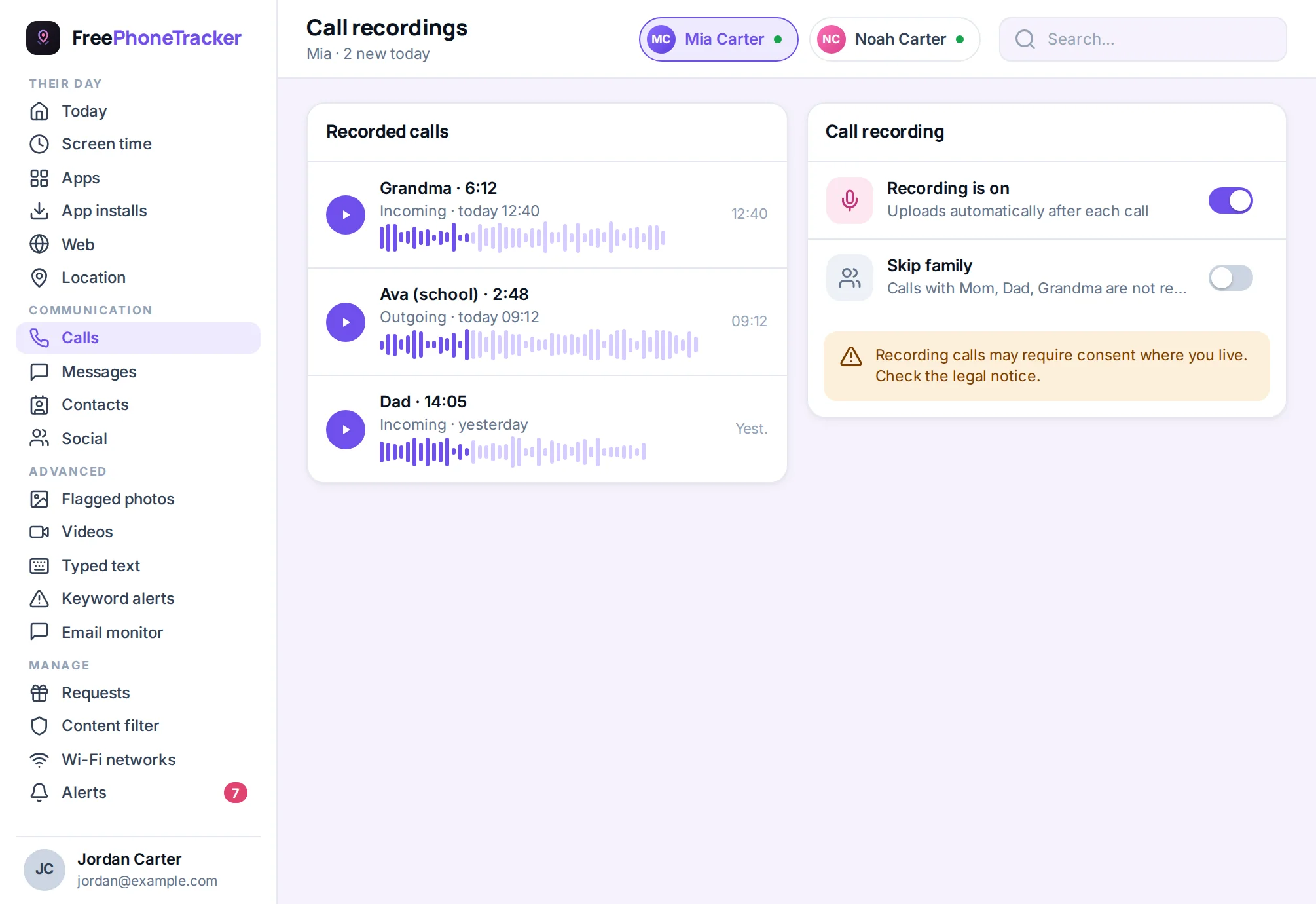
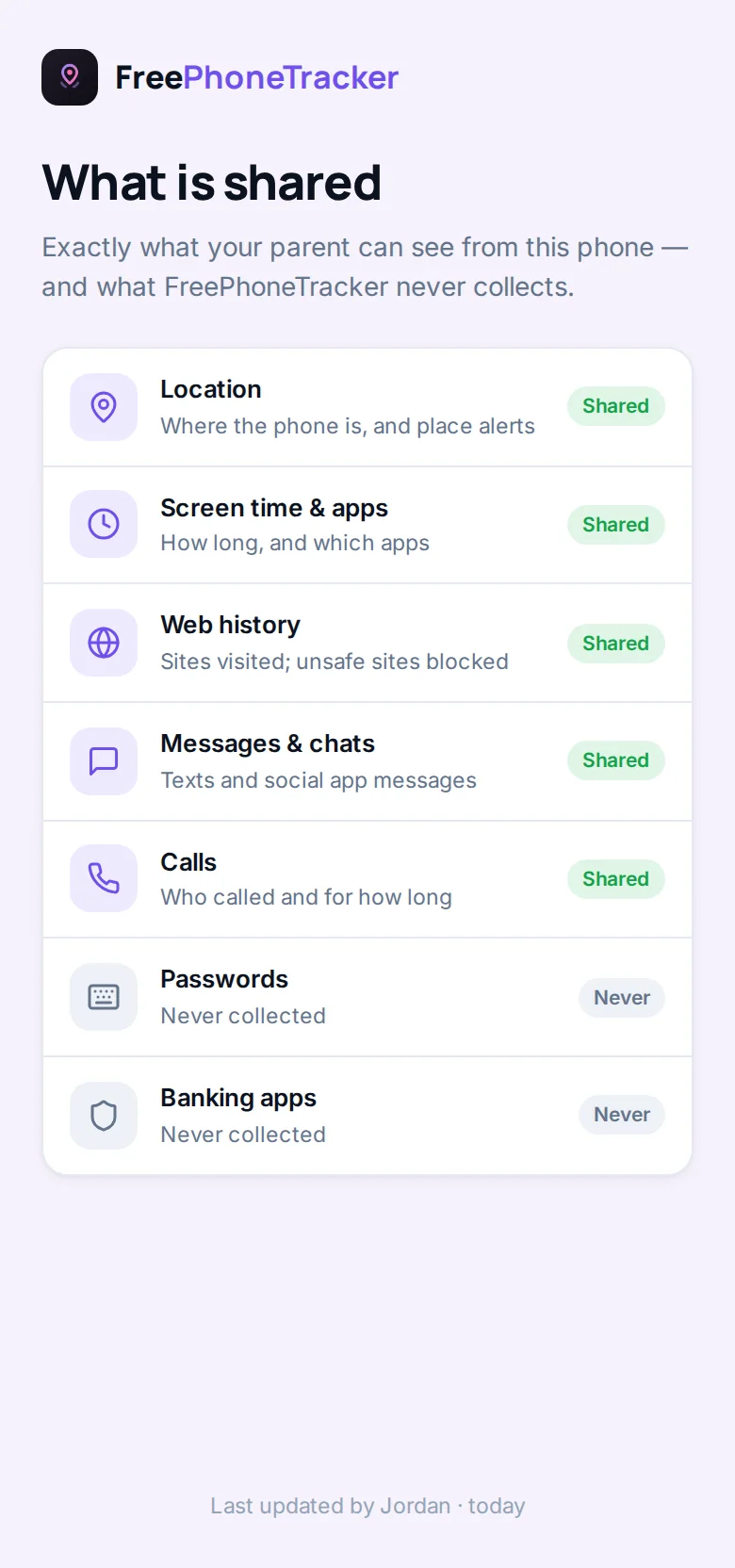
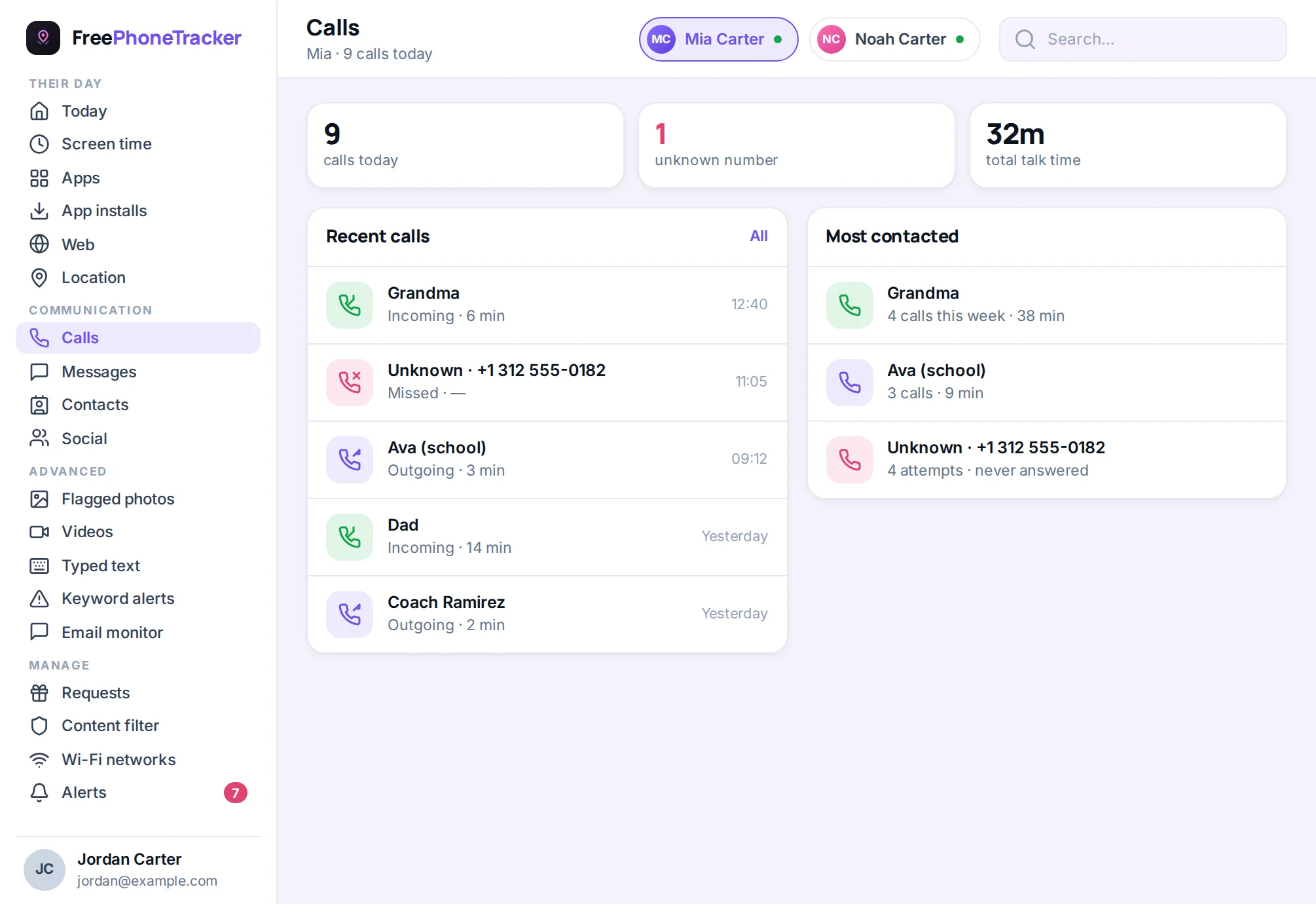
Even then, do it the right way. Tell your child the feature is on. Transparency isn’t just ethical here, it also keeps you clear of trouble if a call involves someone in a two-party area. Our approach with call tracking and recording is built around that principle: it’s a parent’s tool, used openly, not a secret spy device.
How call recording works
Setting it up is straightforward. The care goes into using it responsibly, not the technical steps.
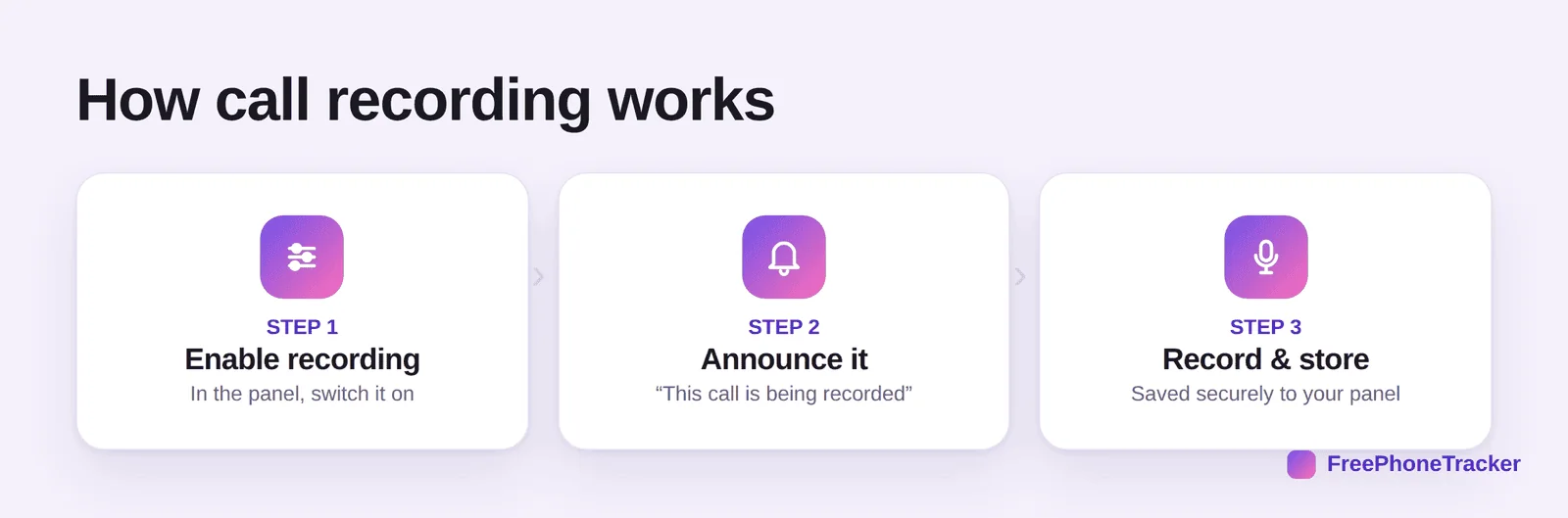
First, enable recording in your panel. Second, make sure it’s disclosed. On a child’s phone, that means they know it’s on. On a call with another adult, that means announcing it. Third, the audio saves securely to your panel, tied to the call it came from, ready to review when you need it.
Where the rules differ
The one-party or two-party split isn’t just a US thing. It shapes the rules almost everywhere, but the details vary, so a quick orientation helps.
In the United States, federal law is one-party, but a number of states require all-party consent, and the strictest rule usually wins when a call crosses state lines. In the UK, an individual can record their own calls for personal use, but sharing them or using them for business brings extra rules. Across much of the EU, recording without all parties’ consent can breach privacy law, so announcing it is the norm. Many other countries lean two-party by default. The safe habit travels everywhere: assume the strictest rule applies, and announce the recording. You never get in trouble for telling someone.
Recording calls that aren’t your child’s
Not every recording is about a kid. Adults record calls for good reasons too, and the same consent rules apply, minus the parental exception. A few common cases are worth calling out.
With customer service or a contractor, a recording settles the “that’s not what you told me” argument later. Announce it, and note that many companies record you anyway. For work calls, check your employer’s policy and local law first, because workplace recording carries its own rules. If you’re documenting harassment you’re receiving, a recording can be valuable evidence, but only if it was made legally, so check your area’s consent rule before you rely on it. The theme never changes: on your own devices, within the law, and open about it wherever consent requires.
Good reasons to record a call
Recording gets a bad reputation, but there are plenty of legitimate uses. A parent checking on a child who’s mentioned a worrying contact. Keeping a record of a call with a contractor or a customer-service line, where “I never said that” comes up often. Capturing important details you can’t write down while driving. Documenting harassment you’re receiving. In each case, the same rule applies. Stay open, stay inside the law, and record for a reason you’d be comfortable explaining.
Tell your teen it’s on
If you record your teenager’s calls, say so. Don’t do it in secret. There are two reasons, and both matter.
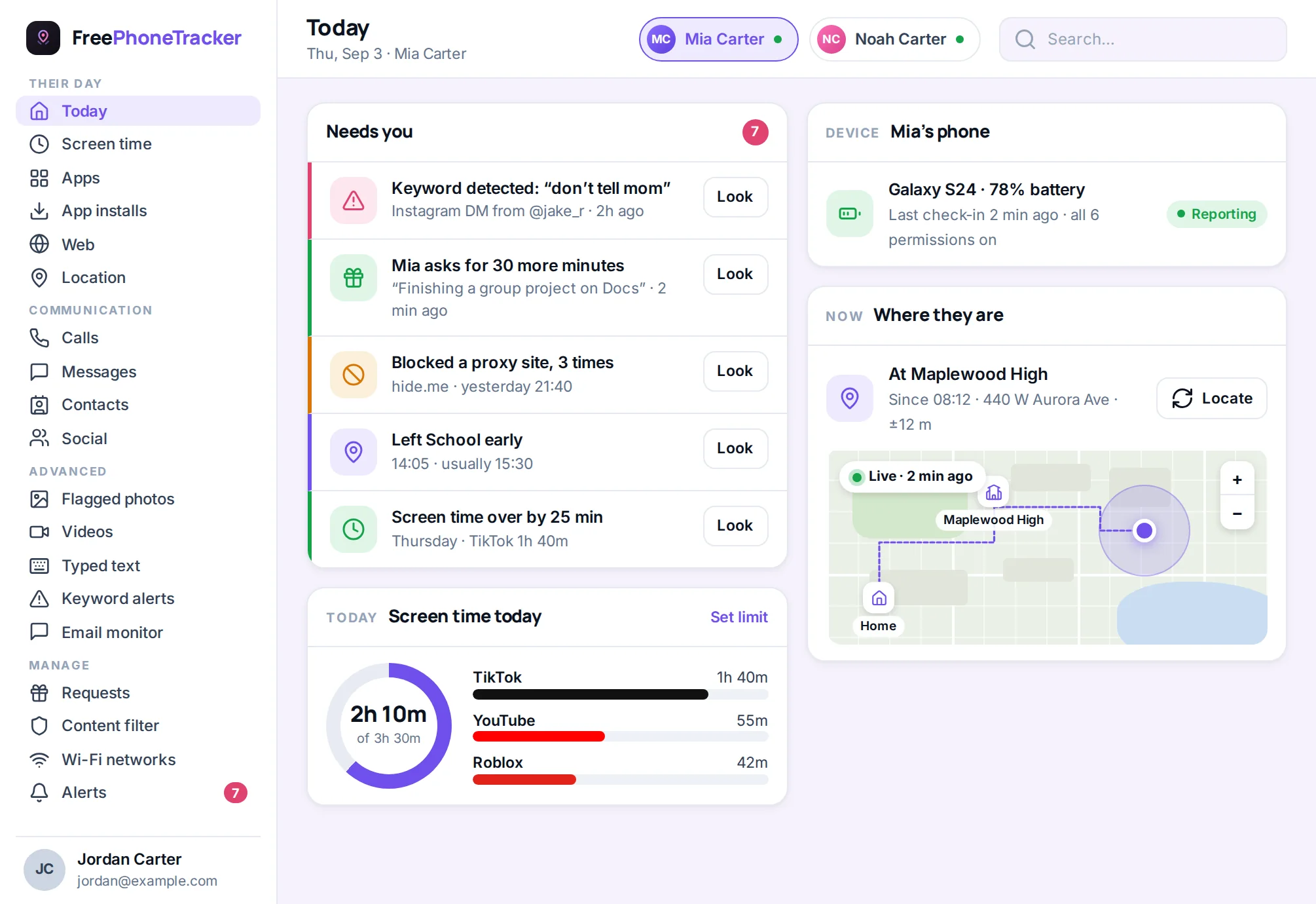
The first is trust. A teen who discovers a hidden recorder learns you’ll go behind their back, and that lesson costs you far more than any single call is worth. The second is legal. Your child’s calls involve other people, and some of those people may be in two-party areas. Disclosure on the device keeps the whole arrangement clean. Frame it the way you’d frame any monitoring: it’s a safety net, not a trap, and it loosens as they grow. Our guide on monitoring a teen respectfully covers how to have that conversation without a fight.
Common questions
Is it legal to record a call on my own phone?
It depends on your area’s consent rule. In one-party regions, yes, if you’re on the call. In two-party regions, only if everyone agrees. Announcing the recording keeps you safe either way.
Can I record my child’s calls?
In most places, yes, for a minor child on a device you own, especially when they know. Do it openly. See our call tracker for how it works, and our monitoring guide for the wider picture.
Do I have to tell the other person?
In two-party areas, yes, always. In one-party areas, you’re not legally required to, but it’s still good practice. If you’re ever unsure which applies, announce it. That covers you everywhere.
Can I use a recording as evidence?
Sometimes, but only if it was recorded legally. A recording made in breach of consent laws can be thrown out, and can land you in trouble instead. For anything headed to court, talk to a lawyer first.
Where are the recordings stored?
Securely in your own panel, tied to your account. They’re not public and not shared. See the pricing page for what’s included free and what unlocks the advanced capture features.
Recording calls legally comes down to one habit: openness. Know whether your area needs one-party or two-party consent, record on devices you own or your own child’s phone, and when in doubt, just say it out loud. Do that, and call recording stays a useful tool instead of a legal risk. Get started free, and read our complete monitoring guide to see where it fits.