A phone contract sounds formal. It isn’t. It’s just a short, friendly agreement you and your child both sign when they get a phone, spelling out the rules everyone agreed to. The magic is what it prevents: the endless “but you never said,” the moving goalposts, the nightly negotiation. Set the rules once, together, and you save yourself a hundred future arguments. This guide explains how to make one that works, and gives you a free template to copy.
- A phone contract turns future arguments into one calm conversation now.
- Write it together. A contract dictated at your child is one they’ll ignore.
- Keep it short. A handful of clear rules beats a page of fine print.
- Sign it, put it on the fridge, and revisit it as they grow. Copy our template below.
Why a contract works
It seems almost too simple, but writing the rules down changes everything. It moves the rules out of the heat of the moment and into a calm, agreed document you can both point to.
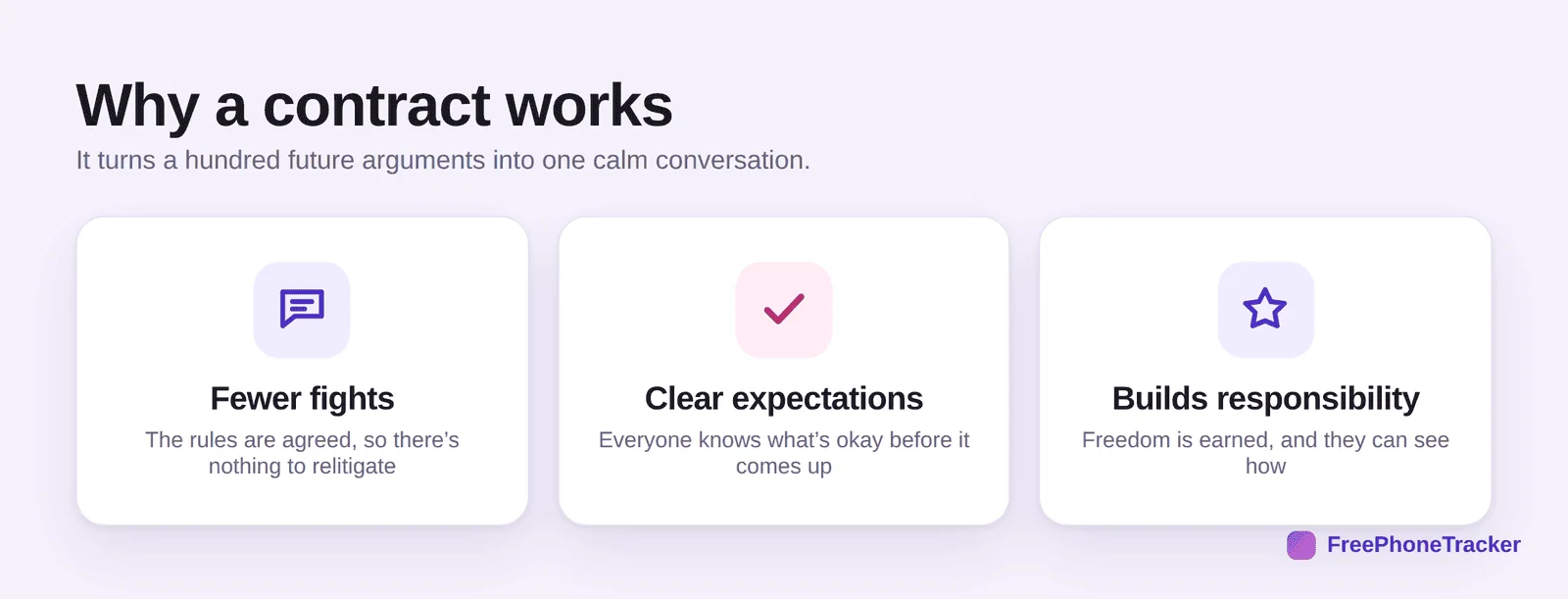
Three things happen. You get fewer fights, because the rules are already agreed; there’s nothing to relitigate at 9pm. You get clear expectations, because everyone knows what’s okay before it comes up. And your child builds responsibility, because a contract frames the phone as something earned and kept through good choices, not an entitlement. It also, quietly, makes you consistent. A written rule is much harder to cave on than a spoken one.
What a phone contract looks like
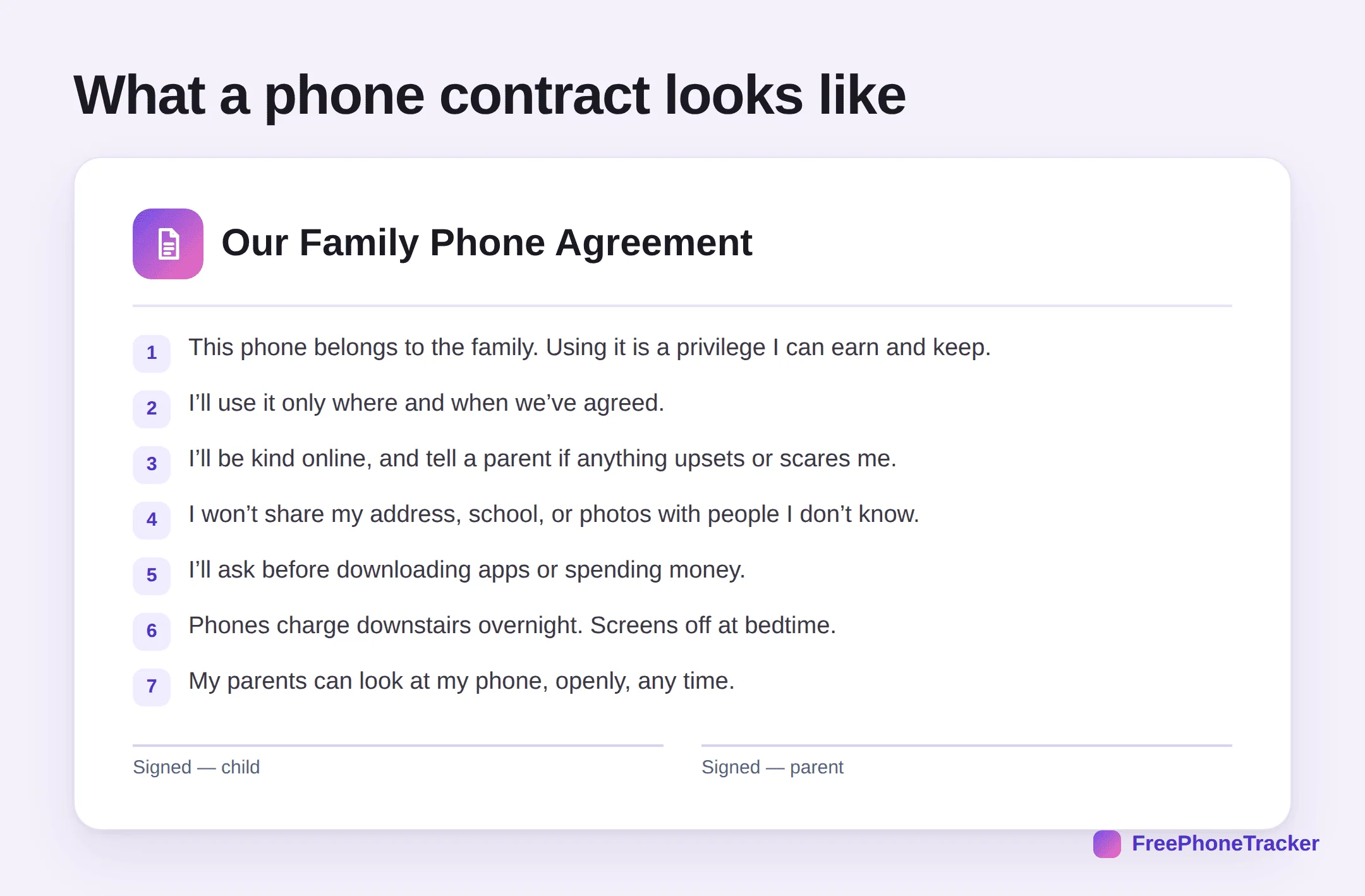
It doesn’t need legal language or a dozen clauses. The best ones are short enough that a child actually reads and remembers them. Here’s the shape.
A free template to copy
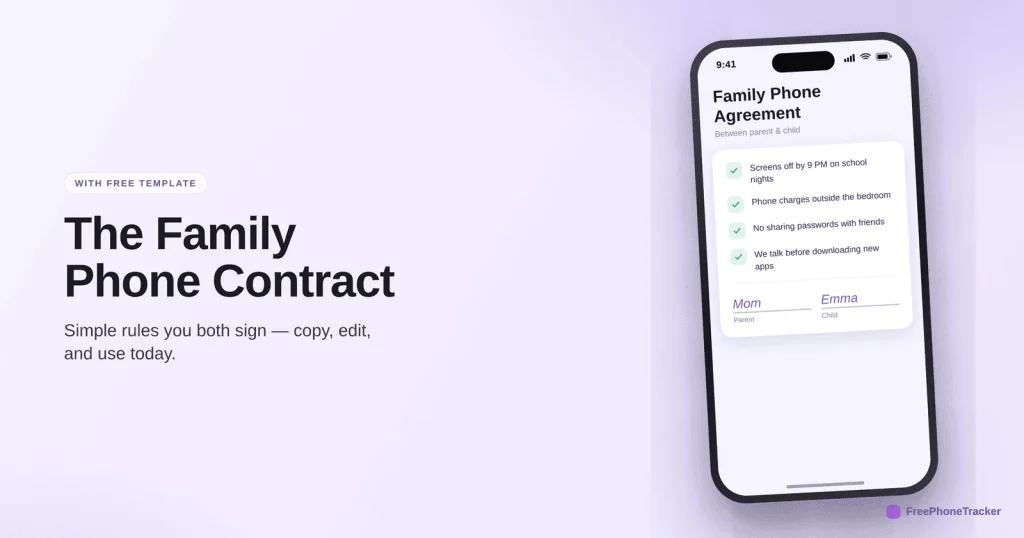
Here’s a complete starter contract. Copy it, change anything that doesn’t fit your family, and sign it together. Written in the child’s voice on purpose, it reads as their promises, not your commands.
- This phone belongs to our family. Using it is a privilege I earn and keep.
- I’ll use it only where and when we’ve agreed, and not during meals, homework or after bedtime.
- I’ll be kind online, and I’ll tell a parent if anything I see or read upsets or scares me.
- I won’t share my full name, address, school or photos with people I don’t know in real life.
- I’ll never agree to meet someone I only know online.
- I’ll ask before I download an app or spend any money.
- My phone charges downstairs at night. Screens go off at bedtime.
- My parents can look at my phone, openly, any time, and I know that’s to keep me safe.
- If I break this agreement, I understand there’ll be a pause, and then a fresh start.
Signed (child): ____________________ Signed (parent): ____________________ Date: __________
That’s a complete, usable agreement. Trim it for a younger child, or loosen it for a teen. The exact words matter less than the fact that you wrote them together.
The clauses that matter most
If you write your own, keep it lean. A few clauses carry almost all the weight; the rest is detail. These are the ones worth including in some form.
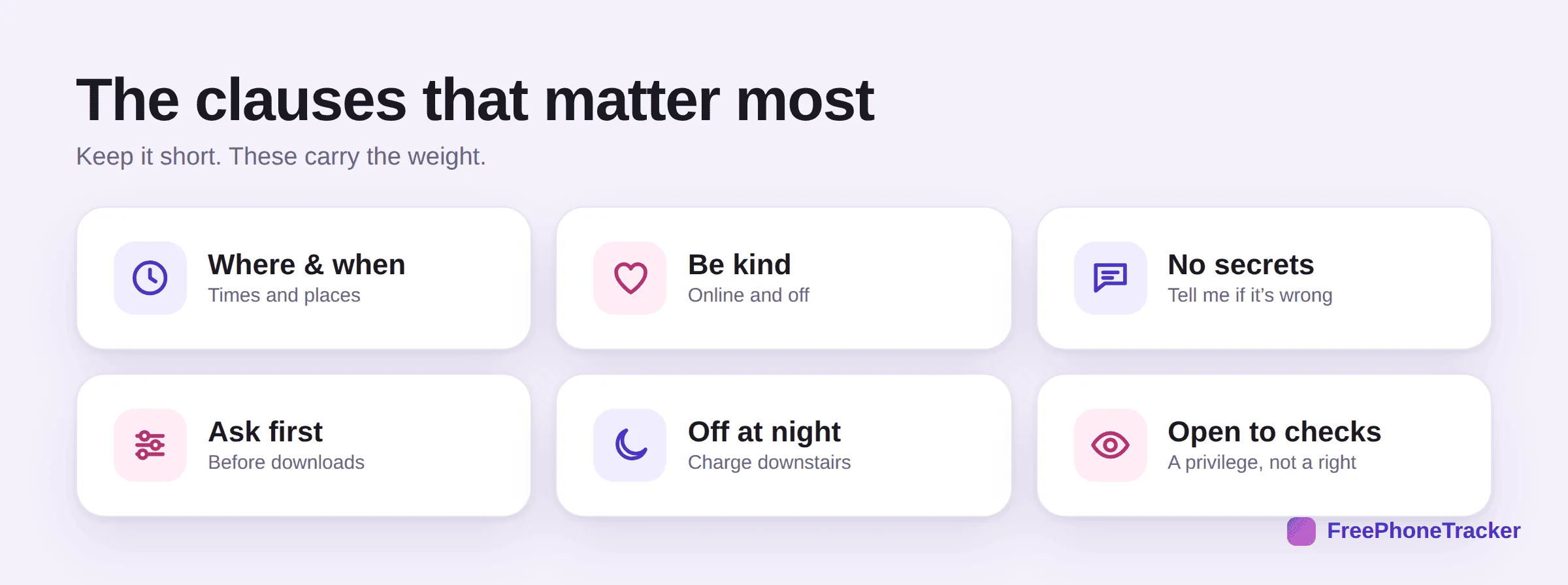
Cover where and when the phone can be used. A be kind rule for how they treat others online. A no secrets promise, that they’ll tell you if something’s wrong. Ask first before downloads and spending. Off at night, charging outside the bedroom. And the openness clause: the phone can be checked, because it’s a privilege, not a private vault. Six short lines like these do more than three pages of rules nobody reads.
Earn more, or lose access
A good contract isn’t just a list of rules. It makes clear what happens next, in both directions. Kids respond far better when they can see how good choices earn freedom, and what crossing a line costs.
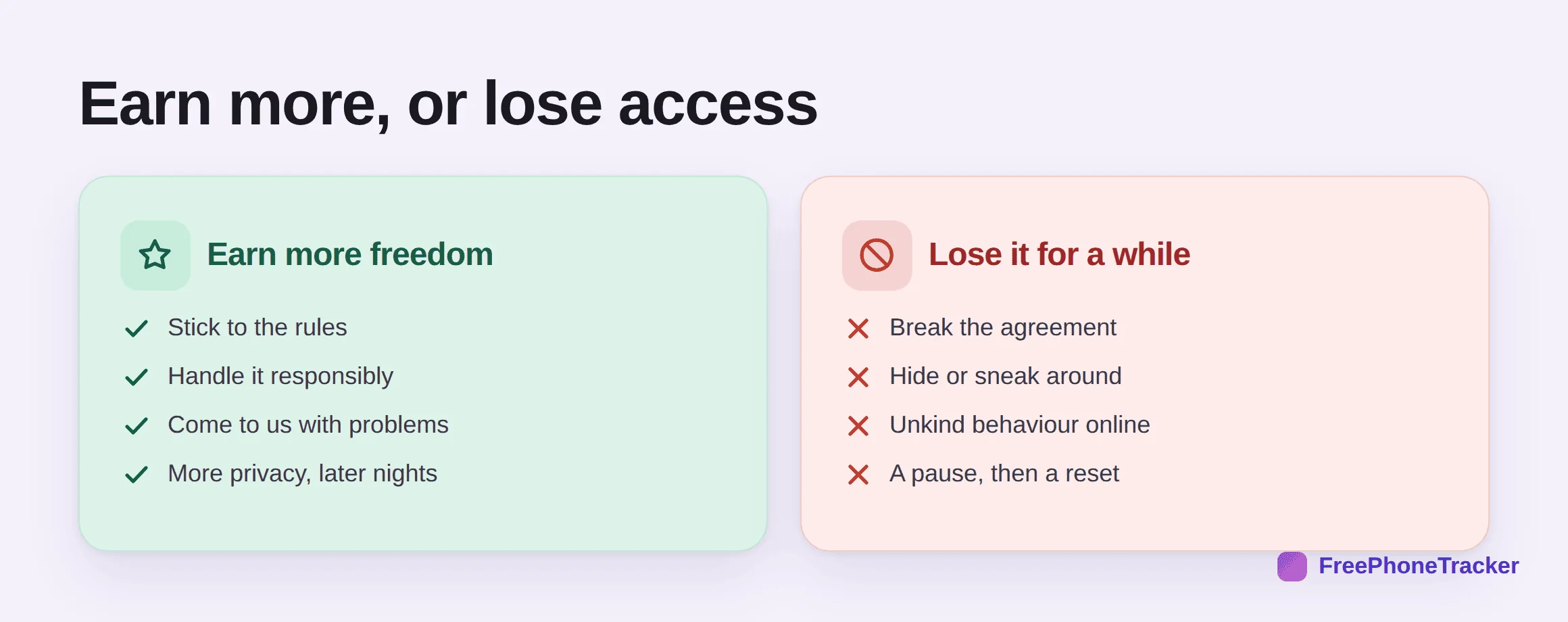
Spell out the upside: stick to the rules and handle things well, and you get more, later nights, more privacy, fewer checks. And the downside: break the agreement, sneak around, or treat people badly, and there’s a pause. Keep consequences calm and proportionate. The goal is a reset and a lesson, not a punishment that breeds resentment. A contract that’s all stick and no carrot is one kids learn to dread and dodge.
What to include, by age
One contract doesn’t fit every age. What’s right for an eight-year-old with a first phone is very different from what a sixteen-year-old will accept. Adjust it as they grow.
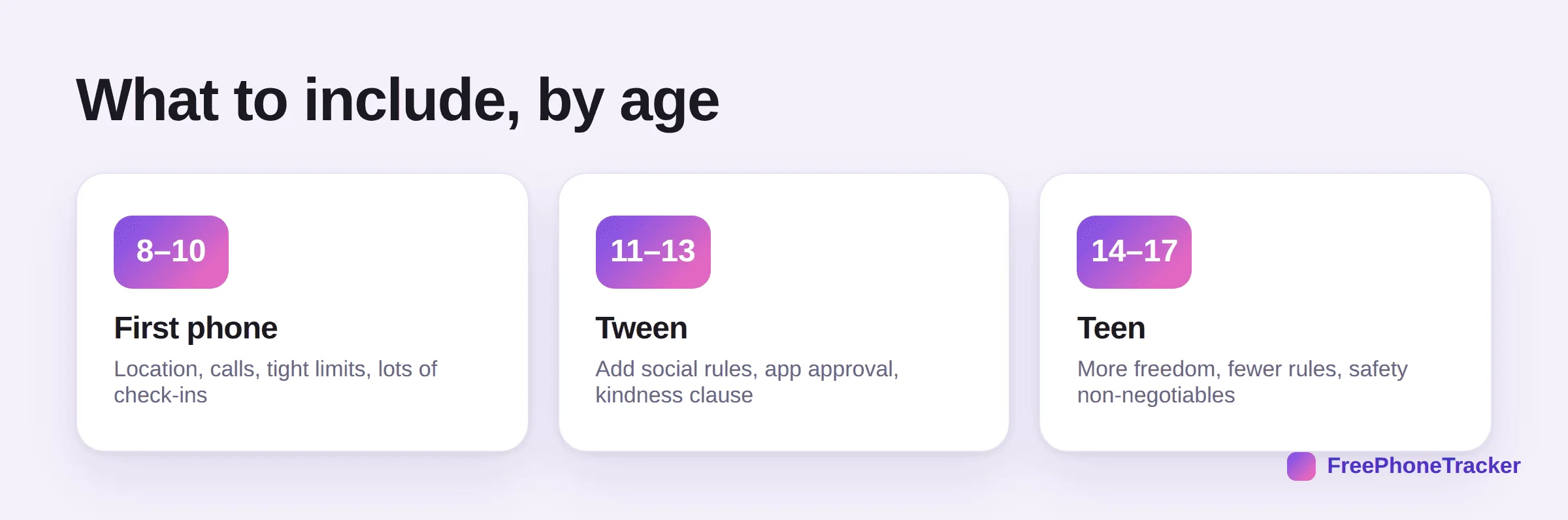
For a younger child (8–10), keep it simple and protective: location, calls, tight limits, and lots of check-ins. For a tween (11–13), add the social layer, rules about kindness, app approval, and who they talk to. For a teen (14–17), strip it back to the essentials, more freedom, fewer rules, but hold firm on the safety non-negotiables. Our guides on screen time by age and a first phone done right pair well with this.
Making it stick
A contract in a drawer does nothing. What makes it work is the ritual around it, and keeping it alive.
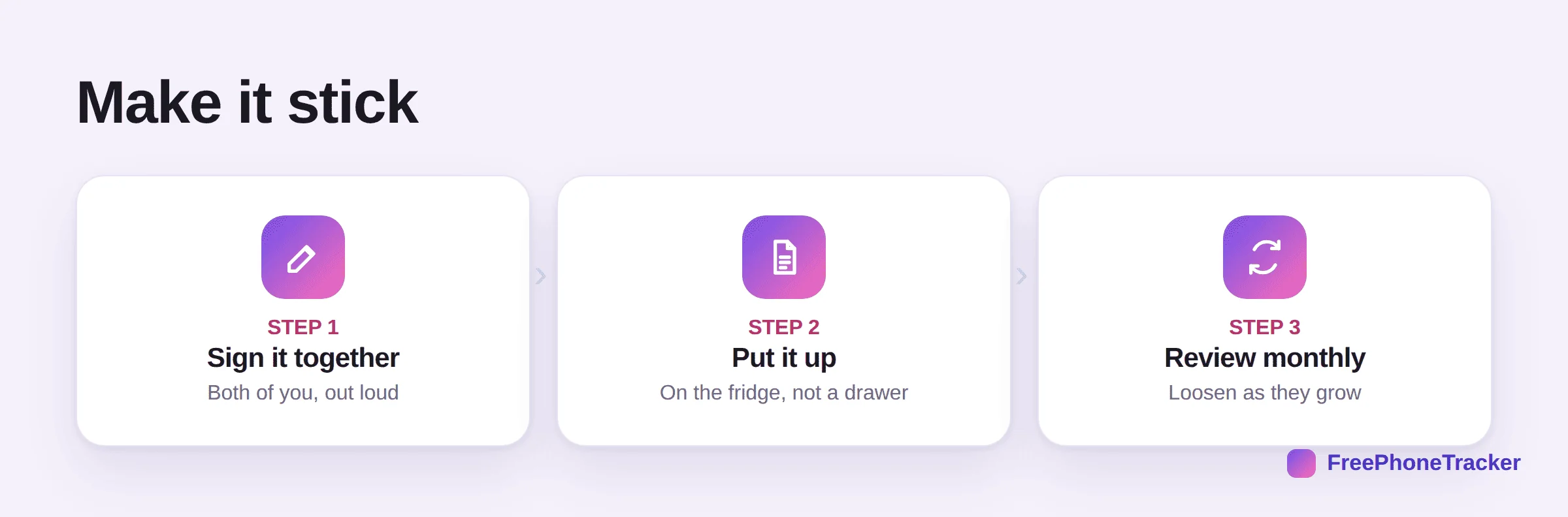
Sign it together, out loud, both of you. The small ceremony matters; it makes the agreement real. Put it up somewhere visible, on the fridge, not folded away. And review it every month or two. As your child shows they can handle more, loosen a rule and let them see it happen. That’s the whole incentive: good choices visibly buy more freedom.
Do’s and don’ts
A few things separate a contract that works from one that gathers dust.
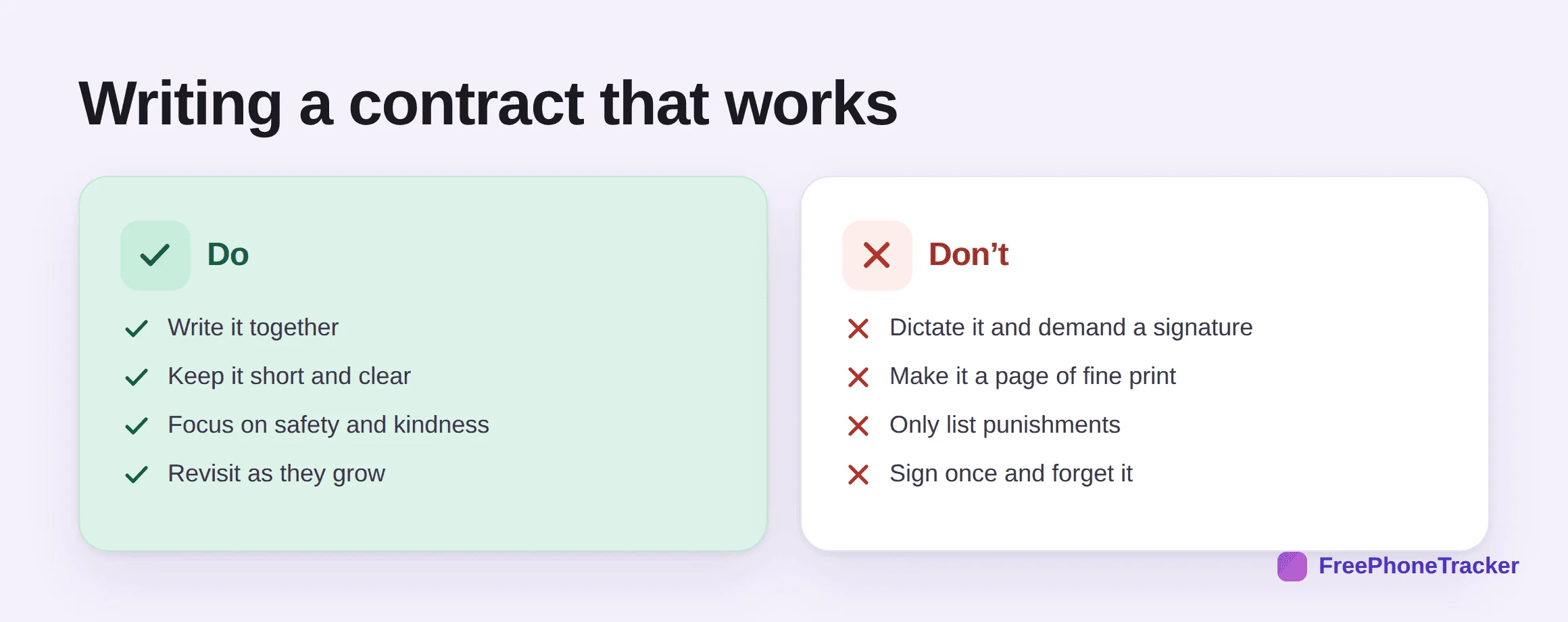
Do write it together, keep it short and clear, focus on safety and kindness, and revisit it as they grow. Don’t dictate it and demand a signature, don’t bury it in fine print, don’t make it a list of nothing but punishments, and don’t sign it once and forget it. The tone you set here, collaborative and fair, is the tone your child will bring to the whole arrangement.
Common questions
What age should we start a phone contract?
The moment they get a phone. It’s the perfect companion to a first phone, when the rules are new and expectations are being set. See our first phone guide.
Isn’t a contract a bit heavy-handed?
Only if you make it that way. Done as a friendly, mutual agreement, it’s the opposite: it replaces nagging with clarity, and gives your child a real say in the rules.
What if my teen refuses to sign?
Treat it as a negotiation, not an ultimatum. Ask what they’d change, and meet in the middle where you can while holding firm on safety. A teen who helped shape the rules is far more likely to keep them.
Do the rules need enforcing with an app?
Not necessarily, but it helps. Automatic parental controls take the fights out of enforcement, so the bedtime lock, not you, is the one saying “time’s up.”
Can I just use your template as-is?
Absolutely. Copy the agreement above, tweak anything that doesn’t fit, print it, and sign it together. That’s exactly what it’s there for.
A family phone contract is the simplest, cheapest parenting tool there is, and one of the most effective. Write it together, keep it short, sign it, and revisit it as your child grows. It turns the phone from a battleground into a shared understanding. Copy the template above to get started, and pair it with a free FreePhoneTracker account to make the rules easy to keep.