Scams look endless, but most run the same playbook: build trust or fear, create urgency, and move you toward money you can’t get back. Learn the common shapes and the shared red flags, and the specific story stops mattering. This guide covers the scams you’re most likely to meet, and how to see through them.
- Romance, marketplace, tech support and prize scams are the common ones.
- Different masks, the same playbook: trust or fear, then urgency, then money.
- Gift cards, wire transfers and crypto are how scammers get paid.
- Slow down and verify — urgency is the tool that beats you.
Scams wear different masks
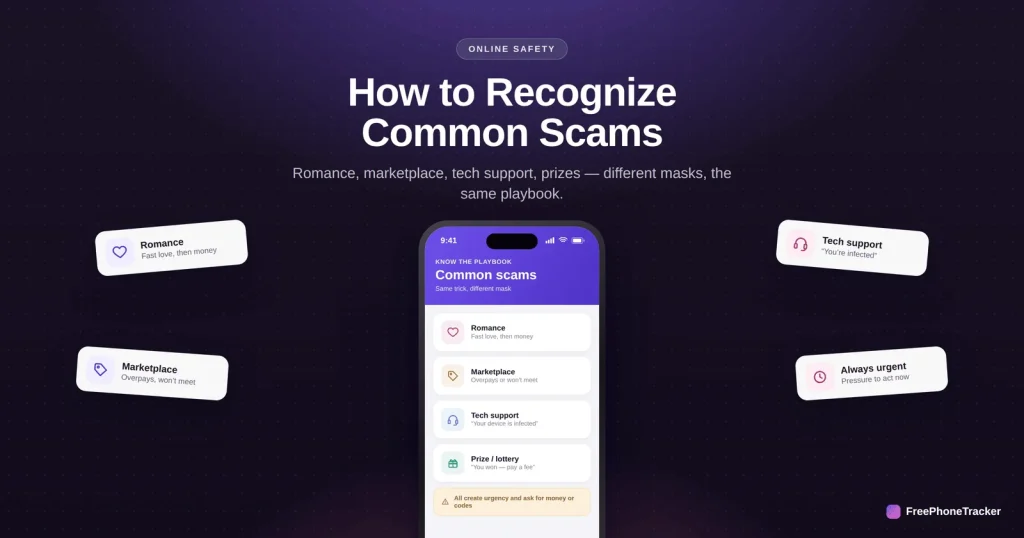
These four cover most of what people run into.
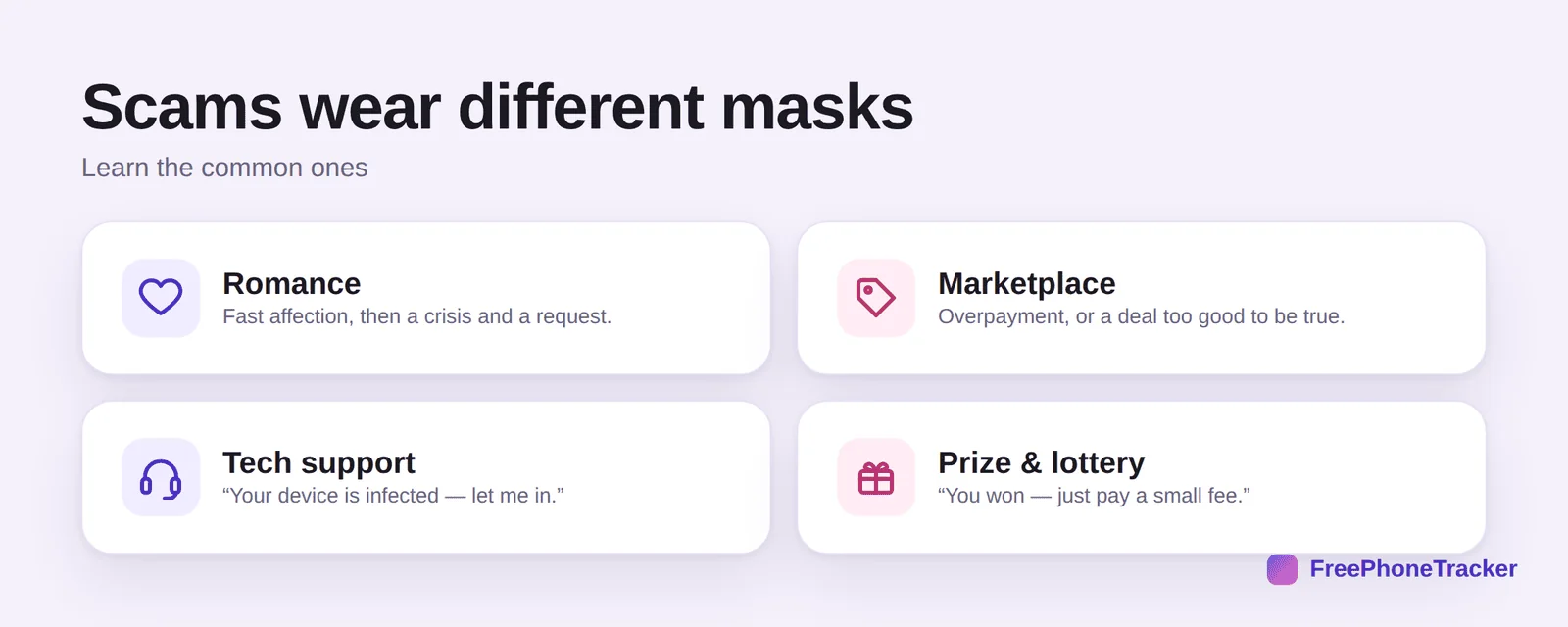
Romance — fast affection, then a crisis and a request for money. Marketplace — an overpayment “by mistake,” or a deal too good to be true. Tech support — “your device is infected, let me in.” And prize and lottery — “you’ve won, just pay a small fee.” The stories differ; the goal is always your money.
When something feels off
Your instinct that something’s wrong is usually right. Here’s what to do with it.
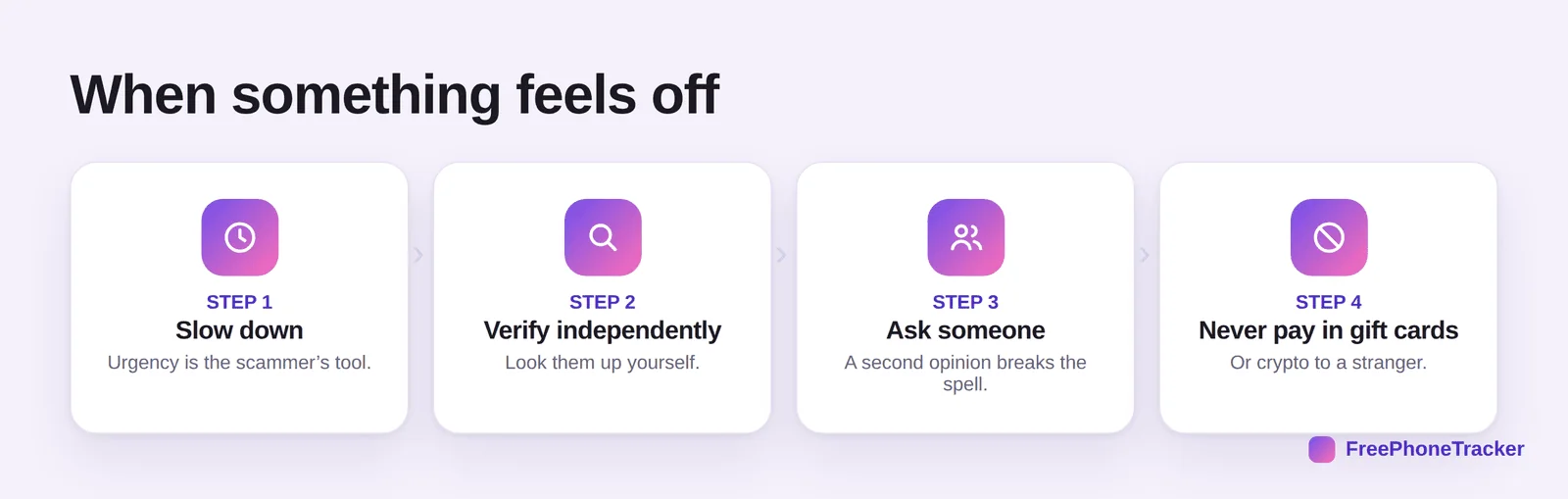
Slow down — urgency is the scammer’s main tool. Verify independently — look the person or company up yourself. Ask someone — a second opinion breaks the spell fast. And never pay in gift cards, wire transfers or crypto to someone you haven’t met; that’s a scam signature.
The universal red flags
Whatever the story, these signs mean stop.
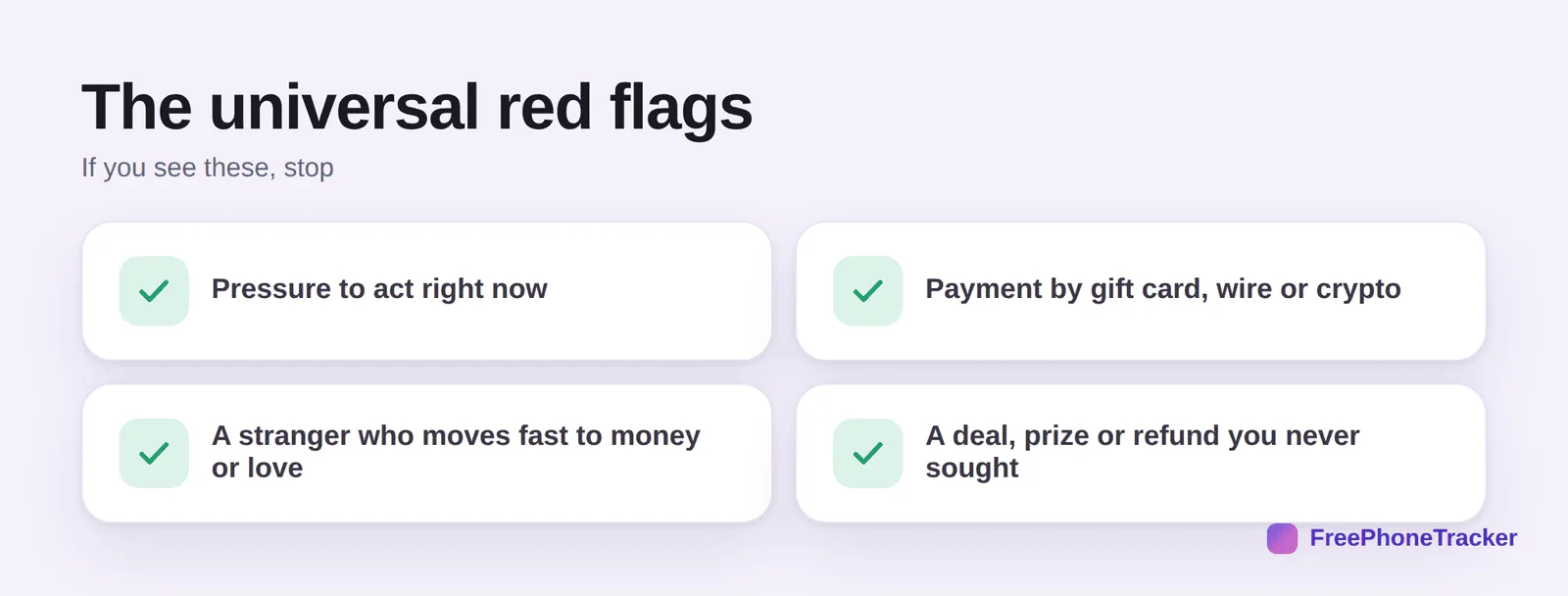
Pressure to act right now. Payment by gift card, wire or crypto. A stranger who moves fast to money or to love. And a deal, prize or refund you never sought. One of these is a caution; more than one is a scam.
Common questions
What’s the most common online scam?
It varies, but romance scams, fake marketplace deals, and “your account is at risk” phishing are perennially near the top. They all lean on emotion — love, a bargain, or fear — to rush you.
Why do scammers ask for gift cards or crypto?
Because those payments are fast and nearly impossible to reverse. No legitimate company or agency will ever ask to be paid in gift cards — that request alone is proof of a scam.
How do I check if someone online is real?
Do a reverse image search on their photos, look for an account history, and try to move a conversation to a live video call. Scammers avoid video and rush toward money. If they resist verifying, walk away.
Are older adults more at risk?
They’re often targeted more heavily, but anyone can be caught by the right story at the wrong moment. Talking about scams openly in a family is one of the best defenses for everyone.
What if I already sent money?
Act quickly — contact your bank or the payment provider, as some transfers can still be stopped, and report it. See what to do if you’ve been scammed.
Once you see the shared playbook — trust or fear, urgency, then untraceable money — the specific scam stops mattering. Slow down, verify, and never pay a stranger in gift cards or crypto. Get started free, and read our guides to spotting phishing and what to do if you’ve been scammed.