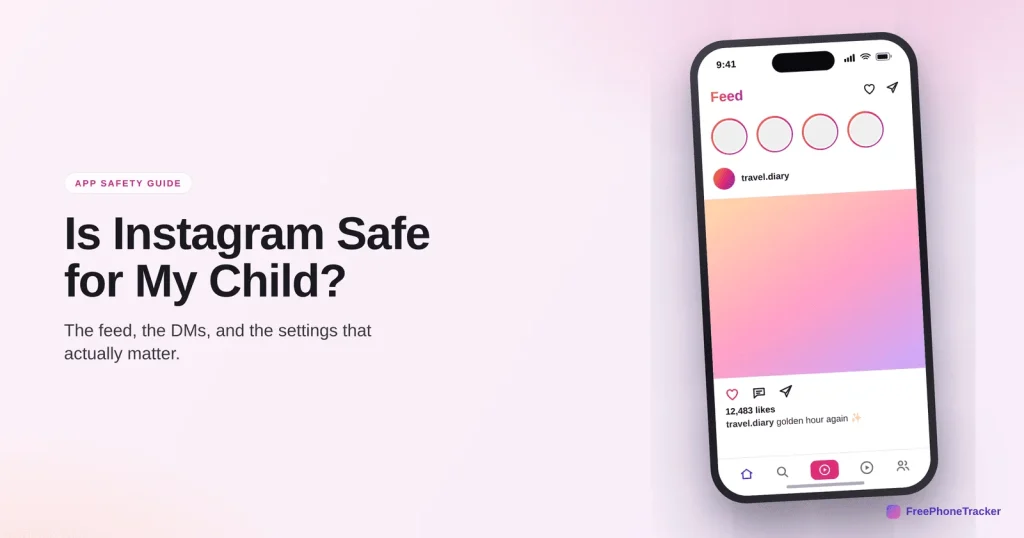
Instagram is where teens share photos, follow friends and creators, and slide into each other’s DMs. It’s also where the comparison trap is at its worst, and where strangers try to make contact. Is it safe for your child? With a private account, locked-down messages, and an honest talk about the highlight reel, it can be. Here’s what Instagram is, the risks that matter, the settings to change, and our verdict.
- Minimum age is 13. Teen accounts now default to more private settings.
- The biggest risks: comparison and body image, plus DMs from strangers.
- A private account is the single most important setting. Lock down DMs too.
- Verdict: okay for teens with a private account, tight DMs and a watch for stranger contact.
What Instagram actually is
Instagram is a photo and video sharing app. Teens post to their profile and Stories, scroll a feed of friends and creators, watch short Reels, and message privately in DMs. Much of it is positive, staying close to friends, following interests, being creative. The trouble comes from two directions: the pressure of constant comparison, and the ease with which strangers can reach a public account.
The real risks
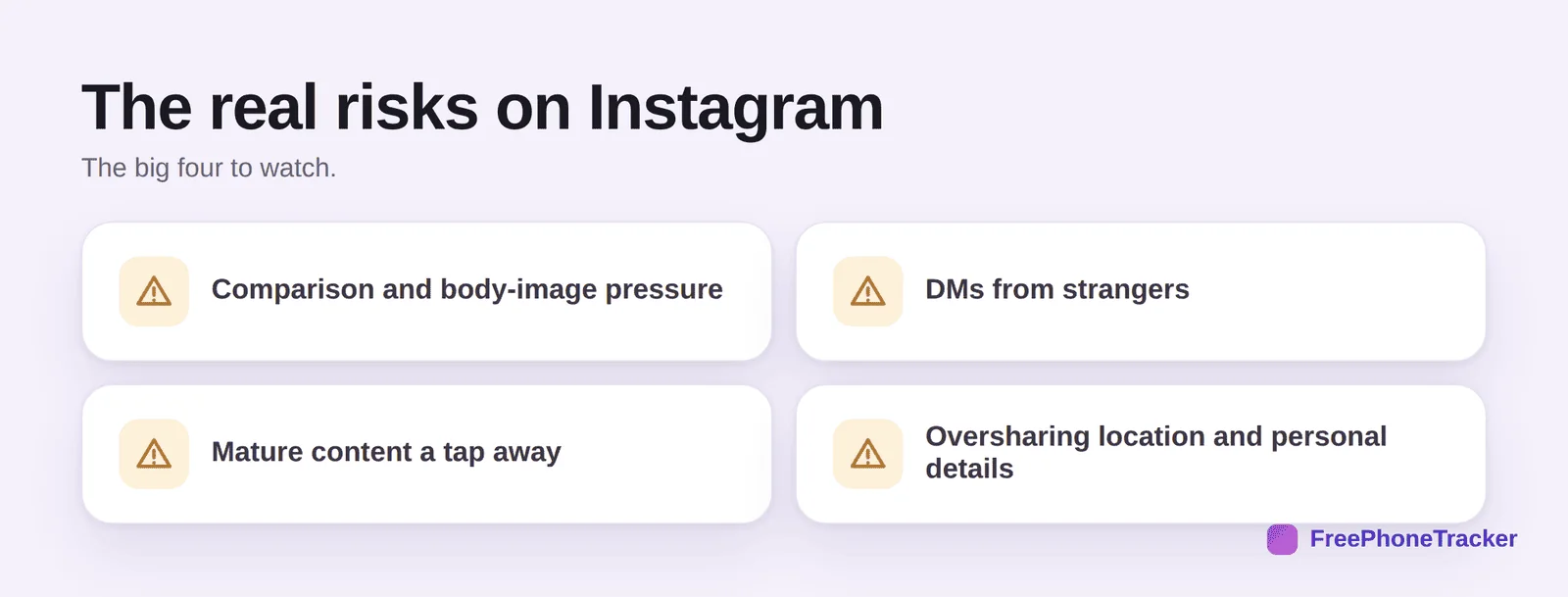
Comparison and body image top the list. An endless stream of filtered, curated lives chips away at a young person’s sense of self, and the research on teen mental health here is genuinely concerning. Then there are DMs from strangers, the main channel for unwanted contact. Mature content is a tap away through hashtags and the Explore page. And oversharing, posting location, school, or too much personal detail, hands information to people who shouldn’t have it.
The features, decoded
Instagram is more than a photo feed, and knowing the parts helps. Posts are the permanent photos on their profile grid. Stories vanish after 24 hours and are where a lot of casual sharing happens. Reels are short videos with an algorithmic feed much like TikTok’s, so the same “surfaces mature content” risk applies. DMs are private messages, the main channel for stranger contact. Close Friends is a smaller list for more private Stories. And Explore is the discovery page, tuned to interests, where content from strangers appears. When you check settings, remember that DMs and Explore are where the outside world gets in.
Safety settings to change today
Instagram’s teen accounts default to safer settings now, but don’t assume, check them. Set these up together.
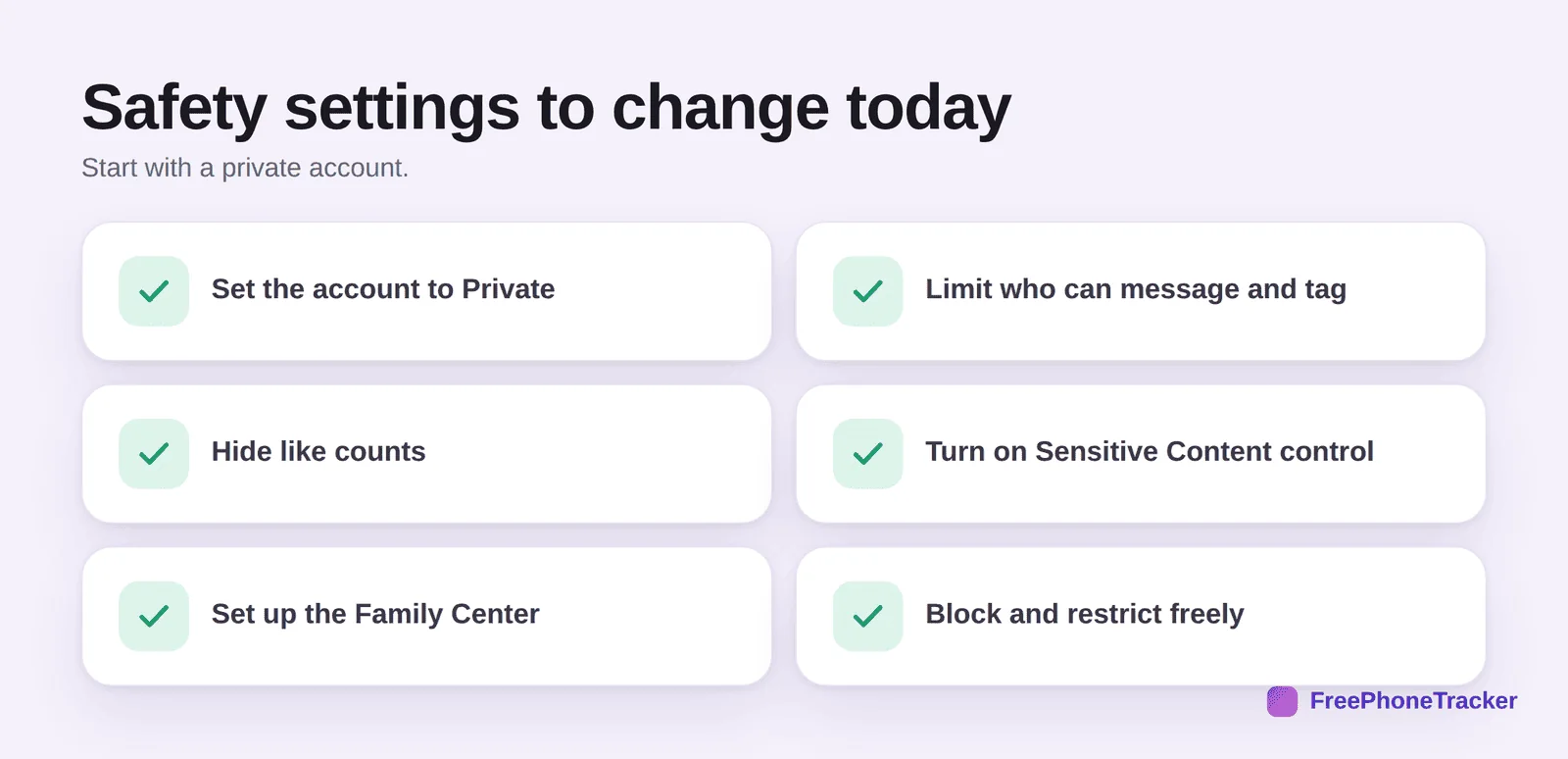
Set the account to Private, so only approved followers see posts and can message. Limit who can message and tag them to people they follow. Hide like counts to ease the comparison pressure. Turn Sensitive Content control to its strictest setting. Set up Family Center for oversight of time and contacts. And teach them to block and restrict freely, no explanation owed to anyone.
How to monitor Instagram
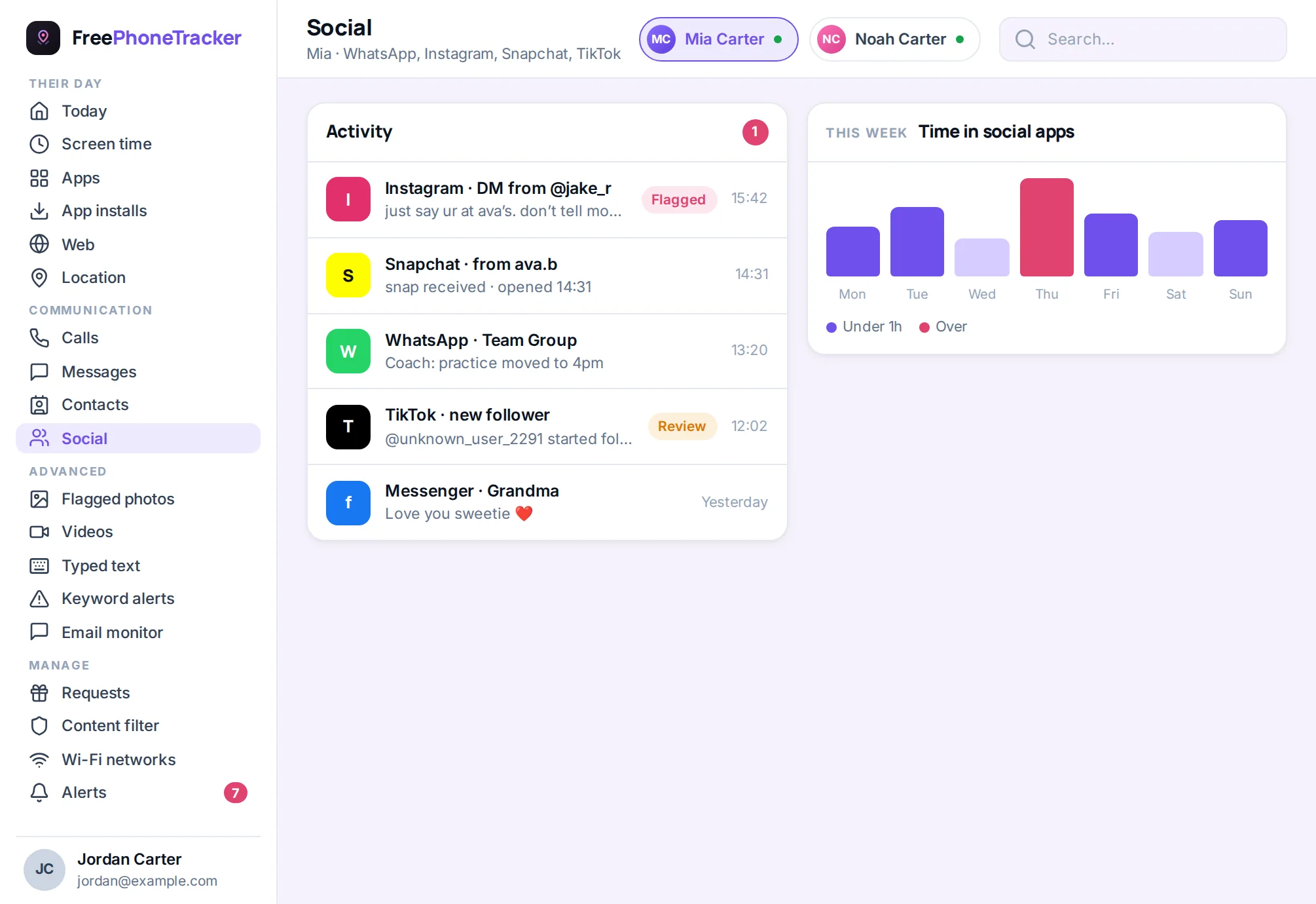
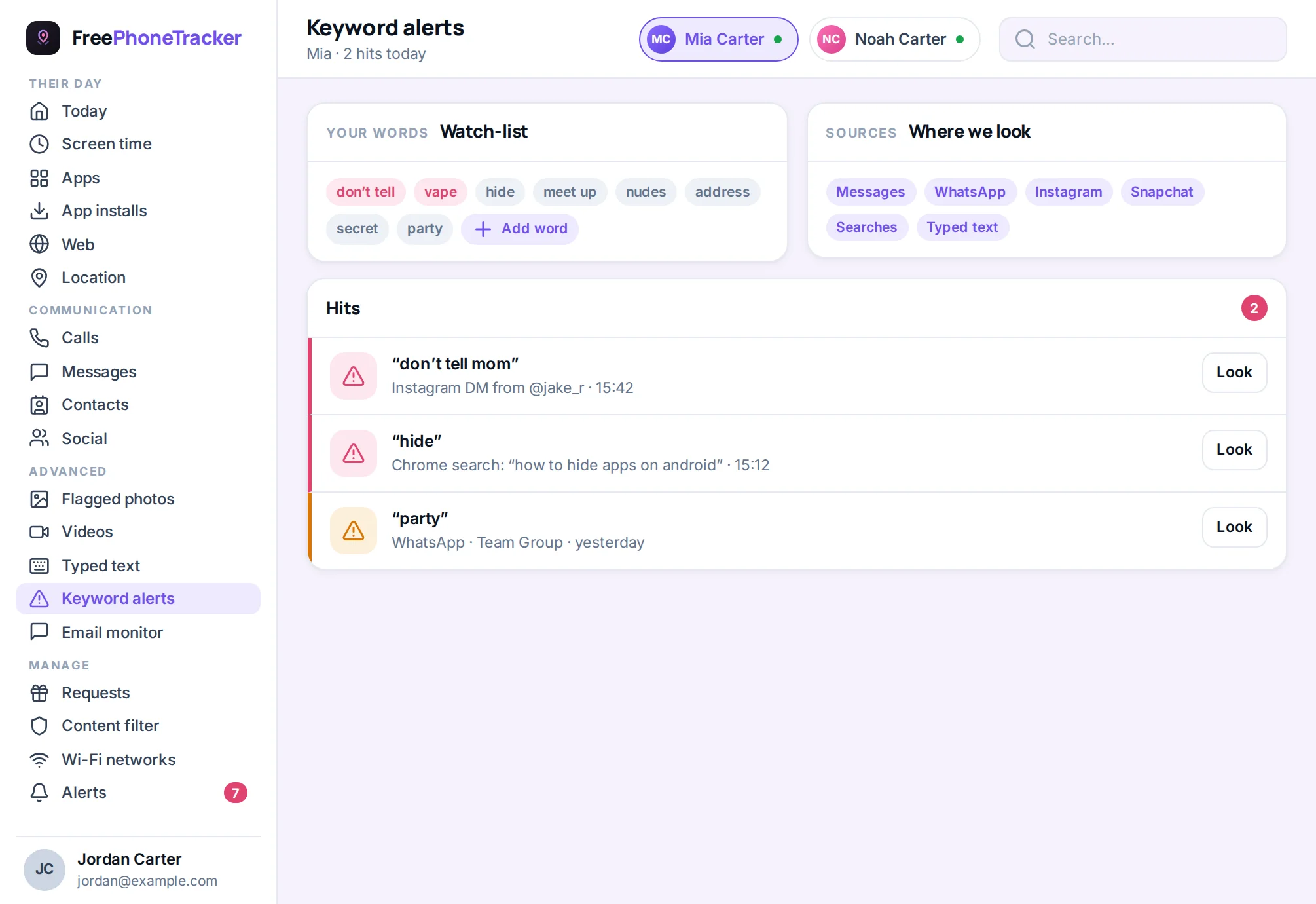
The two things worth watching are stranger contact and signs the comparison trap is biting. Social monitoring and keyword alerts catch concerning DMs; your own eyes catch the mood changes that signal the deeper harm.
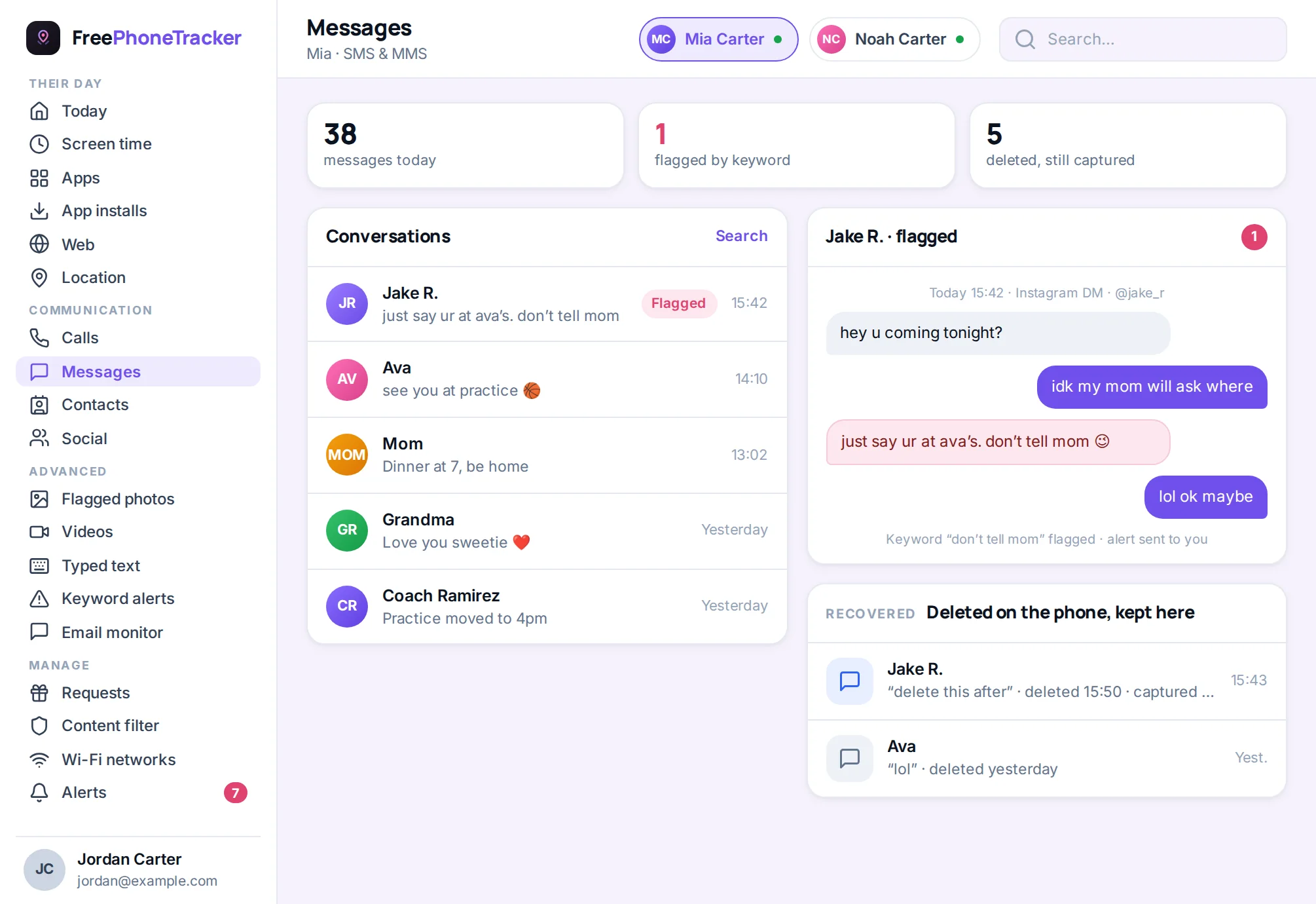
Watch for a child who seems deflated after scrolling, who’s obsessed with likes and followers, or who’s suddenly secretive about who they’re messaging. Those signs matter more than any single message. Keep the conversation about comparison going, remind them that feeds are highlight reels, not real life.
The comparison conversation
This is the one that needs you, not a setting. Instagram runs on curated highlight reels, and teens measure their ordinary lives against everyone else’s best moments. Talk about it plainly and often. Point out that people post their wins, not their bad days, and that filters and editing are everywhere. Notice who they follow, and gently steer away from accounts that leave them feeling worse; nudge toward hobbies, friends and creators who inspire rather than deflate. Remind them that likes and followers measure an algorithm’s attention, not their worth. And model it yourself, a parent who doom-scrolls and frets over likes teaches the opposite of the lesson. The goal is a teen who uses Instagram without letting it define how they feel about themselves.
The verdict
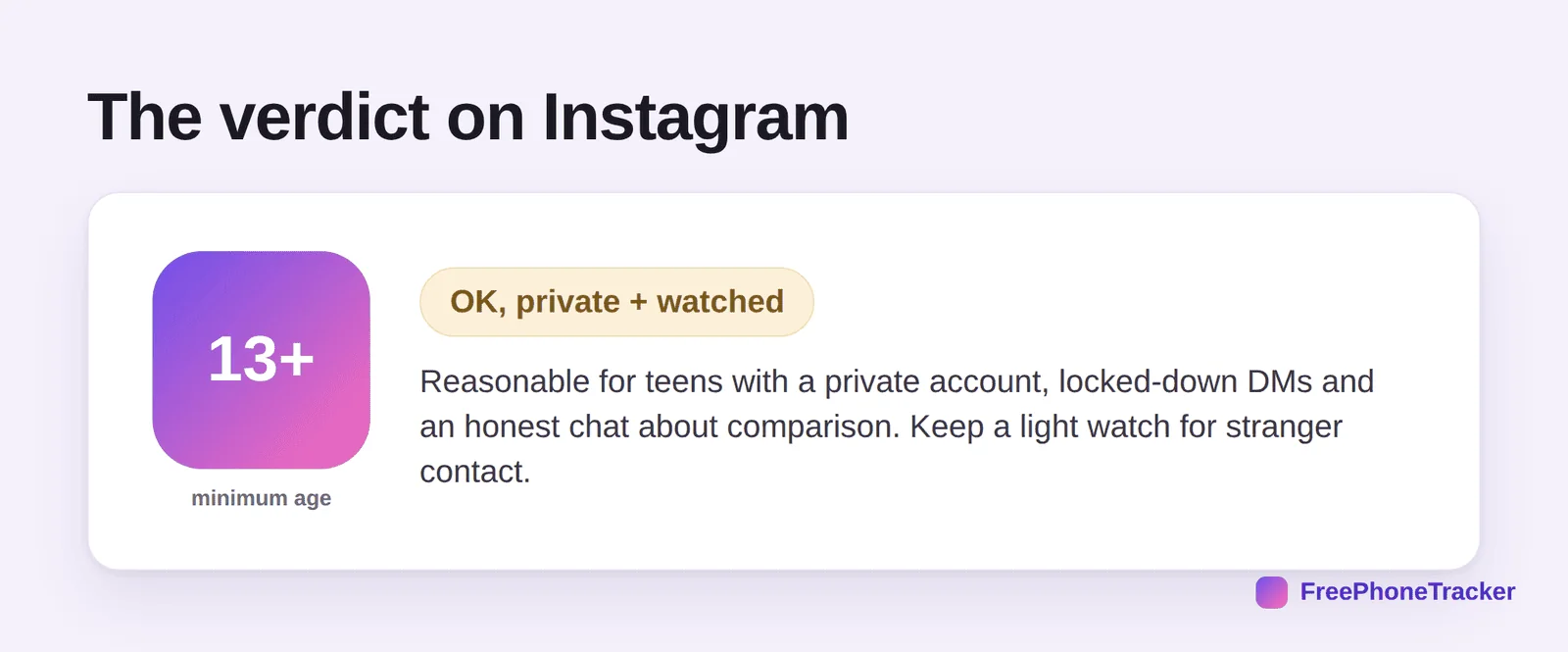
Instagram is reasonable for teens with a private account, locked-down DMs, and an ongoing conversation about comparison. The stranger-contact risk is well handled by settings; the comparison risk needs you, not software. Keep a light watch for unwanted contact, and keep talking about the gap between the feed and reality.
Common questions
What age is Instagram safe for?
13 is the minimum. Teen accounts default to more private settings, but always check them yourself. For a first social app, a private account is essential from day one.
Is Instagram bad for teen mental health?
It can affect it, especially around body image and comparison. It’s not doom for every teen, but it’s real for many. Hiding like counts, curating who they follow, and talking openly about the highlight-reel effect all help.
Can strangers message my child?
On a public account, easily. On a private account with message settings locked to followers, far less so. That’s why the private setting matters most.
Should I follow my teen’s account?
For younger teens, yes, openly. For older ones, shift to a lighter watch through alerts rather than following every post. Respect earns cooperation.
How do I raise monitoring without a fight?
Openly and framed as safety. Our guide on monitoring a teen respectfully covers the conversation, and keeping kids safe on social media gives the bigger picture.
So, is Instagram safe? For a teen with a private account, tight DM settings, and honest conversations about comparison, yes. Settings handle the strangers; you handle the self-esteem side. Get both right and Instagram is a place for friends and creativity rather than a source of worry. Get started free to keep a light, honest eye on it.