It’s the fear that sits under every other worry about kids and phones. Someone reaching your child through a screen, pretending to be a friend, and meaning them harm. It’s rare, but it’s real, and it’s preventable. The good news: predators follow a pattern, and once you can see it, you can shut the door before it opens. This guide covers how grooming works, the warning signs, and exactly what to do to keep your child safe.
- Grooming follows a pattern: contact, trust, isolate, exploit. Spot it early.
- The biggest shield is simple: private accounts and no contact with strangers.
- Use keyword alerts so grooming language is flagged, not read line by line.
- If it happens, stay calm, save evidence, block and report, and support your child.
How grooming actually works
Predators rarely start with anything alarming. That’s what makes it dangerous. They build slowly, in stages, and each step feels small. Understanding the pattern is the single best way to catch it.
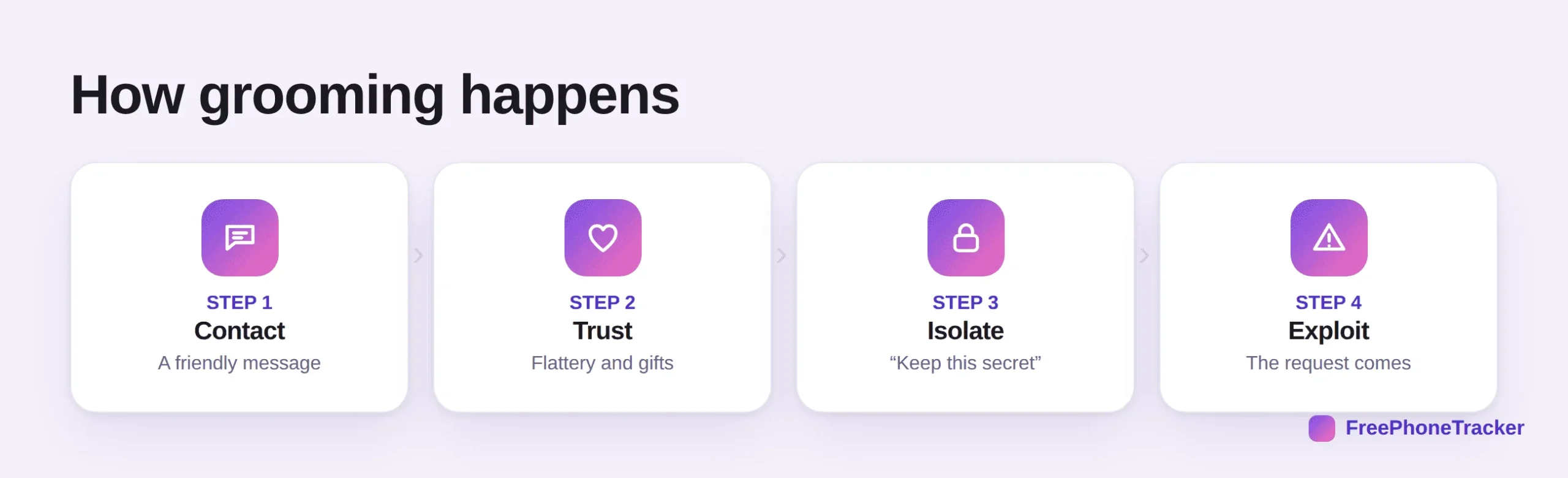
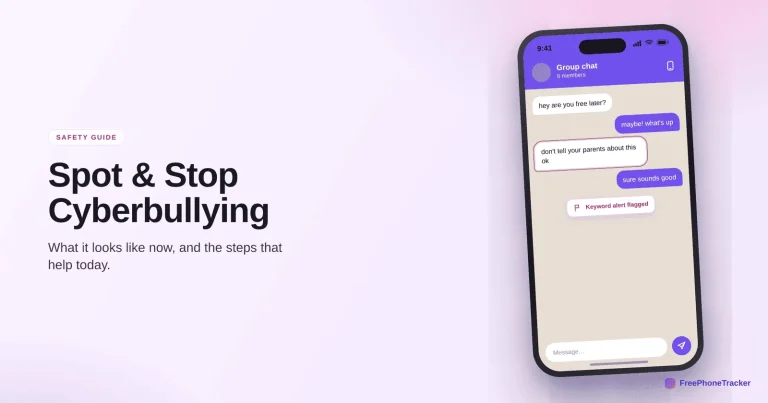
It starts with contact. A friendly message, often on a game, a social app, or in a group chat. Then comes trust. Flattery, shared interests, small gifts or game credits, hours of attention a lonely kid may not get elsewhere. Next is isolation. “Don’t tell your parents, they wouldn’t understand.” The relationship becomes a secret, which is the real red flag. Only then comes the exploitation, the request that was the goal all along. Because it built so gradually, a child often doesn’t see it as danger until they’re deep in it. Your job is to notice the earlier stages, when it’s still easy to stop.
Where it happens
It’s not just the obvious apps. Predators go where kids are, and kids are everywhere. Social platforms and DMs, yes, but also the chat inside games, live-streaming apps, and any service with open messaging. The common thread is a way for a stranger to message your child directly. That’s the door to close.
Warning signs to watch for
A child being groomed often shows it in their behaviour before you’d ever see a message. Watch for the pattern, not any single thing.
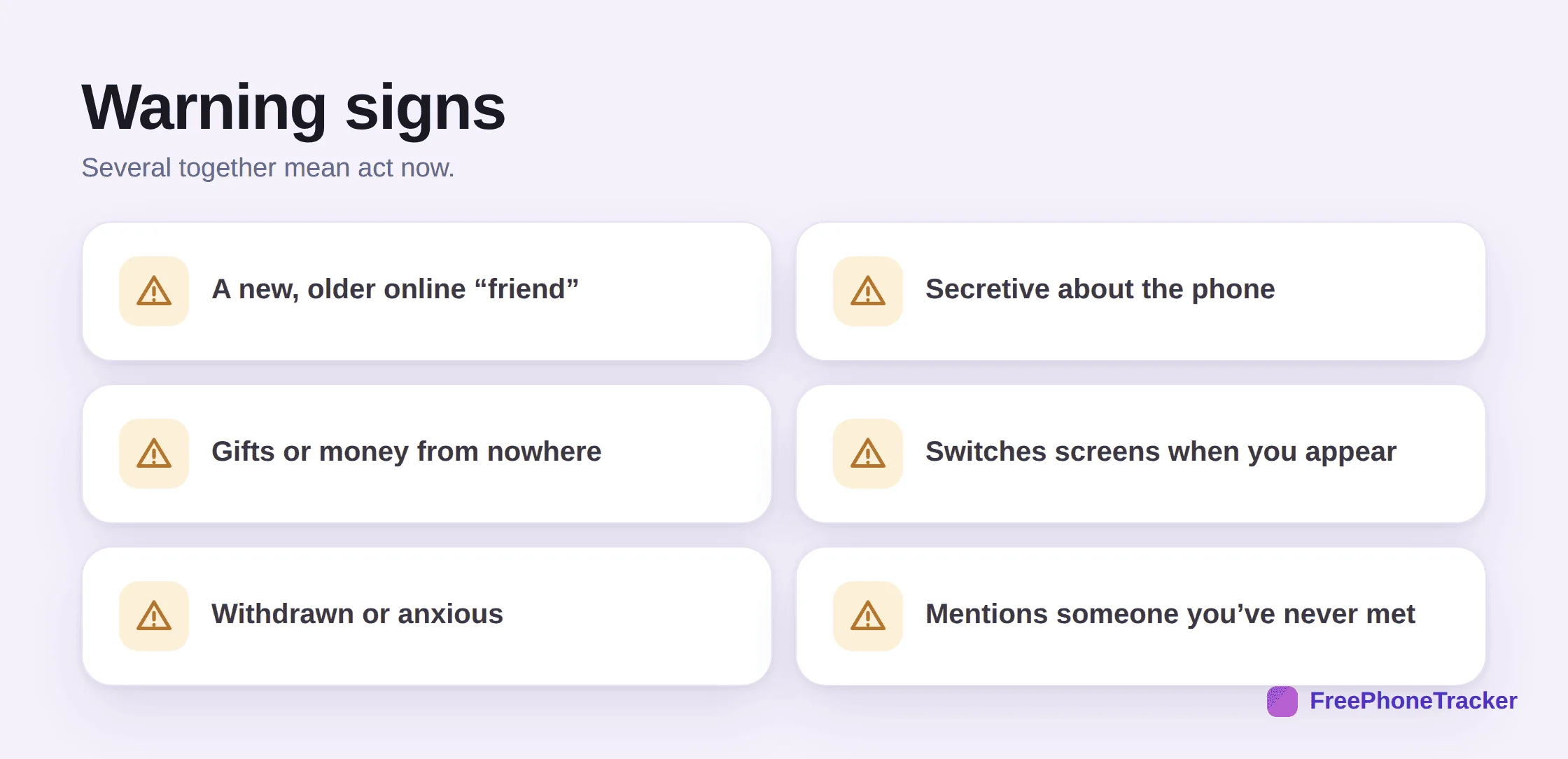
A new online “friend” they’re vague about, especially an older one. Being secretive about the phone, or switching screens when you walk in. Gifts, money or game credits from nowhere. Becoming withdrawn or anxious. Mentioning someone you’ve never heard of. New accounts you didn’t know about. None of these proves anything on its own. Together, they’re your cue to look closer and start a gentle conversation.
How to shut the door early
Most contact never happens if the basics are in place. These few habits block the overwhelming majority of stranger approaches.
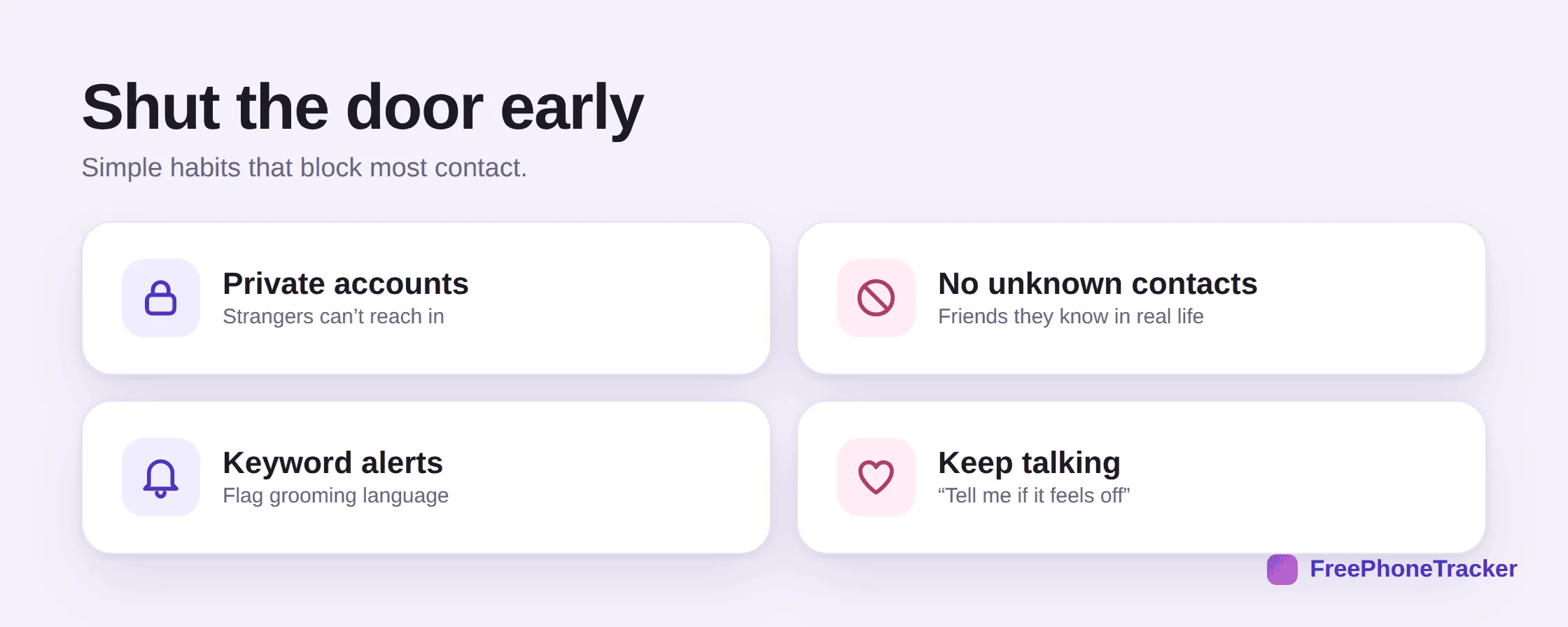
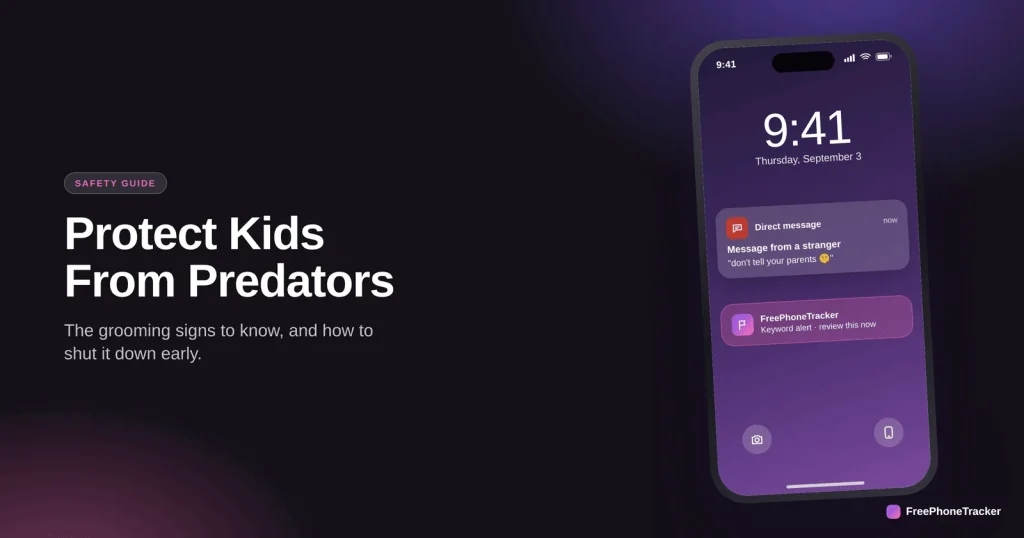
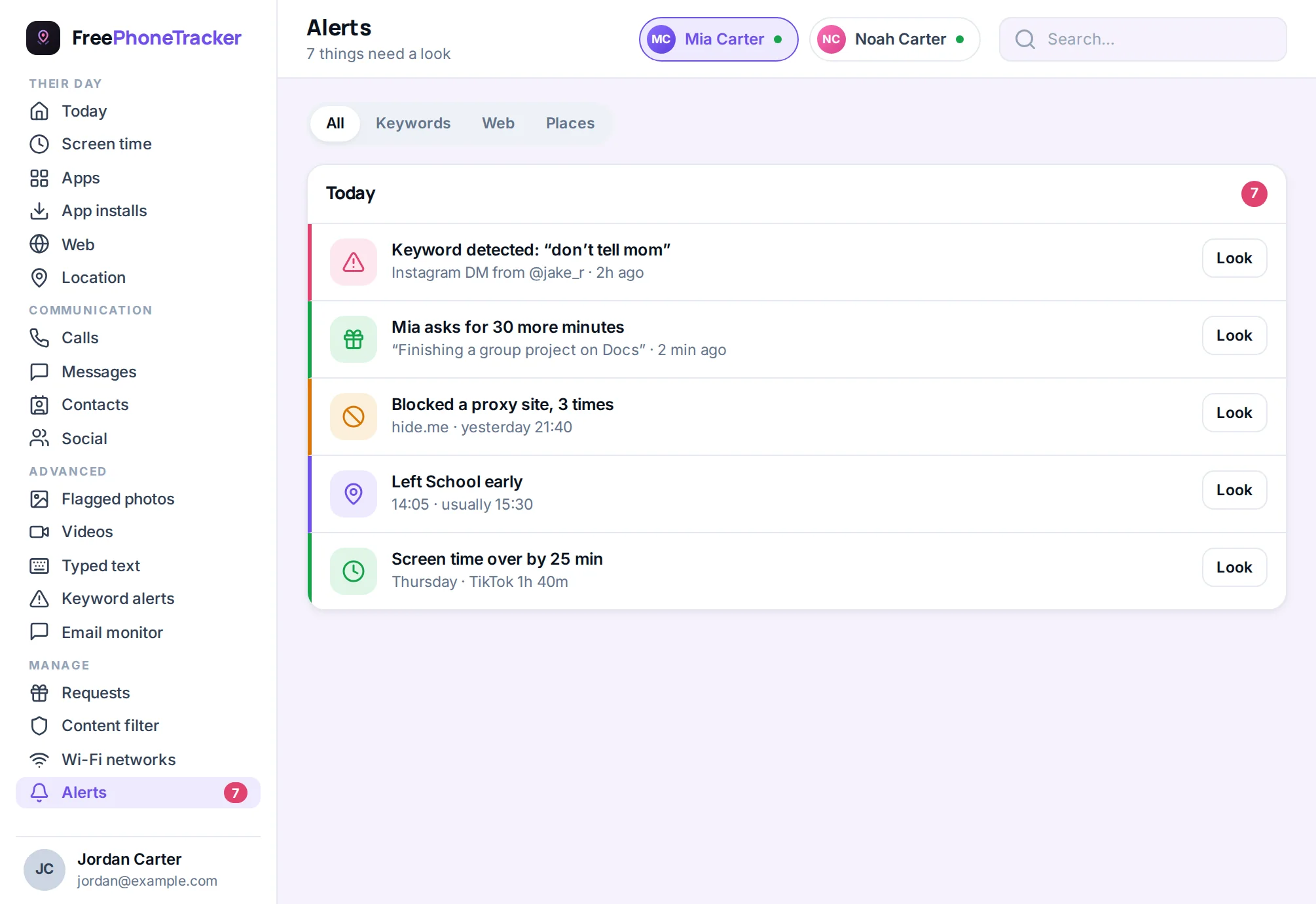
Set every account to private, so strangers can’t see or message your child. Turn off or lock down who can contact them, limiting it to people they know in real life. Turn on keyword alerts so grooming phrases, “don’t tell your parents,” “send me a photo,” “let’s meet,” flag automatically. And above all, keep talking. The child most at risk is the one who feels they can’t come to you. Make it clear, often, that they can tell you anything without getting in trouble.
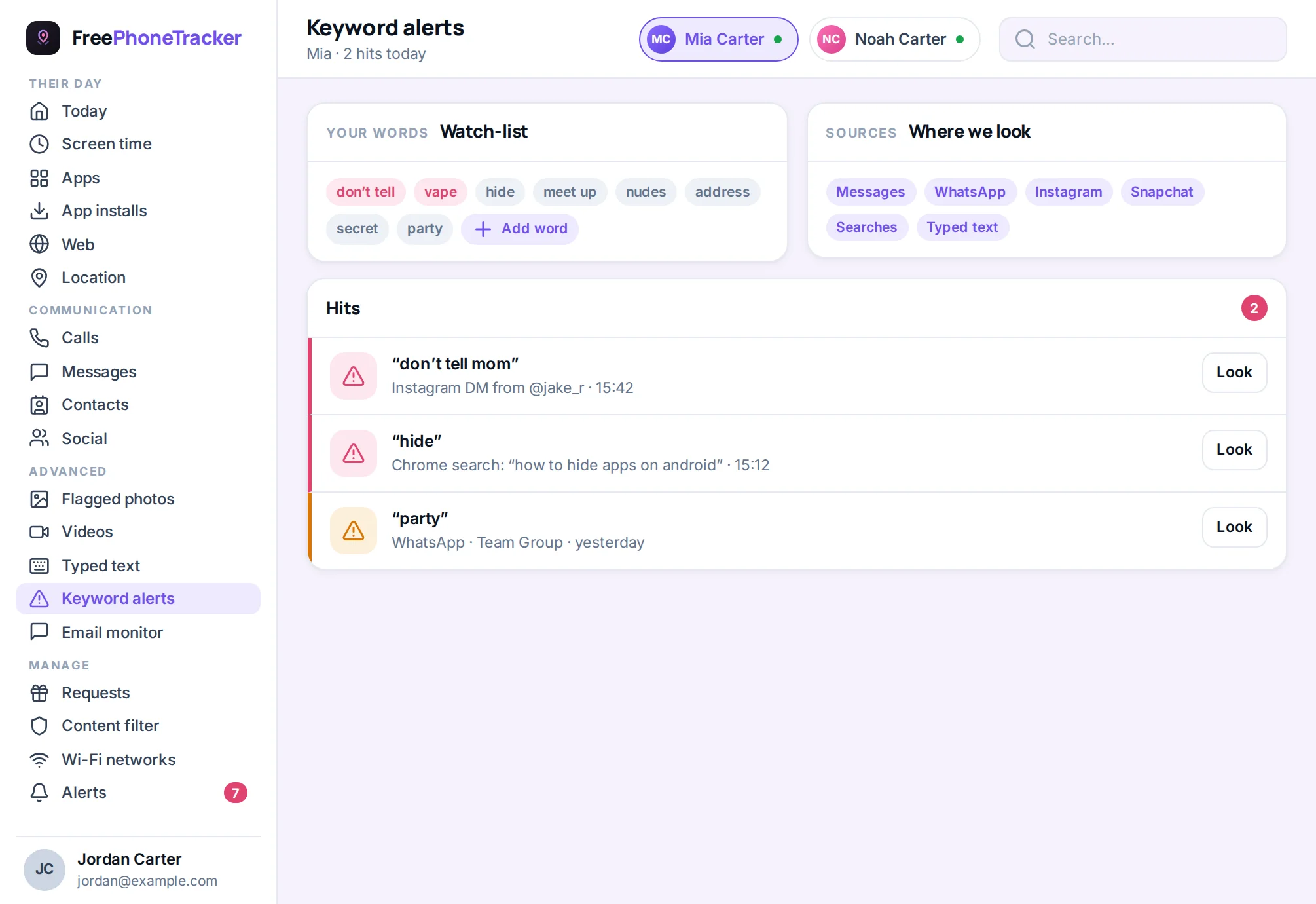
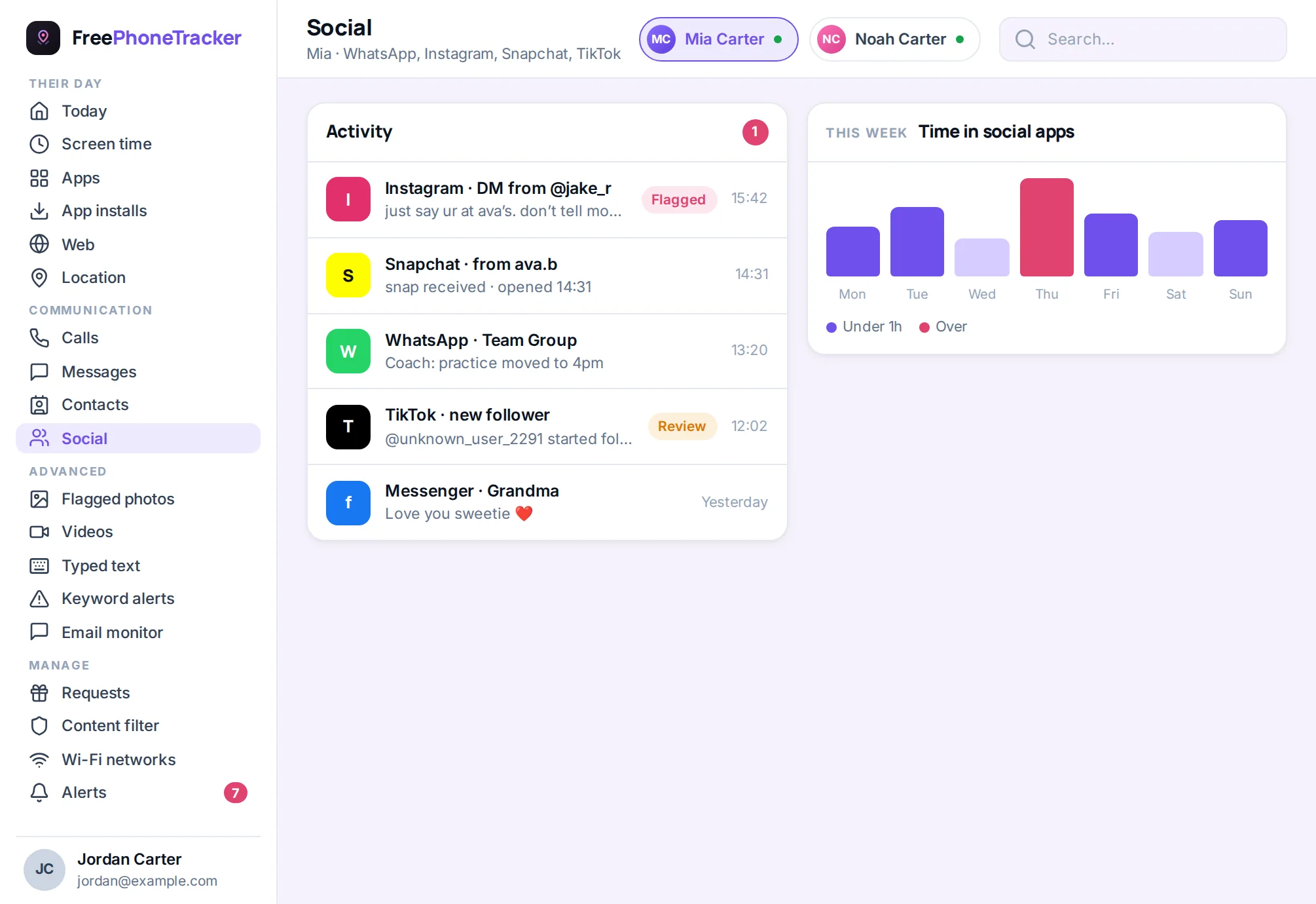
This is where transparent monitoring earns its place. Not reading every message, but keeping an ear open for the words that signal danger. Our guides on social media safety and keyword alerts go deeper on setting this up. And because the app is open on the phone, your child knows it’s there, which is protection in itself.
If a predator makes contact
If you discover something, the moment is frightening. How you respond matters enormously, both for your child’s safety and for whether they keep trusting you.
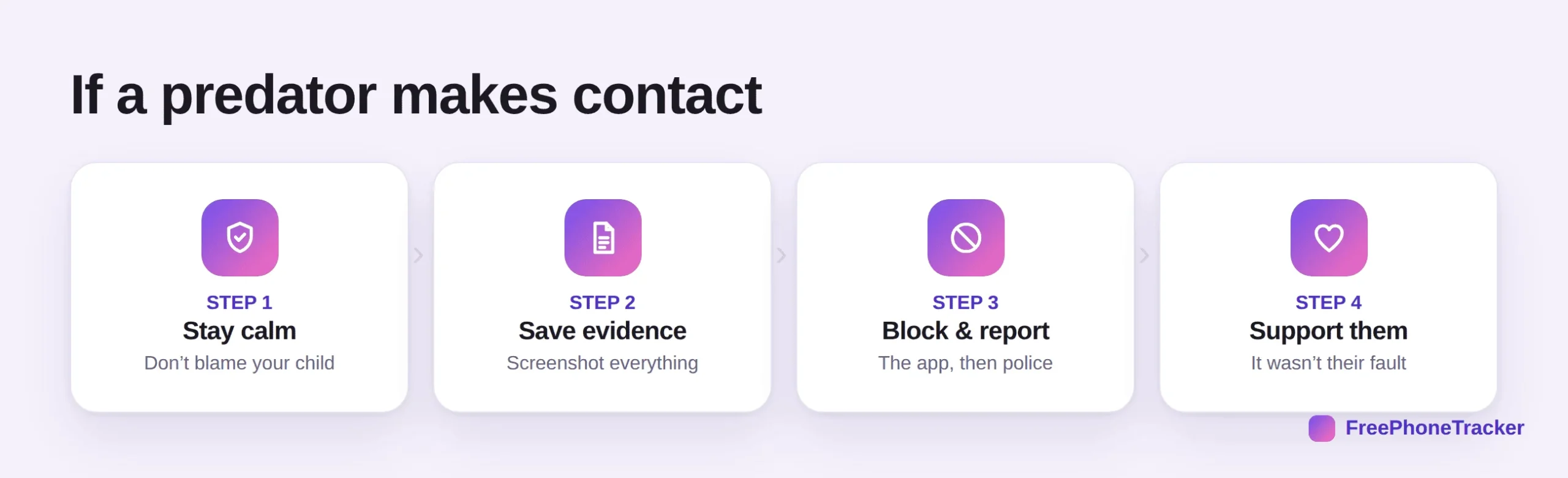
First, stay calm. Don’t blame your child, ever. They were targeted by an adult; that is not their fault, and they need to hear you say so. Second, save the evidence before anything is deleted. Screenshot the messages, the profile, the username. Third, block and report. Report the account to the platform, and if there’s any request for images, any threat, or any attempt to meet, report it to the police. In the US, you can also report to the NCMEC CyberTipline. Fourth, support your child. Reassure them, get them help if they need it, and rebuild their sense of safety.
Talk to your child about strangers online
The strongest protection isn’t software. It’s a child who understands the danger and knows they can come to you. Have the conversation early, and keep having it.
Teach a few clear rules. People online aren’t always who they say they are. Never share your address, school, or photos with someone you don’t know in real life. Anyone who asks you to keep a secret from your parents is a red flag, full stop. And nothing you could ever do would make me too angry to help you. That last one matters most. Predators rely on shame and secrecy. A child who knows they’ll be met with help, not punishment, is a child who tells you early, when it still counts.
Common questions
How common is this, really?
Serious cases are rare, and it’s important not to terrify yourself or your child. But unwanted contact from strangers is common, and it’s the entry point. Handling the small stuff early is what prevents the rare, serious stuff.
Should I ban social media and games to be safe?
Usually no. A total ban pushes kids onto secret accounts where you have no visibility at all. Guiding them to use these apps safely, with private accounts and open conversation, protects them far better. Our social media safety guide covers the balance.
Isn’t monitoring my child’s messages a betrayal of trust?
Done secretly, it can be. Done openly, it’s the opposite. Tell your child what you watch for and why. For teens especially, keep it light and alert-based, as our guide on monitoring a teen respectfully explains.
What age is most at risk?
Tweens and younger teens, roughly 11 to 15, are often most vulnerable. They have more independence than young children but less judgment than older teens, and they crave social connection. That’s exactly the window to have these conversations.
What if my child already met someone online?
Not every online friendship is dangerous; plenty of kids make genuine friends through games and communities. The rules are what matter: no sharing identifying details, no secrets from you, and never meeting in person without a parent involved. If any of those lines were crossed, treat it seriously and follow the response steps above.
Protecting your child from online predators isn’t about fear or lockdown. It’s about seeing the pattern, closing the easy doors, and being the person your child runs to when something feels wrong. Set the accounts private. Turn on the alerts. Keep the conversation open. Do that, and you’ve taken away almost every tool a predator relies on. Get started free to add a transparent safety net today.