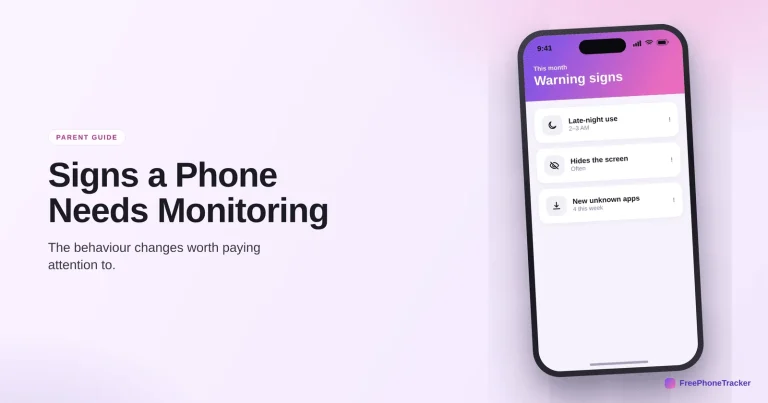
You picked up their phone, or an alert popped up, and now your stomach’s in knots. A message you weren’t meant to see. A photo. A conversation with someone you don’t know. Whatever it is, the next hour matters, because how you respond will shape whether your child ever comes to you again. Take a breath. This guide walks you through staying calm, judging the severity, and having the conversation that actually helps.
- Don’t react in the moment. Breathe, and read it in context first.
- Match your response to the severity, not everything is a crisis.
- For anything serious, save evidence before it disappears.
- Lead the conversation with concern, not accusation. Keep the door open.
First, before you react
The instinct is to confront, to fix it right now, to feel the panic and act on it. Resist. A furious reaction teaches your child one lesson, that coming to you, or getting caught, means an explosion. That’s exactly what makes a scared kid go silent. So the first steps are about you, not them.
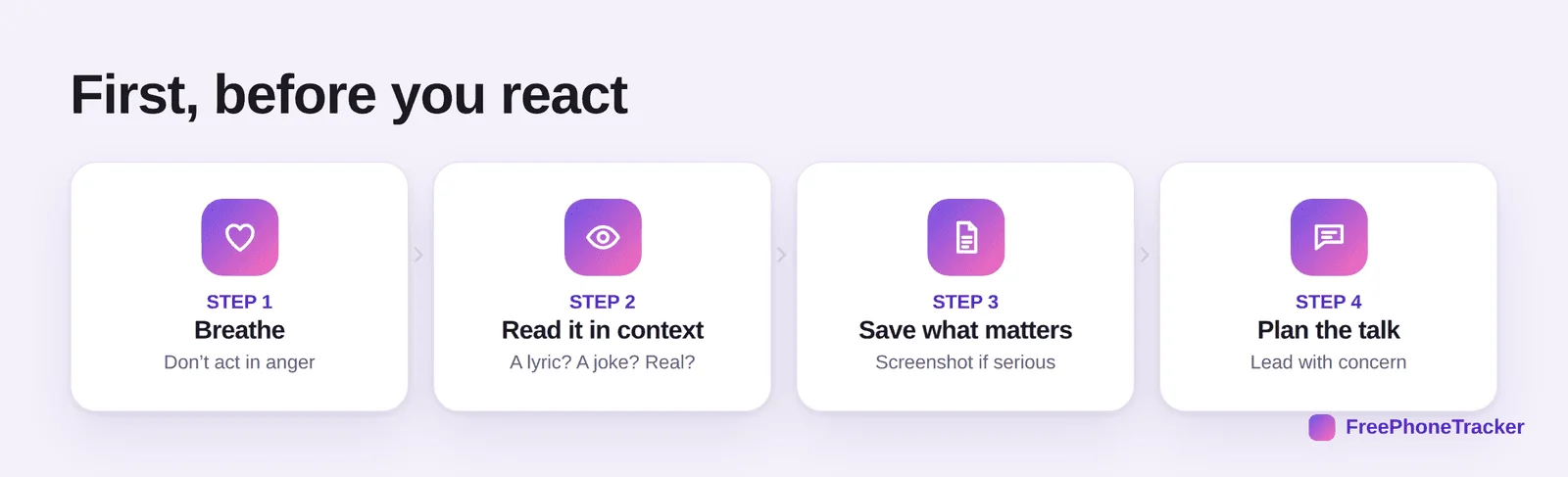
Breathe. Don’t act in anger, and don’t confront in the heat of the moment. Read it in context. Is that alarming phrase a song lyric, an inside joke, or something real? Screenshots lie without context. Save what matters if it looks serious, before anything gets deleted. And plan the conversation, decide how you’ll raise it calmly, rather than blurting it out.
Judge the severity
Not everything you stumble on is an emergency. A big part of responding well is reading how serious it actually is, and matching your reaction to it. Overreacting to something minor does as much damage to trust as underreacting to something serious.
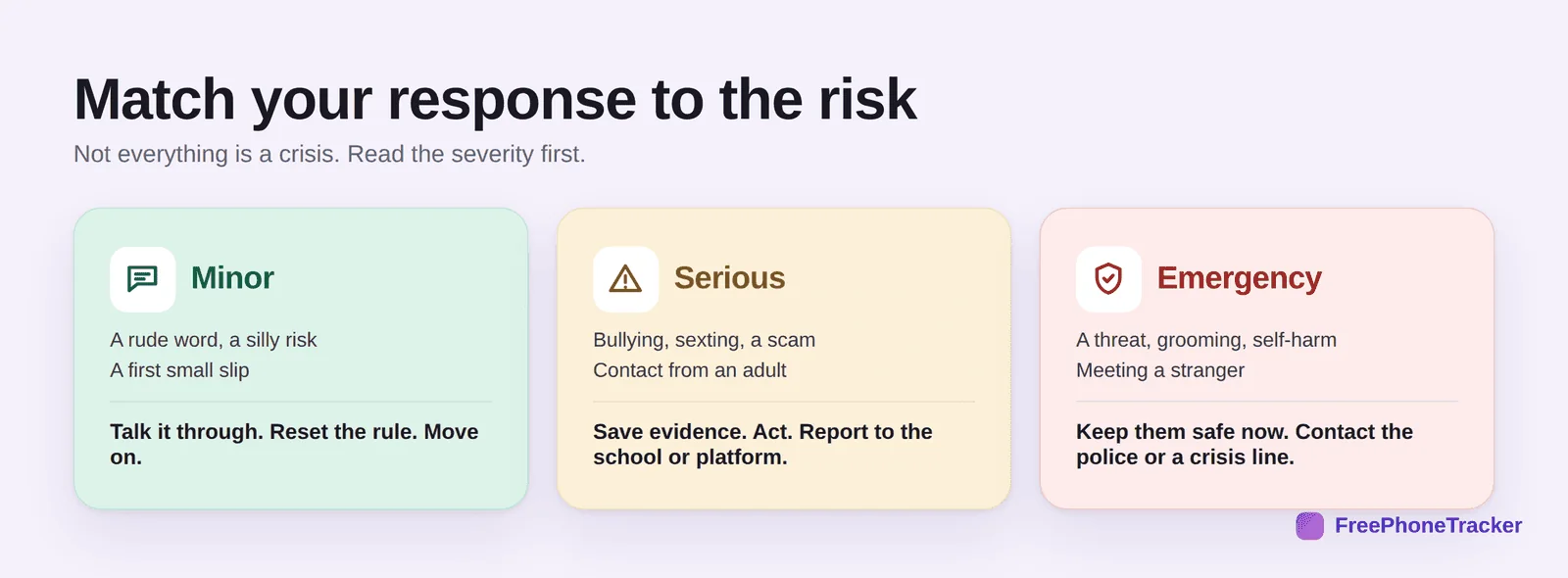
Minor, a rude word, a silly risk, a first small slip, calls for a calm talk, a reset of the rule, and moving on. Serious, bullying, sexting, a scam, or contact from an adult, means saving evidence, acting, and reporting to the school or platform. Emergency, a credible threat, signs of grooming, talk of self-harm, or a plan to meet a stranger, means keeping your child safe right now and contacting the police or a crisis line. When you’re unsure which tier you’re in, treat it as the more serious one until you know more.
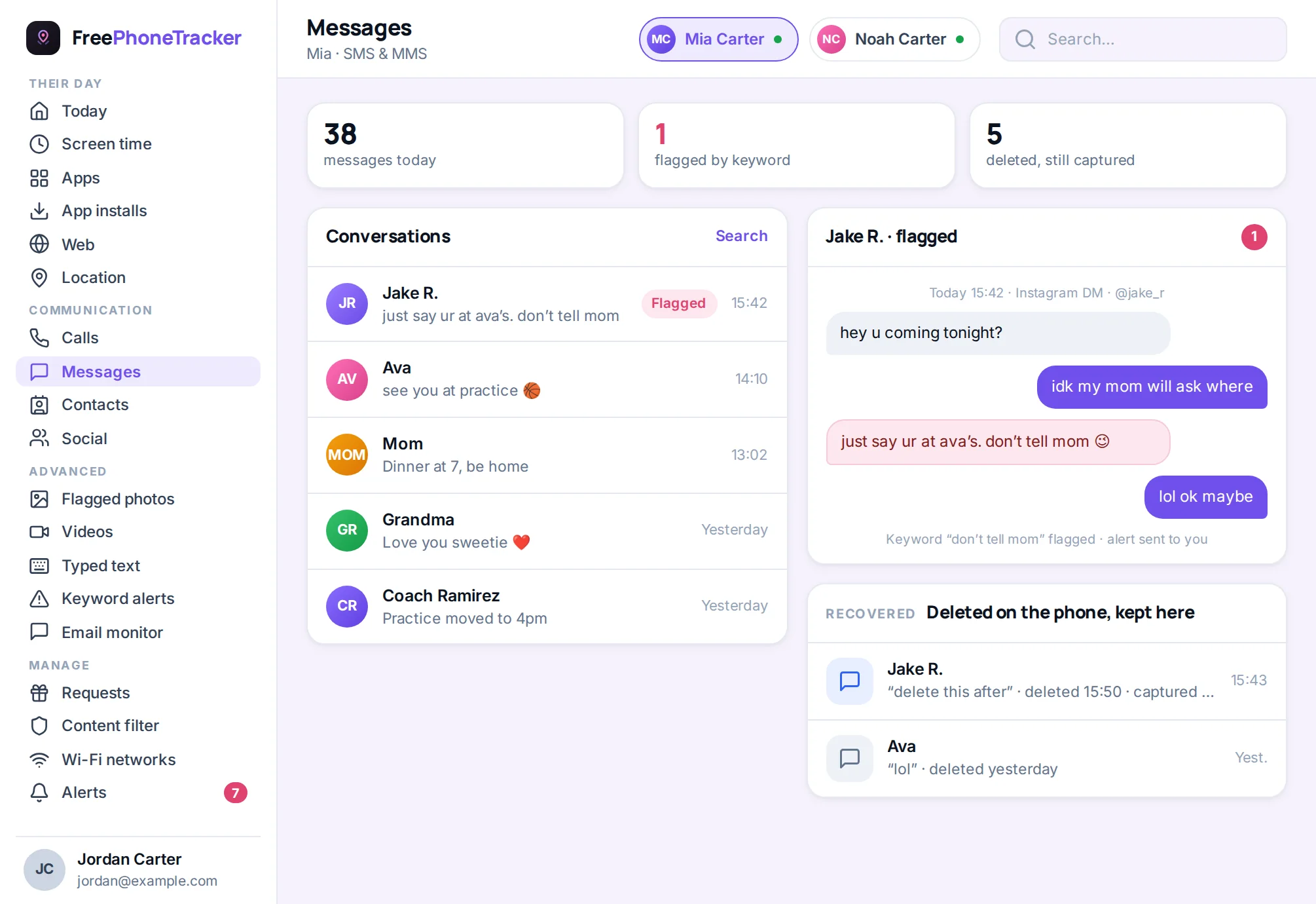
Save the evidence (if it’s serious)
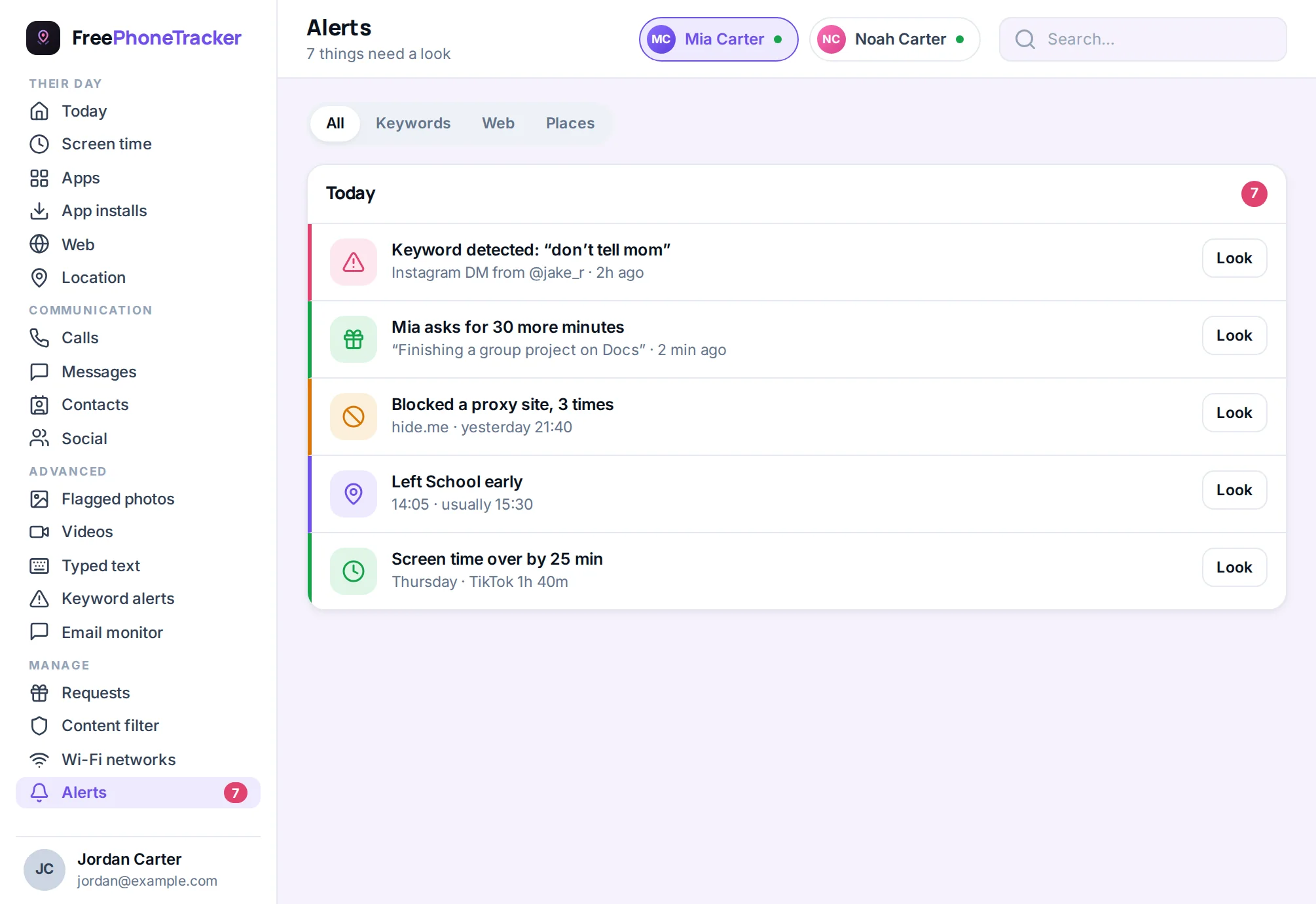
For anything in the serious or emergency tiers, preserve the proof before you do anything else. Screenshot the messages, the profile, the username, the timestamps. Don’t delete, reply, or confront the other person first, that can destroy evidence or tip them off. If it involves an adult contacting your child, a threat, or explicit images, this record is what the school, platform, or police will need.
Have the conversation
Once you’re calm and you understand what you’re dealing with, talk. This is the part that determines whether your child trusts you next time, so how you say it matters as much as what you say.
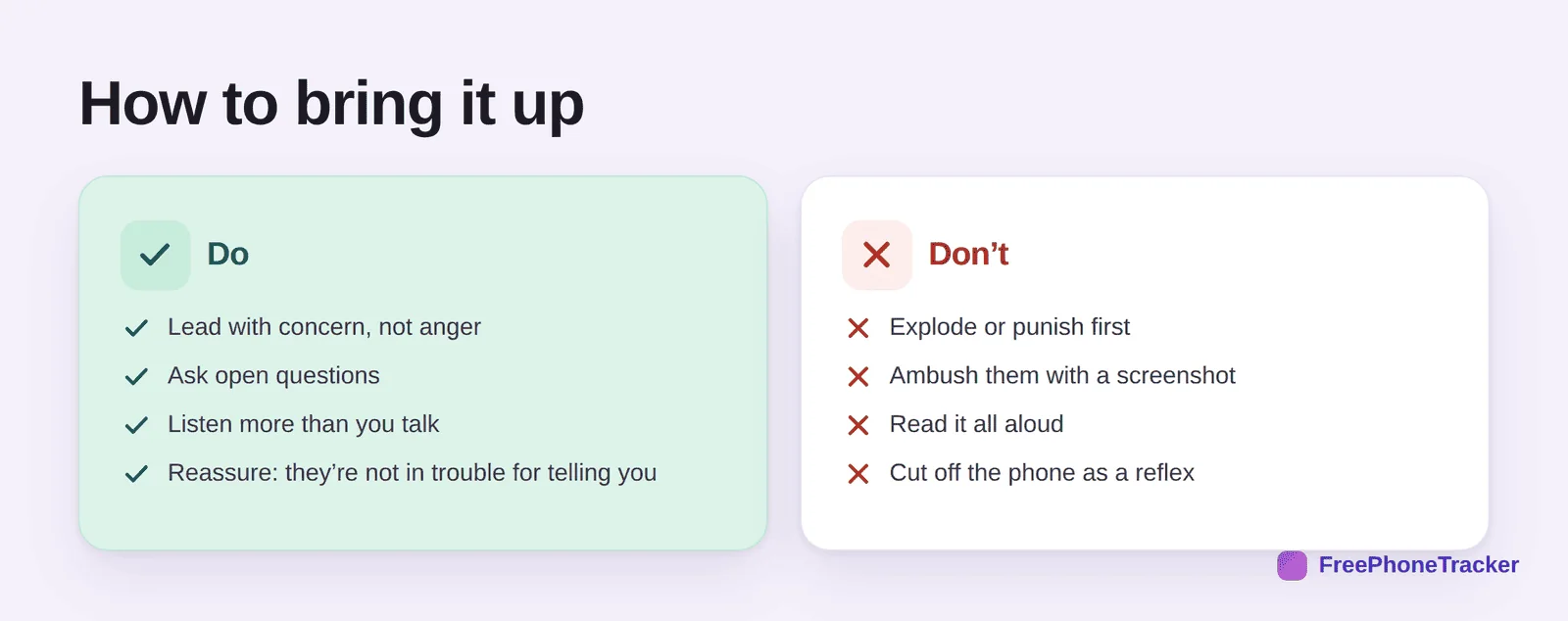
Do lead with concern rather than anger, ask open questions, listen more than you talk, and reassure them they’re not in trouble for being honest. Don’t explode, ambush them with a screenshot, read it all aloud, or reach straight for confiscating the phone. Remember that if your child was targeted, by a bully, a scammer, or a predator, they are the victim, not the culprit, and they need to hear you say it wasn’t their fault. Even when they made a genuine mistake, the goal is a lesson learned and a door left open, not a punishment that teaches them to hide better.

After the storm
Once the immediate issue is handled, think about what comes next. If it was minor, often nothing more than the conversation is needed. If it was serious, it may be time to adjust your monitoring, add keyword alerts, tighten some settings, or have a wider talk about online safety. Do it openly, as a “here’s what we’re changing and why” conversation, not a punishment. And keep reinforcing the message that made this manageable in the first place: whatever happens online, they can always come to you, and you’ll help rather than judge. Our guides on online predators and cyberbullying cover the specific situations in depth.
Common questions
Should I confront my child straight away?
No. Take time to calm down and understand the context first. A reaction fired off in panic almost always makes things worse and shuts the conversation down.
What if they lie about it?
Common, and usually driven by fear. Stay calm, share what you know without hostility, and focus on the safety issue rather than winning the argument. Trust rebuilds faster than you’d think when kids aren’t attacked.
Should I take the phone away?
As a knee-jerk punishment, rarely, it isolates them and teaches them not to tell you things. As part of a calm, agreed plan to handle a specific situation, sometimes. The difference is whether it’s done with them or to them.
How do I know if it’s serious enough to involve police?
Anything involving an adult soliciting your child, threats, or sexual images of a minor is a police matter, not just a family one. When in doubt, contact them, or a child-safety organisation, for guidance.
How do I stop being blindsided next time?
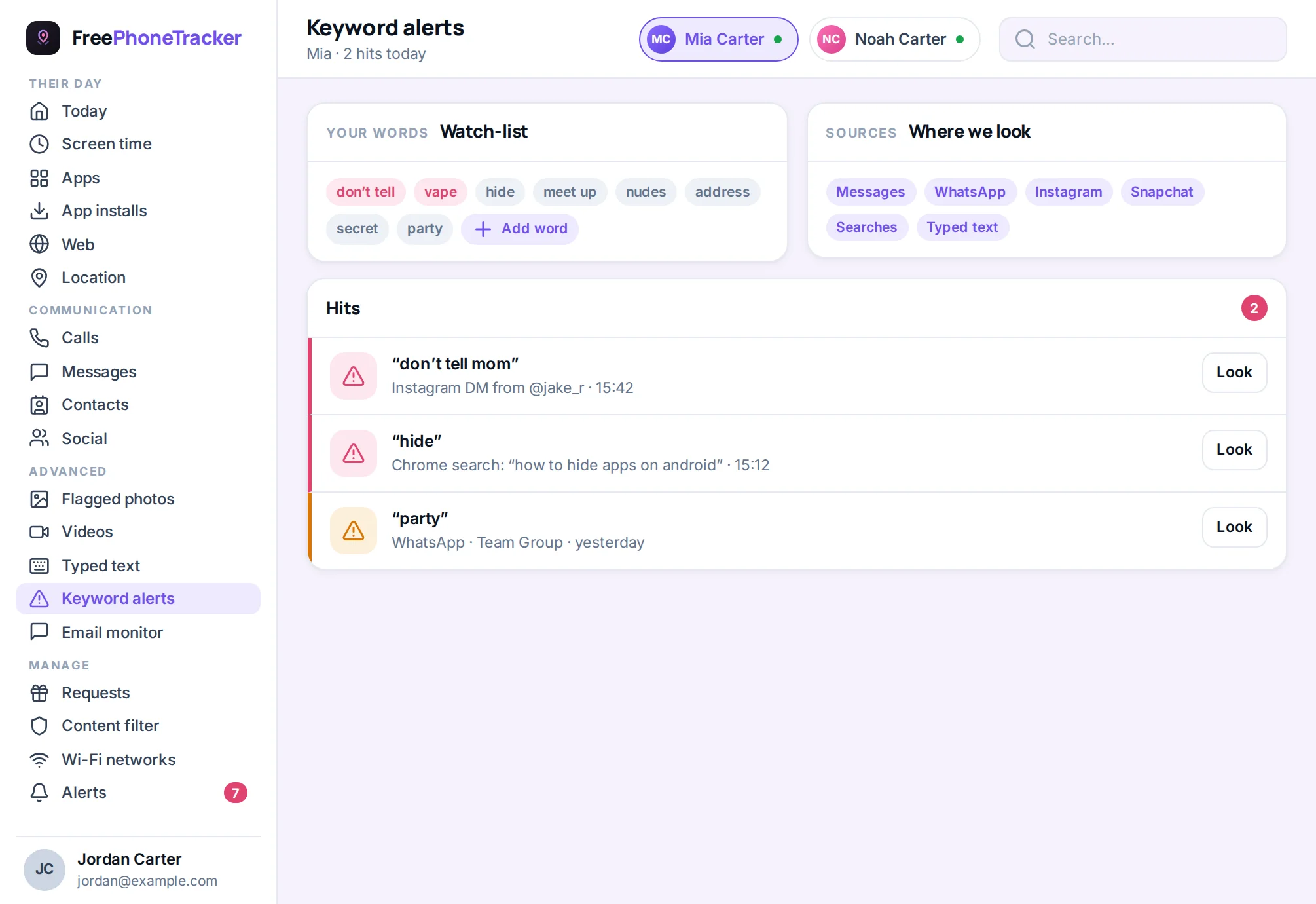
Open, agreed monitoring with keyword alerts means you hear about the serious stuff early, rather than stumbling on it late. See our monitoring guide.
Finding something worrying is one of the hardest moments of parenting a connected kid. But handled calmly, in proportion, and with concern rather than fury, it becomes a turning point that brings you closer instead of driving you apart. Breathe first, judge the severity, save what matters, and lead with love. That’s how you help. Get started free to catch the serious things early.