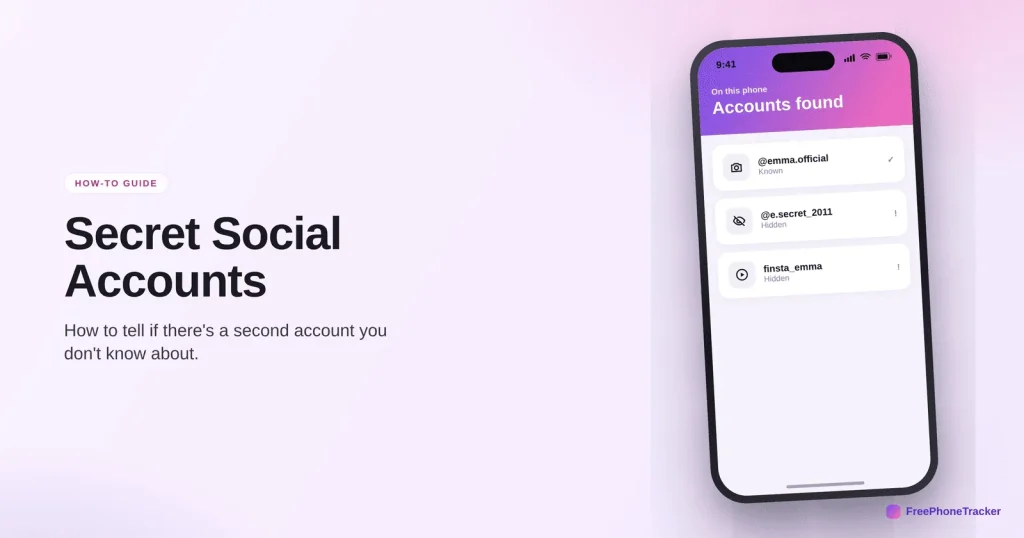
Your child follows you on Instagram. Their account looks tame, well-behaved, parent-friendly. And that might be exactly the point, because it may not be their real account. Secret second accounts, often called “finstas” (fake Instagrams), are common among teens. One account for family, another for their actual life. Here’s how to tell if your child has one, how to find it, and why they make them in the first place.
- Many teens keep a “real” second account separate from the one parents follow.
- Signs: the app logged into two accounts, fast screen-switching, an unfamiliar handle.
- Find one by searching their email or number on the app, or just by asking.
- A secret account isn’t always trouble, but it’s worth understanding, calmly.
Why a “clean” account can be a red flag
Here’s the counter-intuitive part. A teen whose only account is spotless, polite, and clearly curated for adults may be the one most likely to have a second, private one where the real posting happens. The account they let you follow is the storefront; the finsta is the back room. It’s not universal, plenty of kids have just one account, but a suspiciously grown-up profile is a reason to look a little closer.
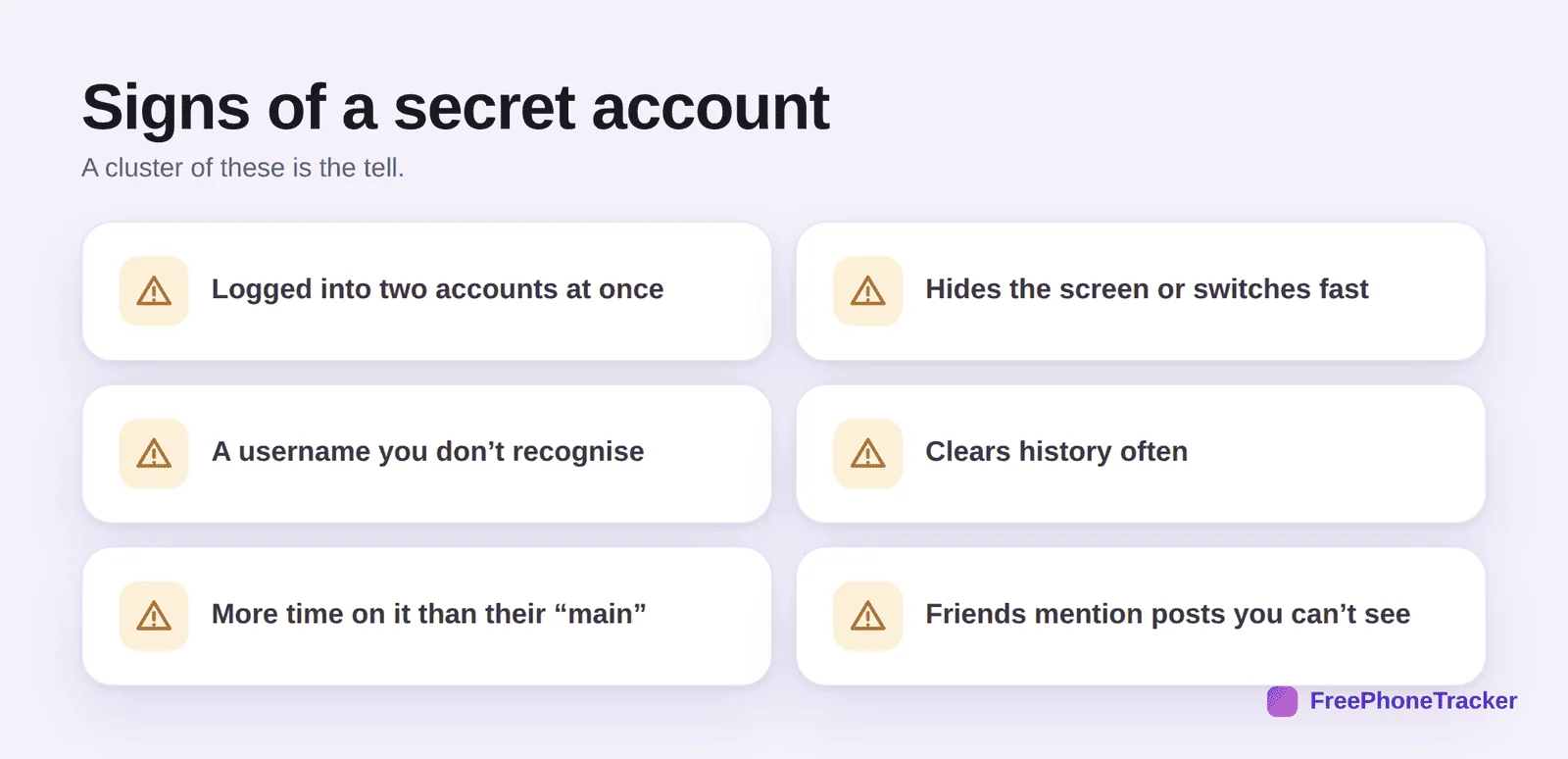
The signs of a second account
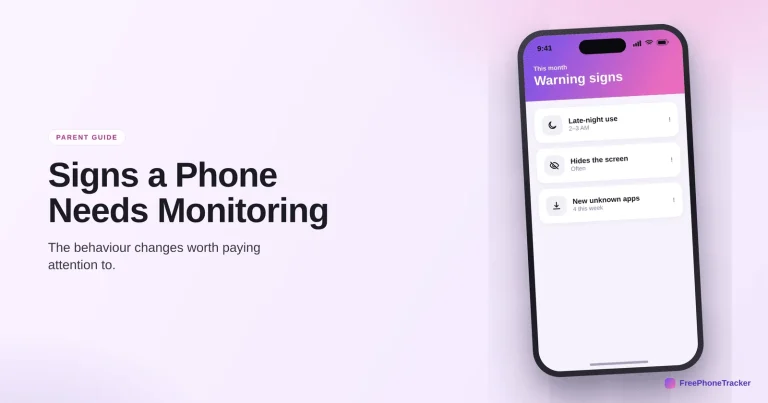
You rarely need to snoop to spot the pattern. Watch for a few behaviours. The app is logged into two accounts and switches between them. Your child hides the screen or switches apps fast when you appear. There’s a username you don’t recognise in notifications. They clear their history often. They spend far more time on an app than their visible account’s activity would explain. And sometimes friends or siblings mention posts you’ve never seen. Any one of these is meaningless; several together point to a hidden profile.
How to find a secret account
If the signs add up, there are calm, non-invasive ways to check, most of which work best done openly.
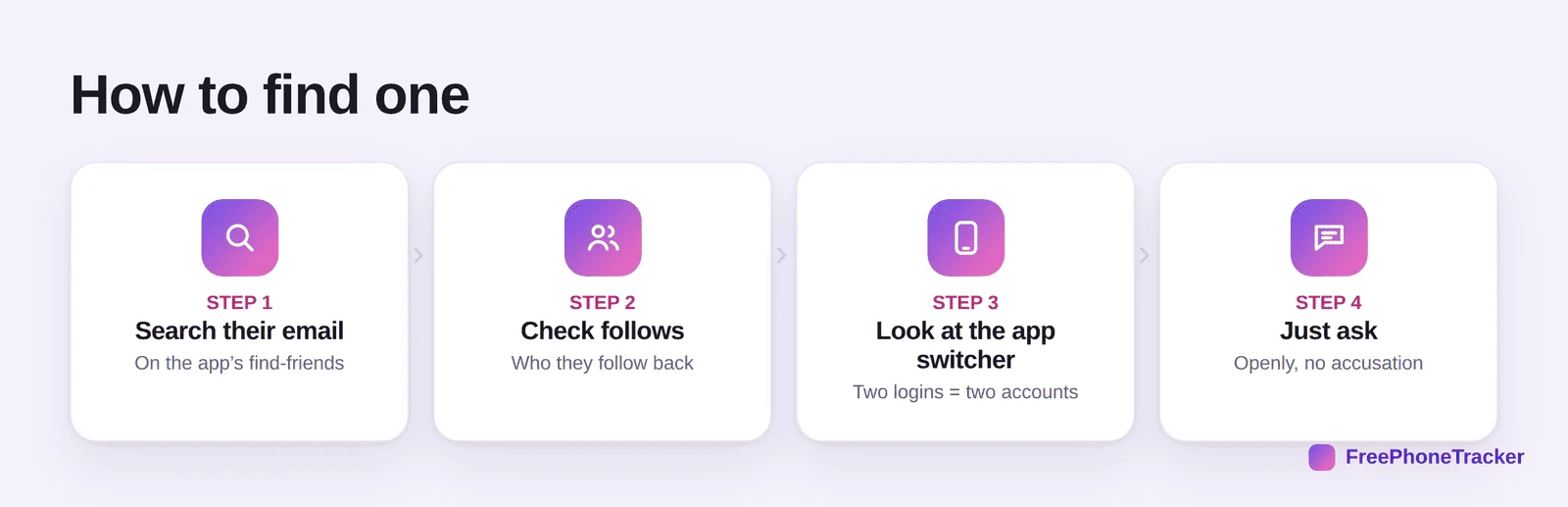
Search their email or phone number on the app’s “find friends” tool, second accounts are often tied to the same contact details. Check who they follow and who follows back, a finsta usually follows the same close friends. Look at the app switcher inside the app, two logins means two accounts. And the simplest, most respectful option: just ask. “Do you have another account? I’m not angry, I just want to understand” gets you further than any detective work, and it doesn’t cost you their trust.
Why kids make secret accounts
Before you treat a finsta as a betrayal, understand the motive. Most are harmless, and knowing why helps you respond well.
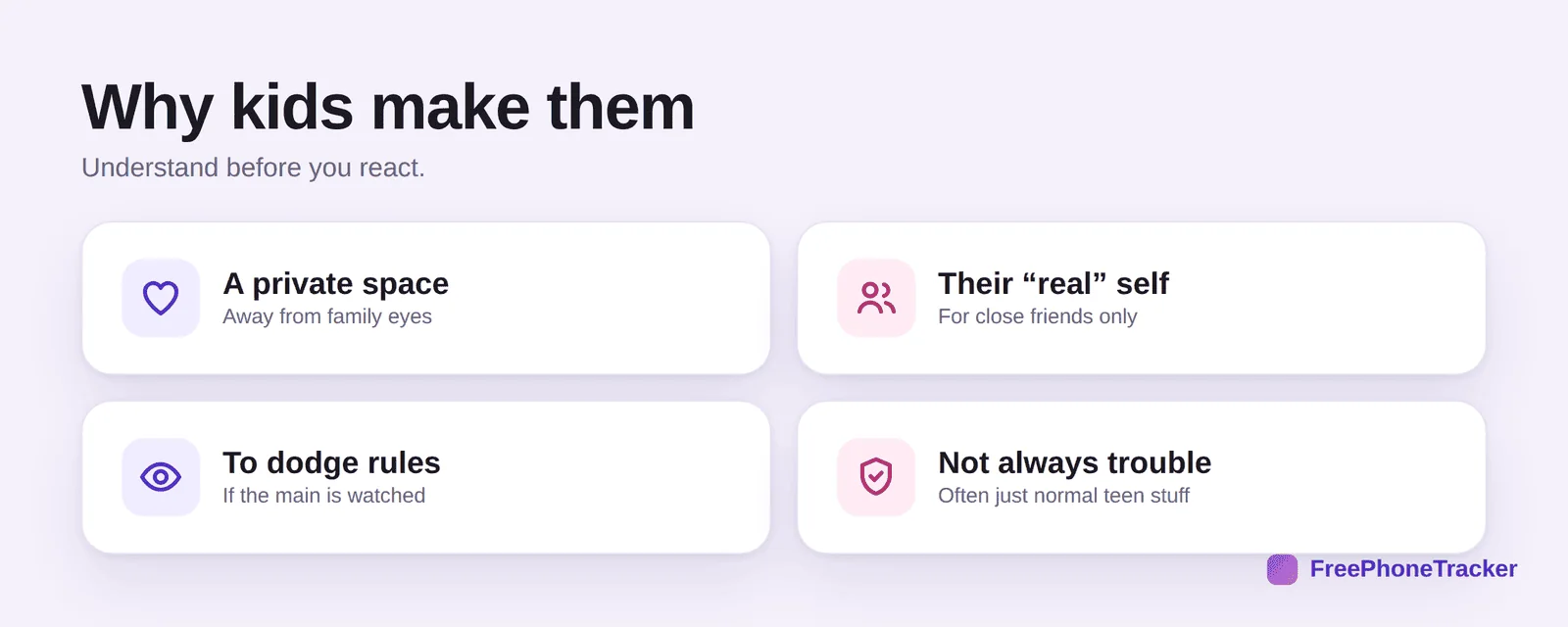
Often it’s simply a private space away from family and teachers, somewhere to be silly without an audience of adults. Sometimes it’s their “real” self, shared only with close friends, less polished than the public one. Occasionally it’s to dodge rules or monitoring on the main account, which is more of a concern. And frequently it’s just normal teen stuff, memes, jokes, and oversharing that they’d rather you didn’t see. The account being secret matters far less than what’s on it and who can see it.
What to do about it
Once you’ve found or been told about a second account, resist the urge to demand its deletion. A better path: acknowledge their need for a private space, and set the safety non-negotiables that apply to every account, secret or not. The account must be private. No strangers. No sharing of identifying details or photos with people they don’t know in real life. And the door stays open: anything worrying, they bring to you. Framed that way, you’re not banning their independence, you’re setting the guardrails it runs inside. Our guide on monitoring a teen respectfully covers striking that balance, and keeping kids safe on social media has the settings that matter.
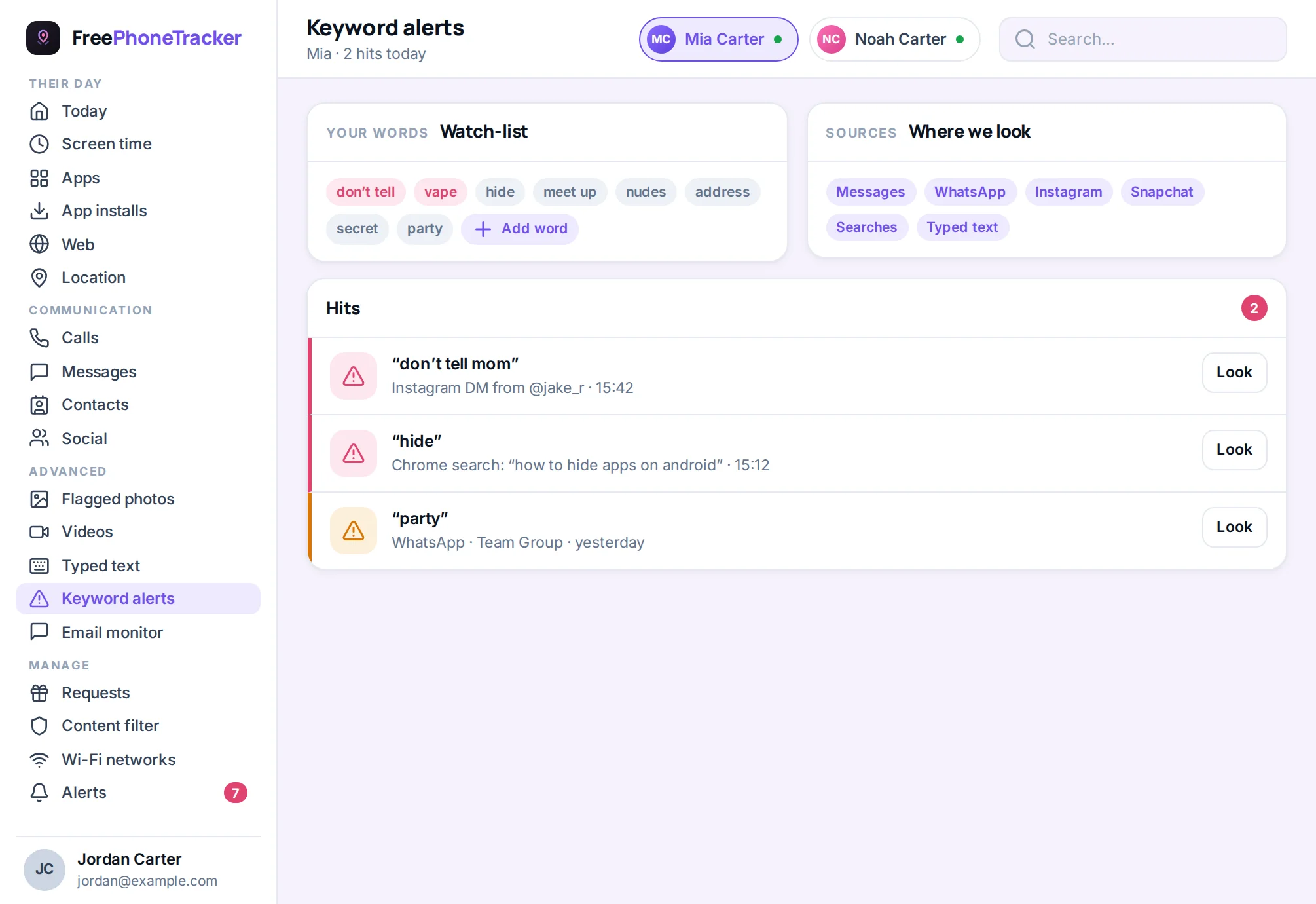
If what you find on the secret account is genuinely worrying, contact from an adult, bullying, explicit content, treat that seriously and act, as our guide to finding something worrying explains. But most of the time, a finsta is just a teenager wanting a room of their own. The goal is to make sure that room is safe, not to tear the door off it.
Common questions
Is it normal for teens to have secret accounts?
Yes, very. The finsta is practically a rite of passage. It’s usually about privacy and self-expression, not danger. Judge it by its contents, not its existence.
Should I demand they delete it?
Rarely the best move, it pushes the behaviour further underground. Better to accept the need for privacy while insisting on the safety rules that apply to any account.
How can I be sure I’ve found all their accounts?
You may never be 100% sure, and chasing certainty erodes trust. Focus instead on the relationship and on light, open monitoring, so that even accounts you don’t know about follow the same rules.
What if the account is public?
That’s the real concern, not the secrecy. A public second account exposes your child to strangers. Make private accounts a firm rule, whatever the account is called.
Isn’t searching for their account snooping?
It can feel that way, which is why “just ask” is the first tool. If you do check, be ready to be honest about it. Secret snooping, once discovered, costs more than it gains.
A secret account is usually less about hiding danger and more about a teenager wanting space to be themselves. Look calmly, ask openly, and focus on the rules that keep any account safe, private, no strangers, nothing shared with people they don’t know. Get that right and it doesn’t matter how many accounts they have. Get started free to keep a light, honest eye across all of them.